


For the first time, Israel’s Shin Bet security agency submitted assessments of candidates seeking appointment as qadis, or judges in the country’s Sharia court system, leading the selection committee to disqualify several nominees, ynet and Yedioth Ahronoth have learned.
The candidates were rejected after the Shin Bet found that they had ties to the Northern Branch of the Islamic Movement, an organization Israel has declared an unlawful association.
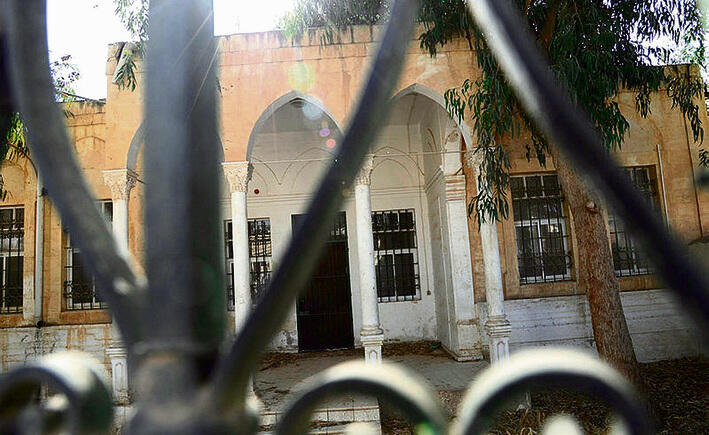
The Sharia court in Be’er Sheva
(Photo: Herzl Yosef)
The security agency was asked to examine the candidates by two members of the selection committee, ministers Dudi Amsalem and Orit Strock.
Israel’s Sharia courts operate under the Justice Ministry and handle personal-status and family matters for Muslim citizens, who make up about 20% of the country’s population. Their role is broadly comparable to that of the rabbinical courts, which adjudicate such issues for Jewish citizens.
Sharia courts operate across Israel, with a higher appeals court based in Jerusalem.
The committee responsible for selecting qadis includes Amsalem and Strock, senior members of the Sharia court system, representatives of the Israel Bar Association and lawmakers Ahmad Tibi, Mansour Abbas and Yinon Azoulay.
The committee convened about a month ago to discuss and select candidates for judicial posts. During the meeting, members were presented with a Shin Bet assessment of every candidate.
The review followed an earlier demand by Strock that the agency examine whether any of the nominees had connections to terrorist organizations.
The Shin Bet submitted a table listing all the candidates and the results of its review. According to the assessment, several nominees were found to have links to the Northern Branch of the Islamic Movement.
After a heated discussion, the committee decided to disqualify those candidates and remove their appointments from consideration.
The move marked the first time the Shin Bet had reviewed candidates for judicial positions and submitted its findings to a selection committee before appointments were made.
Under Israeli law, the Shin Bet conducts security-clearance checks on judges at all levels because they may be exposed to classified information. Those checks, however, are normally carried out only after a judge has already been selected, and their results are not provided to members of the judicial selection committee.
Sharia court judges are not ordinarily exposed to classified material, making the review particularly unusual.
The Shin Bet’s assessment was therefore presented to committee members before the candidates were chosen, establishing a precedent in Israel’s judicial appointment process.
It is also believed to be the first time that a Shin Bet assessment has directly resulted in the rejection of candidates for judicial office. Previous security-clearance reviews conducted after judicial appointments have never led to the disqualification of a nominee.
The ministers’ demand for Shin Bet involvement followed concerns raised during interviews conducted by subcommittees of the qadi selection panel, a process similar to that used by Israel’s Judicial Selection Committee.
During those proceedings, Strock said she had independently examined the backgrounds of several candidates.
In one case, she found that a female candidate had published what were described as problematic social media posts. After being questioned about them by the committee, the candidate withdrew from consideration and deleted the posts.
Another candidate listed Hussein al-Tartouri among the people recommending him for the position. Al-Tartouri served as a minister in the Hamas-led government headed by Ismail Haniyeh in 2007.
Following that disclosure, the committee decided not to appoint the candidate as a qadi.