

The delegation of senior Iranian officials that arrived Friday for the funeral ceremony of Supreme Leader Ali Khamenei was missing one key figure: Mojtaba Khamenei.
The man appointed Iran’s supreme leader after his father was killed on February 28 has still not appeared in public, and even his voice has not been heard. The only way he has communicated publicly with the Iranian people and the outside world is through written statements, which do not necessarily reveal his true condition.
Iran’s leaders weep over Khamenei’s coffin in mass funeral show of defiance


Mojtaba was wounded in the opening strike of the war and has since been hiding in a secure location, according to reports. His face was reportedly badly burned. In recent days, as Iran sought to calm tensions around his father’s funeral, he issued a written statement meant to steady the public mood. But supporters of the regime’s hard-line camp demanded to see his face or at least hear his voice. He did neither.
The New York Times reported Saturday that it remains unclear whether the 56-year-old ayatollah will appear at any of his father’s funeral ceremonies this week. On Wednesday, he did not attend a memorial ceremony for his wife, who was killed on the first day of Operation Roaring Lion in the bombing of the supreme leader’s compound, along with their son.
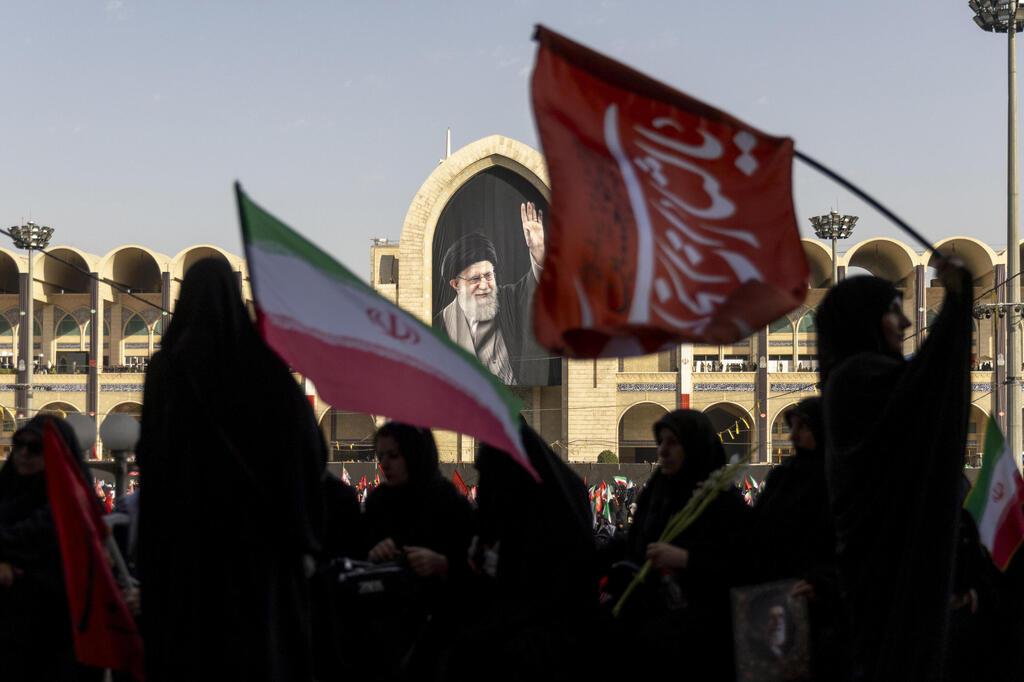
At Friday’s ceremony at Khomeini Mosque in Tehran, the hosts tried to energize the large crowd that had come to bid farewell to the elder Khamenei, including with chants in support of Mojtaba. “At your command, Mojtaba,” the host called out, and the crowd repeated it. They were also encouraged to chant calls for revenge, and some held signs reading “Kill Trump.” The familiar slogans of the Islamic Republic, “Death to America” and “Death to Israel,” were heard at the ceremony and even at the nearby Shahid Beheshti metro station.
But Mojtaba himself was absent.
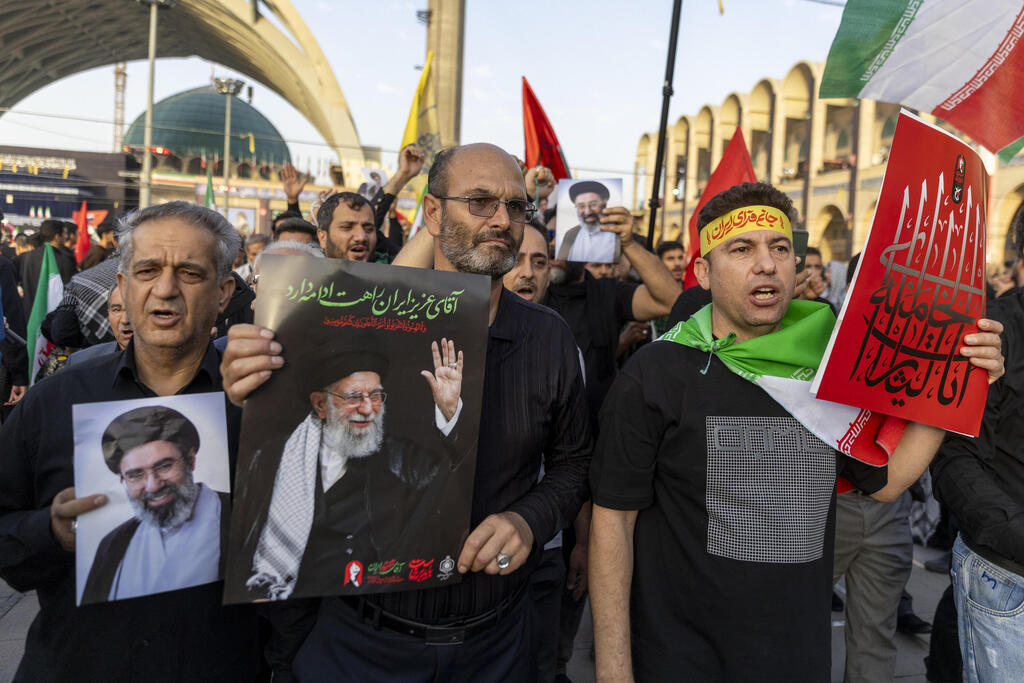
According to The New York Times, Iran’s new supreme leader asked senior officials to attend one of the funeral events on July 9, when the burial ceremony is expected to take place at the Imam Reza shrine in Mashhad, Ali Khamenei’s birthplace. Mojtaba asked to pray over his father’s body. But Iranian security officials rejected the idea for now, according to IRGC figures and funeral organizers quoted by the U.S. newspaper. The reason: concern that Israel would try to assassinate him or track his movements back to his hiding place.
The funeral ceremonies also drew American antisemitic influencer Jackson Hinkle, who has spread anti-Israel incitement to his 3.8 million followers since the start of the war. It was not his first visit to a country in the Shiite axis. He attended Hezbollah leader Hassan Nasrallah’s funeral and also spoke at a Houthi rally.
This time, Hinkle shared a photo of himself from Tehran, marking America’s 250th anniversary with the man behind the deaths of many American soldiers. “July 4th in Tehran, Iran. It is the duty of every American patriot to pay respect and honor the life of Seyyed Ali Khamenei,” he wrote.
The absence that says everything
According to The New York Times, the fact that the younger Khamenei has not appeared publicly is raising questions inside Iran over who is really running the country. The camps are now split in two, but not along the old reformist-conservative divide. Instead, the struggle is between more “pragmatic” conservatives and hard-line conservatives.
The more pragmatic camp, according to the U.S. newspaper, includes unnamed senior IRGC generals, parliament speaker Mohammad Bagher Ghalibaf, President Masoud Pezeshkian and Mohammad Bagher Zolghadr, head of the Supreme National Security Council. Facing Mojtaba Khamenei, they have gained the upper hand, advancing the memorandum of understanding, direct negotiations with the United States and a plan to formulate a broader agreement.
The hard-line camp has publicly attacked the pragmatic conservatives. One example came this week when an interview with Ghalibaf was cut off as he was detailing the memorandum of understanding with the United States. According to The New York Times, the incident triggered a public uproar in Iran, including calls to fire the head of the state broadcasting authority, who was appointed by Ali Khamenei and belongs to the hard-line conservative camp. Iranian state television has reportedly intensified its attacks on the negotiation team, including Foreign Minister Abbas Araghchi.
(Photo: Majid Saeedi/Getty Images)
The public split, according to the report, only scratches the surface of deeper fractures. Four senior Iranian officials and two IRGC members told the Times that the sides are engaged in a brutal struggle for the ayatollah’s backing, a move that would allow one side to claim Iran’s future. But in the months since the war began, IRGC generals have consolidated their power and are effectively running the country.
One sign that Iran’s decision-making process has changed came when Vice President Mohammad Jafar Qaem Panah made remarks that could be interpreted as suggesting the supreme leader no longer has the final word.
“If the meaning is that we implement everything the leader says as his opinion, then there is no need for any other institution,” he said in a speech. “The parliament and the Supreme National Security Council also lose their meaning. The leader expresses a position, and his position undergoes professional review.”
Under Ali Khamenei, such a statement would not have passed quietly.
Questions over whether this can last
According to The New York Times, political circles in Iran are already wondering whether Mojtaba can continue ruling “in absentia,” as four Iranian officials quoted in the article put it.
When Mojtaba hesitated over the memorandum of understanding, President Pezeshkian visited him and threatened to resign, according to the four officials. He told him that the economic situation was dire and that the U.S. naval blockade was paralyzing Iran. The central bank governor warned Khamenei that the country was facing a severe financial crisis and that food and medicine supplies would run out by the end of August if the naval blockade continued.
(Photo: Majid Saeedi/Getty Images)
Those appeals, according to the four officials, were decisive in Khamenei’s final decision to back the agreement. In his written statement, he said he opposed the deal “in principle,” but instructed the president to move forward if he had the backing of the Supreme National Security Council. That gave Pezeshkian the opening he needed.
The New York Times noted that after the funeral, Khamenei will have to make major decisions on key appointments, including who will lead the judiciary, the state broadcasting authority and the Basij militia, as well as who will serve as his own chief of staff.
Those decisions, Iranian officials said, will signal which side he is leaning toward.