

A senior Israeli official sought Thursday to frame the emerging Lebanon ceasefire as a conditional diplomatic track rather than an end to Israel’s military campaign, saying IDF forces would remain in areas already captured in southern Lebanon, including the strategic Beaufort Ridge, while operations to dismantle Hezbollah infrastructure continue.
The official said the U.S.-backed effort is aimed at pushing Lebanon to confront Hezbollah directly, with the Lebanese army expected to deploy in designated sectors and remove the terror group from territory south of the Litani River. If Hezbollah refuses, the official argued, Israel would gain greater legitimacy to keep acting militarily.
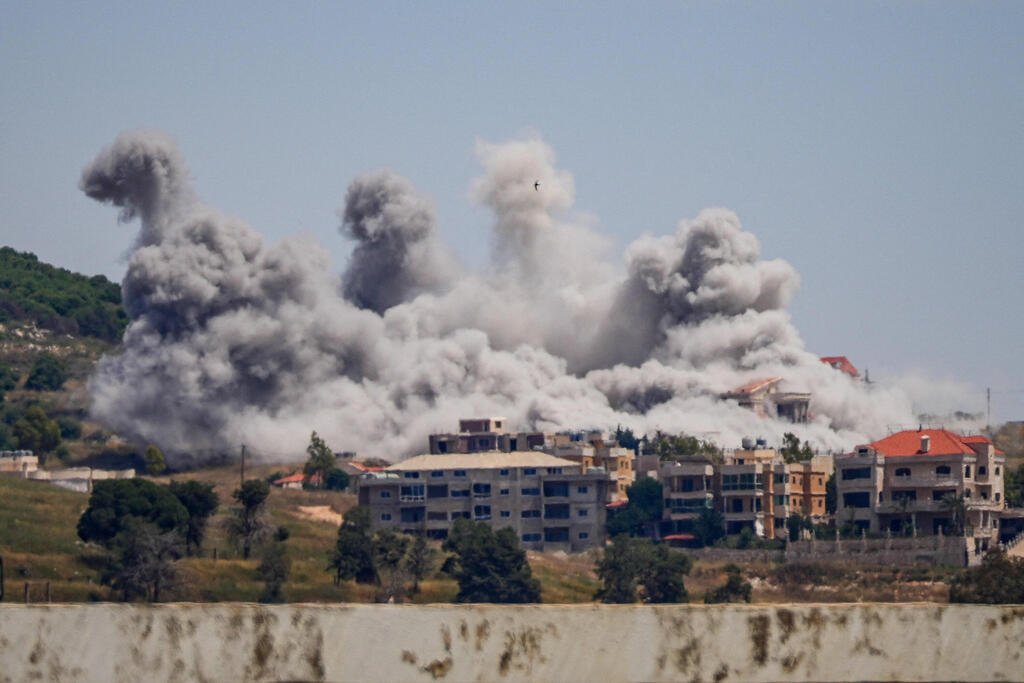
The U.S. State Department announced overnight that Israel and Lebanon had agreed to “implement a ceasefire,” but the statement came with a major caveat: Hezbollah must halt its fire and all of its operatives must withdraw from south of the Litani River. For now, however, the terror group, which did not acknowledge the talks in Washington at all, has not responded, and it remains unclear whether it will agree to those terms.
Lebanese newspaper An-Nahar, which is not affiliated with Hezbollah, reported Thursday morning that “Israeli airstrikes stopped immediately after the statement was published.” But hours later, reports emerged of a targeted strike on a vehicle, additional attacks and then an evacuation warning. On the Israeli side, after sirens sounded in the border town of Kfar Yuval in the Galilee Panhandle, authorities reported the detection of a suspicious aerial target, indicating Hezbollah fire had continued.
The result, at least for now, may be a ceasefire in name only. Israeli officials say the military campaign is continuing, while the diplomatic effort is intended to reshape the balance of power in Lebanon and isolate Hezbollah and Iran.
The senior Israeli official said Israel’s position is that any quiet would depend on Hezbollah changing its behavior, not on Israel ending its operations unconditionally. If Hezbollah fires at Israeli communities, the official said, Israel would respond according to the formula already presented by the government, including possible strikes in Beirut.
Prime Minister Benjamin Netanyahu updated ministers during a meeting of the decision-making Security Cabinet this week on the decision to move toward a ceasefire in Lebanon. He did not provide details, and the tense discussion exposed disagreements. Defense Minister Israel Katz opposed the initiative during the discussion, and the IDF was also unenthusiastic, proposing a broader and more comprehensive plan. National Security Minister Itamar Ben-Gvir called it a “grave mistake” and said Israel should tell U.S. President Donald Trump “no,” while Shas chairman Aryeh Deri backed Netanyahu and said Israel should move toward a ceasefire.
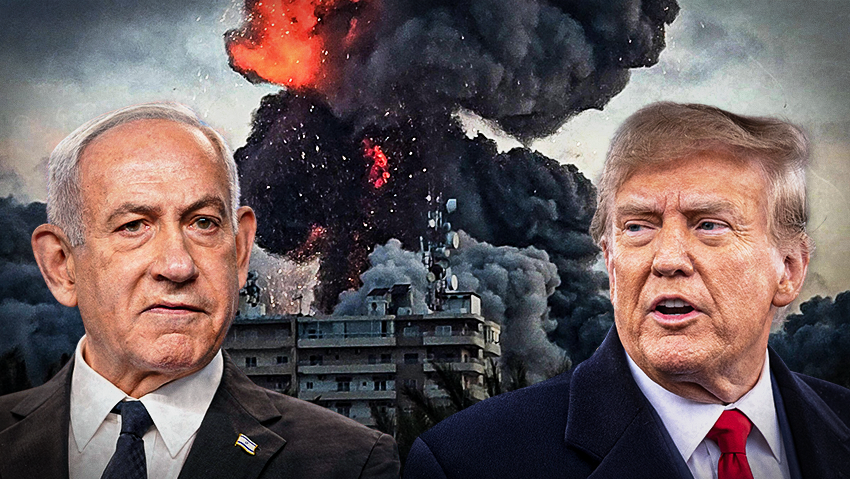
(Photo: Lev Radin/Shutterstock, REUTERS/Nathan Howard, KAWANT HAJU/AFP)
According to the overnight announcement, the sides agreed to advance the creation of “pilot zones” in which the Lebanese army would take control and Hezbollah would have no presence. A senior Israeli official said the Lebanese army is expected to enter areas that were not captured by the IDF, deploy there and work to remove Hezbollah and dismantle its infrastructure.
But senior Israeli officials say Hezbollah will ultimately try to rearm. They also cast doubt on Lebanon’s ability to enforce the ceasefire, even if it wants to. One Israeli official pointed to Trump’s comments the previous evening, saying: “Trump said that a ceasefire in the Middle East means there is less shooting. This could blow up within a day or two.”
Katz, who opposed the plan in the Cabinet, praised it in a statement he issued Thursday morning, while attacking opposition lawmakers.
“They should apologize and acknowledge the major achievement so far in Lebanon, both on the ground and at the diplomatic level, thanks to bold and correct decisions led by the political echelon under Prime Minister Benjamin Netanyahu,” Katz said.
Katz said the declaration of principles between Israel and the Lebanese government in Washington includes a stated goal of disarming Hezbollah throughout Lebanon and condemning Iranian involvement in Lebanon and the region.
He said the ceasefire is conditioned on the prior removal of Hezbollah terrorists from the entire area south of the Litani and the creation of a demilitarized zone, while the IDF continues at this stage its fire and activity on the ground. He also said the IDF would remain in the security zone in Lebanon up to the so-called "yellow line" ceasefire demarcation, including the Beaufort sector, without the return of the population; continue dismantling terrorist infrastructure on the ground; and maintain freedom of action, with American backing, to strike in Beirut in response to fire at Israeli communities or Israeli territory.
For IDF forces, such an announcement is complex. Troops from the 36th Division, which captured the Beaufort Ridge, are there to destroy strategic Hezbollah assets, including weapons depots and extensive underground infrastructure built over years under Iranian sponsorship. Hezbollah had built massive underground systems, and the IDF aims to deny the group access to them. That was also one of the goals of taking Beaufort. According to commanders in the field, the clearing operation will continue for weeks.
The focus is an area near the city of Nabatieh, considered a significant Hezbollah center of gravity in southern Lebanon. The IDF has issued a series of evacuation notices for villages in the area and carried out strikes against Hezbollah infrastructure, so it is still unclear what will happen to the operation to clear the area on the ground. According to a military source, IDF forces with armored vehicles, tanks and other heavy equipment, together with supply convoys, are preparing to remain there in order to “finish the job.”
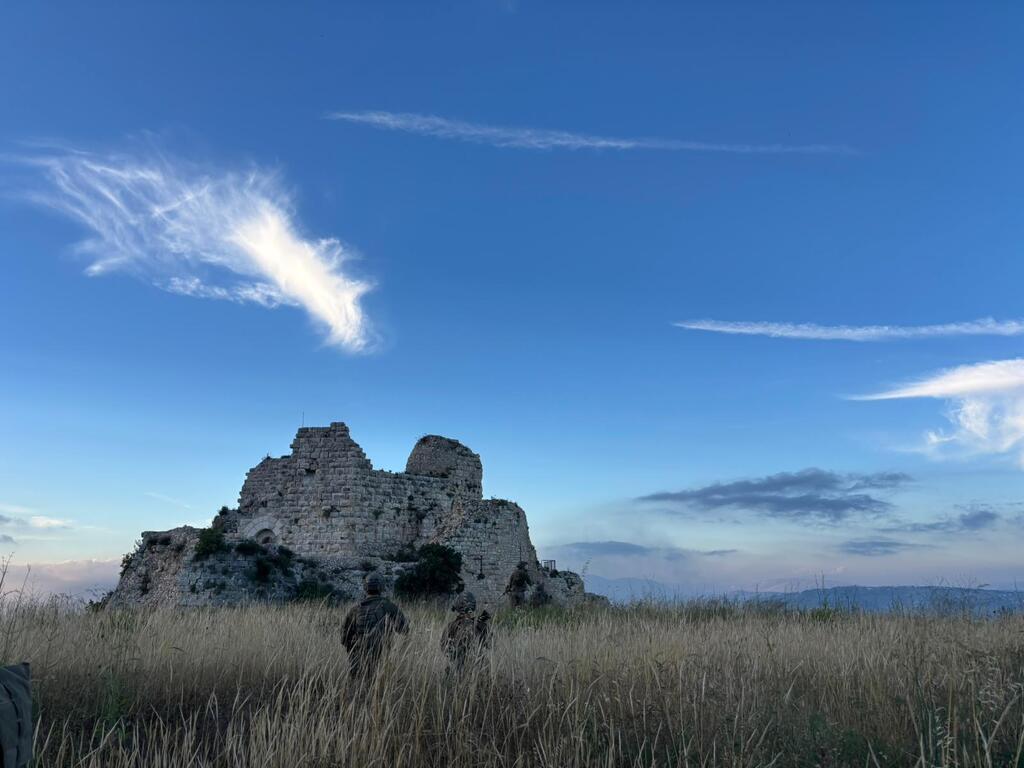
(Photo: IDF)
Israel’s ambassador to the United States, Yechiel Leiter, said there would be ups and downs at first, but that the direction was positive. He said that for the first time, Israel, Lebanon and the United States had reached an understanding aimed at removing Iran from the area. Leiter also said no place in Lebanon would be immune from an Israeli response if Hezbollah violated the ceasefire.
The Israeli ambassador in Washington added that Hezbollah terrorists must move north and that southern Lebanon must be free of Hezbollah influence.
“We hope this will be implemented immediately,” he said. “There may be difficulties at the beginning, but we are determined, together with Lebanon, to implement this ceasefire.”
Ben-Gvir attacked the overnight announcement, saying: “The ceasefire with Lebanon is a grave mistake and pipe dreams by advisers who are dragging the prime minister into wrong decisions. Hezbollah will not leave the area south of the Litani, and the Lebanese army has no way to force it to evacuate. In practice, Hezbollah will only grow stronger, and instead of defeating it, Israel is accepting its very existence.”
“There are moments when you have to know how to say ‘no’ even to the president of the United States,” he added. “When that is not done, we will meet Hezbollah next time when it is stronger and much more dangerous. I request a cabinet discussion and a vote on the decision to stop the fire.”
The senior Israeli official said the government is looking not only at the military maneuver, but also at the diplomatic one. Israel’s position, according to the official, is that if the Lebanese army fails to remove Hezbollah from southern Lebanon, it will be easier for Israel to argue that it must do so itself.