

After rejecting an invitation from Iran to visit the country, Lebanon’s foreign minister launched sharp criticism of Tehran, acknowledged that Hezbollah refuses to hand over its weapons and said Lebanon has received warnings that Israel is preparing a broad military operation.
Speaking to Al Jazeera, Foreign Minister Youssef Rajji said Lebanon is seeking to distance itself from Iranian influence and is strengthening its diplomatic ties to preserve neutrality and protect itself from any Israeli attack. He said Lebanon received warnings from Arab and international sources that Israel is preparing for wide-scale military action against the country.
“Meetings of the mechanism committee do not mean we are negotiating with Israel,” Rajji stressed. “We are seeking a return to the armistice agreement with Israel, and a peace agreement is far off at this stage.”
Officials in Beirut say 80% of Hezbollah’s weapons south of the Litani River have been dismantled, but Rajji acknowledged that the group continues to refuse full disarmament. “The state is holding talks with Hezbollah to persuade it to hand over its weapons, but it refuses,” he said.
Against the backdrop of Hezbollah’s efforts to rebuild its capabilities after the extensive destruction Lebanon suffered following the group’s entry into the war, Rajji said Hezbollah’s weapons “proved ineffective in supporting Gaza and in defending Lebanon, and led to Israeli occupation.”
Rajji confirmed he had declined an invitation from Iran’s foreign minister to visit Tehran. “Iran’s role in Lebanon and the region is very negative, and Tehran’s policy is one of the sources of instability,” he said. “We have a problem with Iran, and we are open to dialogue on the condition that it stops interfering in our internal affairs. Iran must stop funding an illegitimate organization in Lebanon.”
Amid fears of escalation, contacts between the sides have continued. A representative of Israel’s National Security Council and a Lebanese government representative recently met in the southern Lebanese town of Naqoura as part of ceasefire monitoring efforts. On Friday, Lebanese President Joseph Aoun said the return of “prisoners held by Israel” is a top priority in negotiations and that contacts are underway to secure their release as soon as possible.
Decisive weeks ahead
The Hezbollah-affiliated Lebanese newspaper Al-Akhbar reported that the period through the end of the year, roughly the next two weeks, will be decisive both domestically and internationally, particularly in light of a U.S. deadline for Hezbollah to disarm by the end of the month.

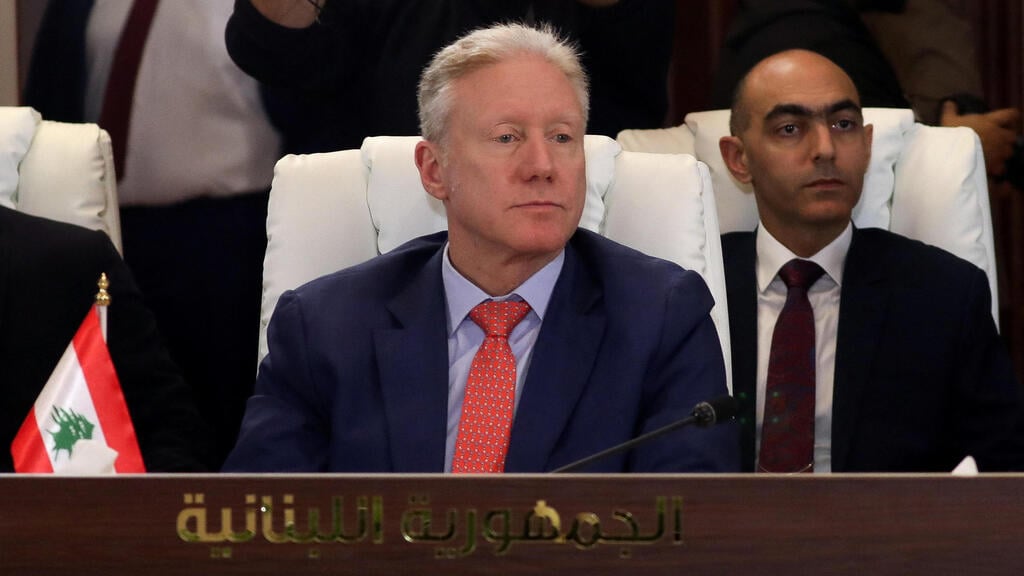
Decisive weeks in the land of the cedars
(Photo: AP Photo/Bilal Hussein)
The paper said a series of significant meetings related to Lebanon will take place in the coming weeks amid concern over what may happen next year, given assessments that Israel is planning a wide-scale strike. Next week, Lebanese army commander Rodolphe Haykal is expected to visit Paris to discuss the army’s needs. U.S. special envoy to Lebanon Morgan Ortagus is also due to arrive in Paris, where she will meet with the French envoy to Lebanon, who recently returned from Beirut, and with a Middle East adviser to French President Emmanuel Macron, following visits to Israel and Lebanon.
According to Al-Akhbar, sources familiar with the talks said the U.S. position on Lebanon remains unclear. While American envoys tell Lebanese officials that Washington is preventing Israel from escalating, the sources said there are “signs of plans that could turn the southern front into a potential flashpoint at any moment.”
Israeli strikes continue
As discussions continue and fears of escalation grow in Lebanon, Israel has continued operations against Hezbollah’s attempts to rebuild its capabilities. For the second time this week, the Israeli military struck a training compound used by Hezbollah’s Radwan force. Earlier in the week, another Hezbollah training site was targeted.
As part of the training at the camp, terrorists carried out live-fire drills and additional weapons training to plan and carry out attacks against Israeli forces and civilians, the Israeli military said. It added that, guided by military intelligence, additional Hezbollah military infrastructure was struck in several areas of southern Lebanon. The military said conducting training and building terrorist infrastructure aimed at Israel violates understandings between Israel and Lebanon and poses a threat to Israel.
First published: 18:39, 12.12.25