


Israel ranked at the bottom of a global nation branding index for a second straight year, recording its sharpest decline since the survey was launched nearly two decades ago, according to results released Thursday by the BrandIL initiative.
The 2025 Nation Brands Index showed Israel falling 6.1%, the steepest single-year drop in the index’s history. The Palestinian Authority, included in the index for the first time, ranked last overall, below Israel, though researchers said its inclusion was intended for comparative purposes and to track its international standing.
BrandIL said Israel’s image has deteriorated steadily since the war in Gaza. Israel ranked 44th out of 46 countries in 2022 and 46th out of 60 in 2023, before again finishing at the bottom this year.
Unlike last year, the report said, criticism in the current index extended beyond Israeli government policy. Israeli citizens were increasingly perceived abroad as directly responsible for events in Gaza and, in many countries, viewed as persona non grata, or unwelcome figures.
The survey found that members of Generation Z, particularly in Western countries, increasingly see Israel as a colonial, toxic state disconnected from liberal values. Researchers said the distinction between government policy and the diversity of views among Israeli citizens has eroded significantly.
According to the index, the “Made in Israel” brand has suffered direct harm, reinforcing reports of boycotts of Israeli goods and services. BrandIL warned of broader economic risks, including declining global trust, reduced foreign investment, damage to tourism, pressure on Israel’s credit rating and erosion of its standing as a legitimate member of the international community.

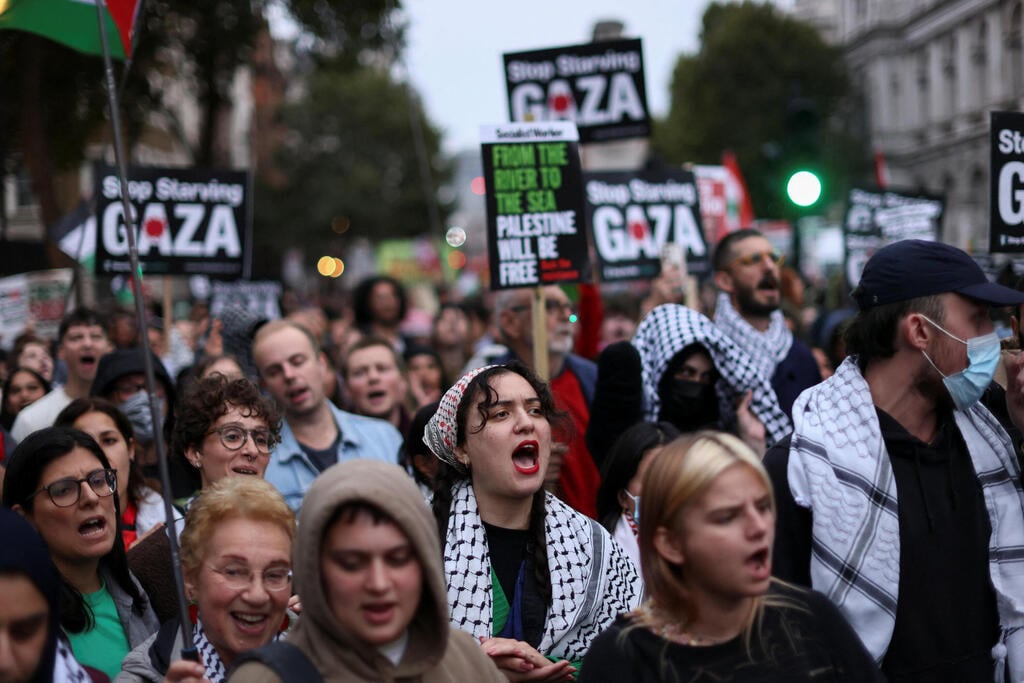
Pro-Palestinian protest in Pireus, Greece
(Photo: Angelos TZORTZINIS / AFP)
The findings highlight a widening gap between Israel’s international image and its underlying economic and social indicators. BrandIL noted that Israel ranks among the world’s top 10 countries in objective measures such as gross domestic product per capita, life expectancy and education levels, yet is positioned in the index alongside countries considered part of the global periphery. The report warned that such a mismatch could gradually undermine Israel’s economic and technological achievements.
By contrast, Saudi Arabia recorded the largest improvement in the rankings, rising to 42nd place. BrandIL said the shift reflects growing international legitimacy for the kingdom, even as Israel moves in the opposite direction. The report cited the diplomatic contrast as Donald Trump hosted Saudi Crown Prince Mohammed bin Salman in Washington with full honors.
The index also showed continued weakening of the brand perception of the United States, Israel’s closest ally, a trend BrandIL said began with the return of the Trump administration earlier this year.
The countries that favor Israel
The 2025 NBI index indicates that global criticism of Israel has expanded beyond the government and the IDF and is now directed at the Israeli public as a whole. The result is a decline in trust and a sharp rise in rejection and hostility worldwide.
The new currency of states is the “nation brand,” and sovereignty over it is measured through image and trust. In the 2025 NBI, Israel ranks last (50th) in three categories: human sentiment (compassion, sympathy and trust) — Israelis themselves are perceived as “toxic,” leading to a decline in goodwill and an increase in rejection; Generation Z — ages 18–24 — who view Israel as a colonial and illegitimate state and have turned it into a target of global “canceling”; and Israeli exports and products, where a drop in scores reflects a deepening negative sentiment toward “Made in Israel,” amounting to a de facto boycott.
Still, the research points to one bright spot: in science and technology, Israel ranks 36th. This area could serve as a basis for shifting negative perceptions of Israel, drawing on its image as a leading technological nation.
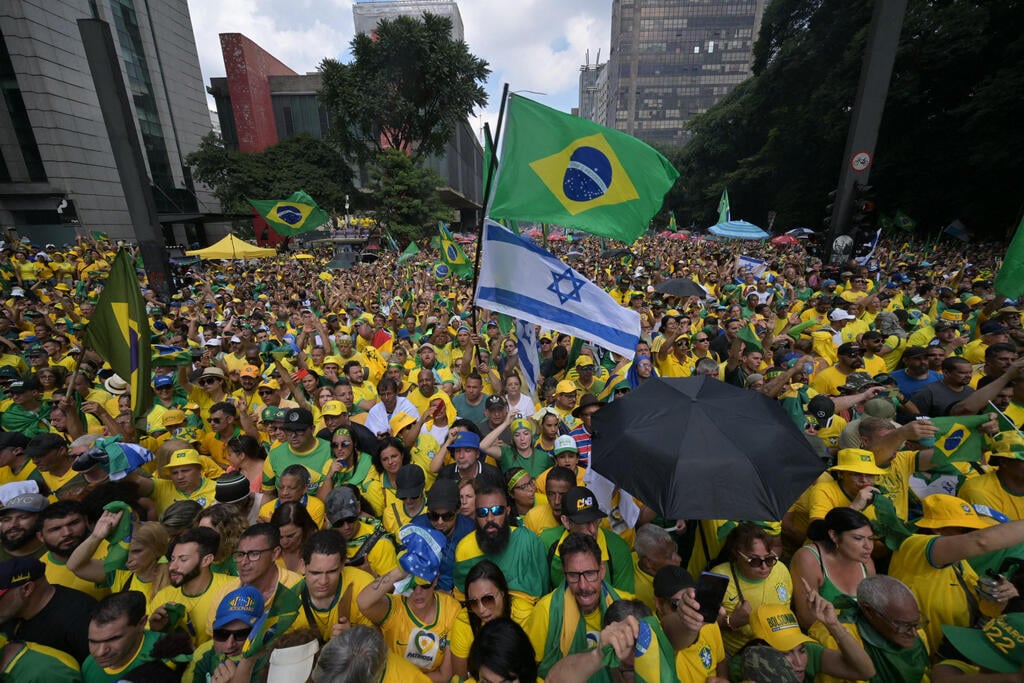
Supporters of Brazilian ex-president Jair Bolsonaro hoist Brazilian and Israeli flags during São Paulo rally, February 2024
(Photo: NELSON ALMEIDA / AFP)
The NBI ranking also examined how much countries like Israelis. The findings show that Brazil (60.9 points), the United States (60) and India (59.3) are the most favorable toward Israelis. At the bottom of the list in this category is Japan (39.2), followed by Sweden (44.9) and Poland (45.8). Slightly above them are Britain, France, South Korea and Italy (45.9).
The full ranking
This is the Global Nation Brands Index list, from highest-ranked to lowest: Japan, Germany, Canada, Italy, Switzerland, Britain, Australia, France, Sweden, Spain, Norway, the Netherlands, Austria, the United States, New Zealand, Scotland, Finland, Belgium, Ireland, Greece, Portugal, Iceland, South Korea, Singapore, Wales, Northern Ireland, Brazil, Poland, China, Argentina, the Czech Republic, Taiwan, Mexico, Turkey, Chile, Slovenia, Bulgaria, Romania, Estonia, Latvia, the Philippines, Saudi Arabia, Lithuania, India, Kenya, Russia, Ukraine, Namibia, Israel and the Palestinian Authority.
The index has been published for the 20th consecutive year and includes countries representing influential economies, different continents, distinct geopolitical impact and relevance to the global agenda.
The index measures attitudes and deep-rooted perceptions of countries across six categories that make up the nation brand: governance and policy — security, political stability, fairness and transparency; culture — cultural depth and richness in the arts, sports and heritage; people and society — friendliness, industriousness and openness of residents, the level of trust in them and willingness to employ them; exports — product quality and scientific and technological innovation; immigration and investment — willingness to move to a country to live or study and assessments of investment attractiveness; and tourism — desire to visit the country, its cities and its architectural and natural sites.
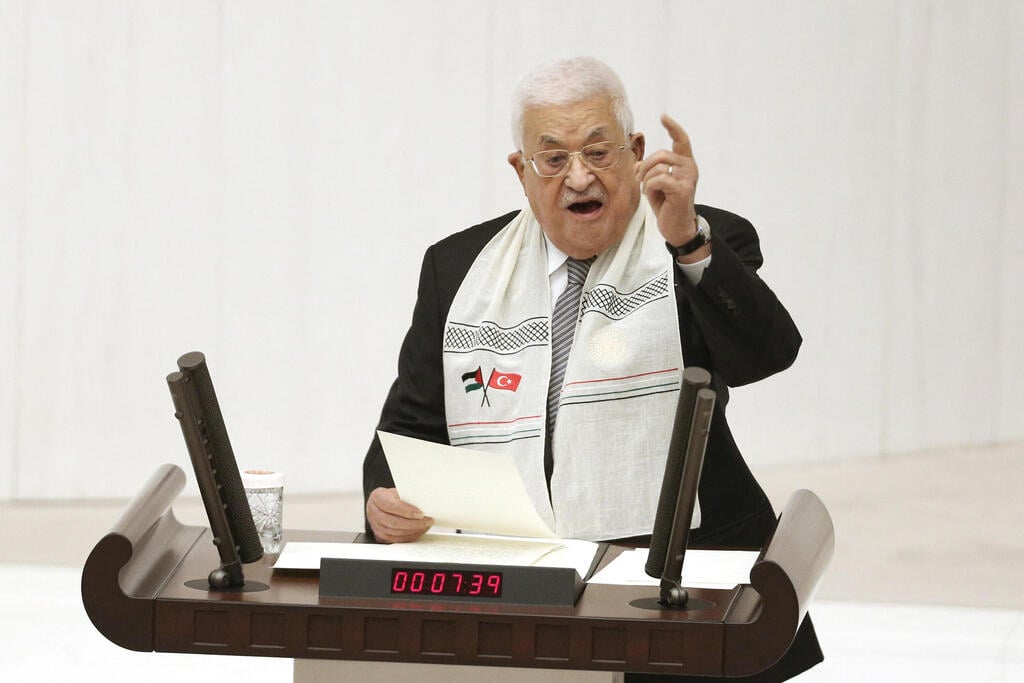
Palestinian Authority Chairman Mahmoud Abbas
(Photo: REUTERS/Cagla Gurdogan)
The study was conducted in August–September 2025 and is the most up-to-date assessment of Israel’s standing, two years after the war in Gaza. It surveyed 40,000 respondents from 20 countries that together account for about 70% of the world’s population.
Last year, Israel was included for the first time as a full participant in the global NBI index as part of a partnership with BrandIL, which acquired full rights to the research data covering all ranked countries. The data enable the creation of a comprehensive and up-to-date map of countries’ global standing, their attitudes toward Israel, trends, opportunities and challenges. The Palestinian Authority was also added to the index, despite not being defined as a state, in order to collect in-depth, current data and track its international standing.