

This was supposed to be a special, energizing week for Netanyahu’s election campaign. Several flashy campaigns had missed their mark over the previous month, their origins unclear but their beneficiary obvious: the false quote attributed to a senior Revolutionary Guards official about an Iranian nuclear weapon, the Turkish invasion of Syria that never happened, the accompanying stories about assassins at the doorstep surrounding the real threat to Yair Netanyahu, and a series of attempts to smear Gadi Eisenkot.
Now the moment had arrived when all the material collected over nearly three years was supposed to come together: Netanyahu’s 55-page document, the book and television series “The Generals’ Revolt,” orchestrated appearances on Channel 14 and a flood of document excerpts, some of them genuine, though even those had undergone surgical treatment.
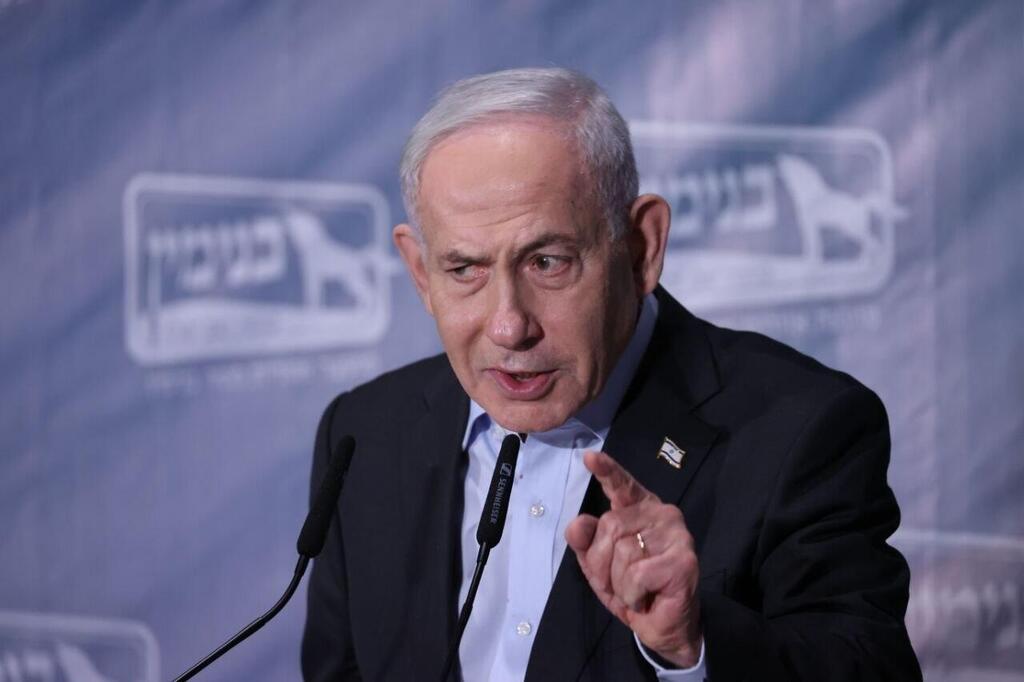
The message was supposed to move up a level. No longer merely: the military and Shin Bet were wrong, negligent and believed Hamas was deterred; they were wrong and misled Netanyahu. From now on: they knew, and nevertheless deliberately decided not to wake Netanyahu because they feared he would order an attack and cause a miscalculation. In other words, not failure but intent; not a misconception but a conspiracy and revolt.
But someone in the campaign made a miscalculation of his own, misjudging the public response to Sara Netanyahu’s remarks about Yair Golan and how the attempt to contain the damage, prepare for a defamation suit and distance her from the word “betrayal” would expose the contradiction between her story and her husband’s. At the same time, instead of debating what Netanyahu would have done had he been awakened, the discussion focused on what he actually did from the moment he was awakened.
“There’s a name for that,” said a security official with a cynical smile. He is deeply familiar with the workings of ministers’ and prime ministers’ offices and furious over the blood libels against his colleagues. “It’s called a miscalculation,” he said, using a word from the Likud campaign.
The ‘generals’ revolt’ enters the campaign
Already about a month ago, someone warned civil society figures that the blood-libel campaign about “betrayal” and “revolt,” centered on responsibility for October 7, was about to reignite with enormous force ahead of the election. Its flagship is Erez Tadmor’s “The Generals’ Revolt,” a book turned into a four-part Channel 14 series in which Tadmor is the author, presenter, interviewer, interviewee and expert validating his own conclusions.
Data from the Movement for Public Journalism show that since publication of the book and the television series’ debut, someone has been making an enormous effort to inject the term “generals’ revolt” deep, deep into all our minds, and not merely as promotional content. On Channel 14, the phrase was uttered 267 times over 46 broadcast days. Some of that total comes from broadcasts of the series, but, for example, the term was used 131 times in panels and interviews, independently of it.
That is still the simple figure, which can be linked to the series or the book. The point is that on channels and stations that amplify the Netanyahu machine, there has been a curious increase of many hundreds of percent in the use of “general” or “generals” outside the phrase “generals’ revolt,” while other channels saw no change. Netanyahu uses this manipulation himself: instead of referring to “the major generals on the General Staff” in an interview this week, he suddenly speaks of the IDF’s “generals,” an expression he had never used.
The word “coup” also appeared in 71 segments. People monitoring the amplification networks of Netanyahu’s propaganda pointed to a curious phenomenon. The label was attached to every disagreement between the political and professional leadership: the Shin Bet chief, police commissioner, Supreme Court, Coordinator of Government Activities in the Territories, an appointment or a leak.
If an officer objects, it is revolt. If he obeys and fails, it is the rebels’ misconception. If he expresses his opinion, he should be fired, perhaps tried as well, preferably live on “The Patriots.” A theory that every outcome confirms is not research. It is religious faith with a promotional department.
The word “generals,” which suddenly appeared in Netanyahu’s interviews this week, was also carefully chosen. In the IDF, the rank is called aluf. “Generals” imports the image of a South American junta surrounding the palace with tanks. It is not a rank but a stage direction.
Netanyahu rejects ‘betrayal’ but keeps the story
Netanyahu approached the story in stages. In October 2023, he published and then deleted a post stating that “under no circumstances and at no stage” had he been warned and that the heads of the security establishment had said Hamas was deterred. Later came the “thousand SIM cards,” the question of who ordered the Air Force not to attack, and the claim that he was not awakened. He was careful to leave himself an escape route: to ask, amplify and share, without saying the dirty word himself.
On February 9, 2026, almost all room for denial disappeared. Netanyahu did not settle for a like or a hint. He copied into his own Twitter account Tadmor’s assertion that “Ronen Bar decided that Benjamin Netanyahu was an illegitimate prime minister... and chose to appoint himself the de facto prime minister on the night of the massacre.” This is not a discussion of negligence. It is an indictment for revolt that the prime minister chose to distribute under his own name.
On August 31, 2026, Netanyahu himself said that generals had decided “not to anger Hamas, not to wake me and not to strike preemptively.” Then, when the uproar over Sara erupted, he added verbal body armor: “Failure, not betrayal.”
But if the heads of the security establishment understood that an attack was about to begin and deliberately concealed that from the prime minister to prevent him from acting, that is not a good-faith failure but revolt and betrayal of the worst kind. And so, in his predicament as he tries to defend his wife, Netanyahu rejects the word while preserving the story.
Sara Netanyahu creates the contradiction
In an interview with Channel 14, Sara Netanyahu said of Yair Golan: “You claim you were fighting on October 7. You were already there early in the morning, already dressed and ready, at a very, very early hour, when others did not know, such as the prime minister.”
The attempt, born after Golan’s warning letter, to argue that Sara was merely complimenting his neatly pressed uniform and criticizing those who failed to update her husband is, with respect, bullshit that contradicts the syntax. “You claim” casts doubt on Golan having gone out to fight and saved many people that cursed morning; “already” and “dressed and ready” depict preparation that preceded the event; “when others did not know” attributes to him an informational advantage; and “such as the prime minister” explains why that advantage is supposed to incriminate him. The insinuation is not hiding between the lines. It is the line.

Benjamin and Sara Netanyahu
(Photo: GPO)
Netanyahu received his first call just as the firing began, perhaps a second earlier. If Golan received, before 6:29 a.m., a concrete warning of a day of fighting, widespread fire or a raid, the meaning Golan attributes to Sara Netanyahu’s remarks in his warning letter is that she accused him of being part of a conspiracy that, at minimum, possessed advance intelligence about the attack that was concealed from the prime minister.
Because she did not deny the theory of betrayal from within, her remarks can also be interpreted as connected to an even worse accusation. Sara Netanyahu says she accused him of nothing, perhaps of using too much starch.
To save Sara, the information has to be innocent. To save Benjamin, that same information must be serious enough to wake a prime minister and send an army into action. Both versions cannot be true at the same time.
Three conspiracy theories around October 7
All the conspiracy theories surrounding October 7 are branches of one false and malicious blood libel: not a systemic collapse but a plot to overthrow Netanyahu or at least take away his powers.
The first conspiracy is called “betrayal from within”: Israelis knew, opened a gate or helped Hamas. The collapse of the blood libel about Brothers in Arms and the spy from the south, alongside other false allegations, makes this theory very difficult to use, certainly in a Likud campaign.
The second is that “refusal to serve opened the gate”: Yahya Sinwar saw an army unfit for combat and decided to attack. The problem is that Hamas military intelligence concluded in July 2023 precisely the opposite: that the protest had not harmed readiness, that the chance of that happening was negligible, and that it strongly recommended not attacking because Israel would respond with enormous force.
Ultimately, Netanyahu himself apparently became convinced that this theory harmed him, because he had been warned about the consequences of the coup against the system of government and had not acted. In February this year, Netanyahu published what he described as the “documented version” he submitted to the state comptroller.
According to Netanyahu, the state comptroller asked him: “Did Hamas choose the timing of the October 7 attack because of the internal situation in Israel?” Netanyahu answered that “subsequent intelligence demonstrates unequivocally that the answer is negative and provides a detailed explanation of why Hamas chose the timing of the raid.” The rest of the page is blacked out.

Netanyahu’s document says later intelligence showed Hamas did not choose October 7 because of Israel’s internal political crisis
But the rest of the blacked-out page contains nothing secret. It does contain something that could embarrass Netanyahu further, which is why he and his people both use that document and conceal it. Unidentified actors continue to conceal many other documents, including a major effort currently underway to remove documents of dramatic importance to understanding the war from public databases.
The third conspiracy is the “generals’ revolt”: the system did not join forces with Hamas, God forbid; it merely decided to run the country in Netanyahu’s place and keep him in the dark about the final night before the massacre. This is the most convenient version. It allows Netanyahu to transform himself from the man who headed the system into its victim, a superhero who would have saved Israel if only someone had woken him, tugged at the hem of his phone.
How an article became a ‘doctrine’
For the third theory, the propaganda machine needed to prove three components: first, that the IDF and Shin Bet knew something bad was about to happen, or at least concluded there was a reasonable chance of it; second, that the intelligence was not passed from the IDF and Shin Bet to the prime minister; and third, most importantly, that the information was deliberately withheld.
And here comes a simple intellectual trick: take a genuine article, quote a few passages from it using quotation marks, and then use the credibility of those quotation marks to smuggle in facts that were never written and conclusions the article never reached.
That is how an article published in Maarachot in 2019 by the late Brig. Gen. Amit Saar, later head of Military Intelligence’s Research Division, about unintended escalation in past cases became the “doctrine of maximum containment.” It is doubtful that the article was a bestseller on the scale of Harry Potter when it appeared. Forgoing the surprise advantage of an Israeli strike became consent to absorb a Hamas surprise attack, and military thinking from 2019 became, without a document or testimony, IDF strategy and the secret motive of Ronen Bar and Herzi Halevi on the night of October 7.
This is the conceptual sausage machine of the two creators, Erez Tadmor and Jonathan Dahoah-Halevi. The latter formerly served as an officer in the IDF Spokesperson’s Unit, has lived in Canada since 2005 and works for a right-wing institute close to Netanyahu. He is another figure whom the pro-Netanyahu propaganda apparatus uses, along with his publications, as research validation: feed an Amit Saar text in one end, and a “deep-state government” comes out the other.
What the article actually said
Saar’s full article examined the Second Lebanon War and Operation Protective Edge and asked how two sides that do not want an all-out war can slide into one because of actions, reactions and misinterpretations. Its purpose was to understand how the security establishment could carry out the political leadership’s objectives without an unintended escalation dictating a different outcome.
Saar did write that Israeli actions and statements by senior officials, including Netanyahu’s statements, contributed to the dynamics of 2014. But he did not pass judgment on them. Rather, he placed them in a broader context: hardship in Gaza, the salary crisis, Operation Brother’s Keeper, the arrest of prisoners released in the Shalit deal, rocket fire, the attack tunnel and incorrect assessments by both sides.
This is certainly not an indictment of Netanyahu, and still less an instruction to rebel against him four years later. Netanyahu actually valued Saar and consulted him on sensitive issues even after Saar retired because of cancer. It is a shame that those assisting Netanyahu’s propaganda exploit Saar’s death to attribute to him things he never said and the creation of an ideological framework for a revolt with horrific consequences, if not worse.
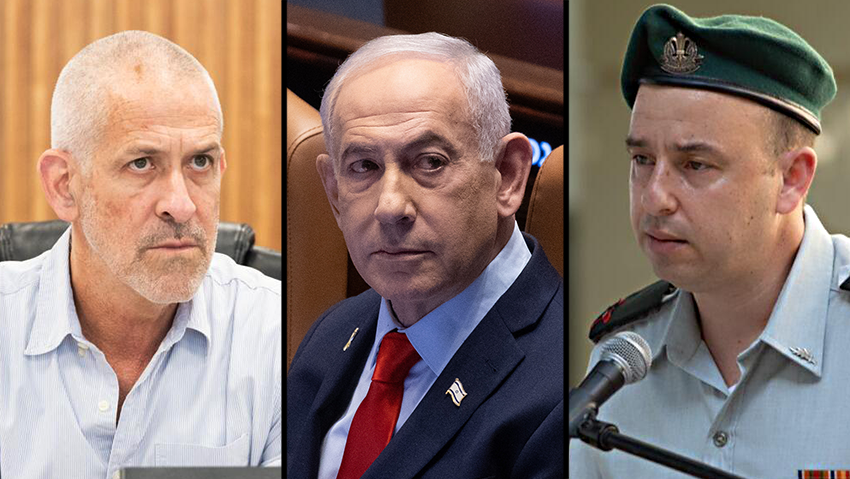
Ronen Bar, Benjamin Netanyahu and Amit Saar
(Photo: Alex Kolomoisky, IDF Spokesperson’s Unit)
Dahoah-Halevi gave his distortion of the article explicit wording. After quoting Saar, he wrote: “Saar’s words imply that it is of paramount importance to adhere to implementing a policy of maximum containment intended to prevent unintended escalation ‘even at the expense of surprise,’ meaning... a military surprise by the enemy, which may take the form of an attack against Israel.”
There is only one small problem: the phrase “maximum containment” does not appear in the article. Dahoah-Halevi invented a name for a doctrine Saar supposedly developed and then began arguing with it.
Elsewhere in his article, Saar discusses intelligence with a short shelf life, when pressure arises to use a capability before the enemy disappears. He therefore proposes building capabilities that allow flexibility in the timing of their use, even at the cost of giving up the surprise effect of the Israeli strike. Who is doing the surprising here? Israel.
Dahoah-Halevi switched the actor and turned “the surprise of our strike” into “a Hamas surprise attack” to reach October 7. And so, more and more distortions and lies are attributed to Saar by Dahoah-Halevi and Tadmor to connect what does not connect at all to that fateful night.
They also turn the complimentary introduction by Maj. Gen. Amir Baram, Maarachot’s editor-in-chief, into a major general’s endorsement of the doctrine. But the publication itself states that the views are the author’s personal opinions. An introduction became a seal of approval, a professional article became binding strategy, and Saar’s promotion became proof that the virus had spread.
The missing chain of evidence
Saar’s article contains no recommendation to deceive a prime minister, no instruction to conceal information and no permission to make decisions in place of elected officials. The connection is not in Saar’s work; Tadmor makes it himself and then blames Saar for the result.
From there, the chain of proof is short: Saar wrote an article; Saar was promoted; therefore the article became doctrine; therefore Bar and Halevi adopted it; therefore they concealed information from Netanyahu; and therefore the “generals’ revolt” occurred.
What is missing? Only a document adopting it, an order, minutes, testimony that they read the article, evidence that they relied on it, or evidence that fear of Netanyahu was the reason for action or inaction that night. In other words, roughly the entire chain between the article and the conclusion is missing.
That is why the exercise is effective: some of the quotations are accurate, and the manipulation usually begins after the quotation marks close. Saar wrote “containment,” and “maximum containment” was born. Saar wrote about the surprise effect of an Israeli strike, and a Hamas surprise attack was born. Baram wrote an introduction, and “approval” was born. Saar was promoted, and a doctrine was born. Bar and Halevi did not wake Netanyahu, and a motive for which no evidence has been presented was born.
A question is not evidence; five conspiratorial questions are not five pieces of evidence either. Between the end of the quotation marks and the beginning of the conspiracy, there is not even a pedestrian crossing.
The intelligence did reach Netanyahu’s office
The facts about the reporting channels also do not fit the story of deliberate exclusion. From around 2 a.m. onward, the prime minister’s intelligence officer, a colonel responsible for routing classified material from the security establishment to Netanyahu and back, received both the worrying signs and the reassuring assessments.
At around 3:50 a.m., the duty officer in the Research Division’s operations room called to make sure he was awake and had seen the material. In parallel, the information reached the National Security Council operations room. A night shift is there for urgent cases, say, cases like these. It, too, is in the Prime Minister’s Office and answers to him.
This does not prove that Netanyahu himself was informed, nor does it absolve the prime minister’s intelligence officer, the National Security Council or the military secretariat of the question of whether the military secretary himself should have been awakened so that the only person authorized to wake Netanyahu could consider the matter (although the chances of Netanyahu issuing a contrary order in the face of such an assessment by the senior security leadership were extremely slim).
But these details prove unequivocally that the element of malice in the blood libel is a despicable falsehood, and that the security establishment did not conceal the material from Netanyahu’s office: it sent it there through two channels, and it stopped inside the office. If it wanted to conceal the information, why take the risk of sending it twice anyway?
Who was supposed to wake the prime minister?
Tadmor argued that the “proper channel” was a direct call from the Shin Bet chief or the chief of staff to Netanyahu, and that this had happened “countless times.” Really? Let him produce one example.
In conversations with 15 senior figures who had served as heads of organizations, military secretaries, prime ministers or in prime ministers’ offices, all described precisely the opposite. After the Bus 300 affair, the practice was established that every security conversation with the prime minister goes through the military secretary and takes place with his knowledge and in his presence, except for personal matters.
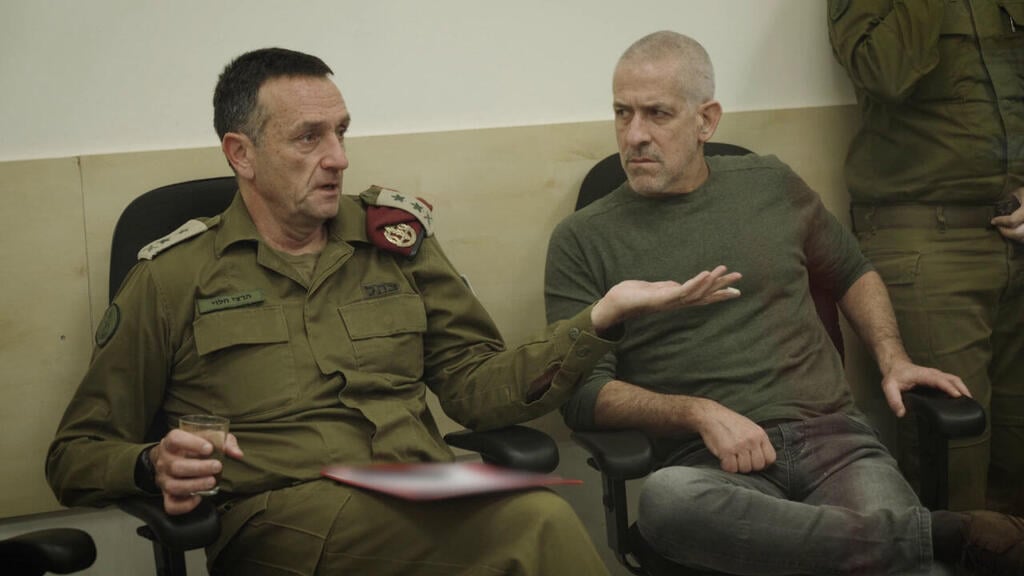
Herzi Halevi and Ronen Bar
(Photo: IDF)
This was both to prevent another dispute of “he ordered me” versus “I never said that,” and to prevent parallel, disconnected channels, differing assessments of the situation and contradictory orders.
One former military secretary said: “Everything went through me. I and only I would decide whether and when to wake him.” Another put it simply: “No head of an organization calls a prime minister directly... there is a military secretary; that’s who he calls.”
It is possible and necessary to ask why the military secretary was not approached earlier and more forcefully. But Tadmor and other mouthpieces echoing him invent a channel that does not exist, ignore the channels that do exist, turn a colonel into a “low-ranking sentry,” and then convict the system for failing to use the channel they invented.
What Netanyahu actually did after 6:29 a.m.
Once an intelligence assessment has been reached, one that proved wrong in retrospect, should the prime minister be approached to validate it? A review of cases over the past 20 years in which the prime minister was and was not awakened shows that this is certainly not the practice.
“What, is the prime minister a department head in Military Intelligence?” asked one former senior official. A prime minister is not supposed to receive every raw fragment of intelligence for review. He is awakened when the information requires a decision, the use of force or an exceptional directive.
The terrible failure was that the system did not understand that this was the situation, and everyone dealing with the matter agreed that it was not immediate and that there probably was no issue at all. This is also why S., Bibi’s intelligence officer, was not particularly alarmed when he read the information, and why Netanyahu did not take S. to task over how he acted and continued working with him for many more years.
The affair involving suspicions against the chief of staff over shifting the time of the “red phone” call by about 11 minutes is also clearer now. If the call in which Netanyahu is already giving instructions is presented as the first call, the result is a prime minister who wakes up and immediately goes “from zero to 100.”
From there, it is a short step to the claim that had he been awakened at 3 a.m., he would have prevented everything. The campaign wanted to discuss what he would have done in an alternative reality, and Netanyahu promised on “The Patriots” that he would immediately have activated the Air Force and the chief of staff, closed the borders and so on.
But his miscalculation brought the public back to asking what he actually did after 6:29 a.m., and whether, once he really had been awakened, he acted as he said he would have acted had he been awakened.
In practice, until the first security consultation he held close to 10 a.m., Netanyahu did very little, if anything, and even then accepted the recommendations of the military and the defense minister.
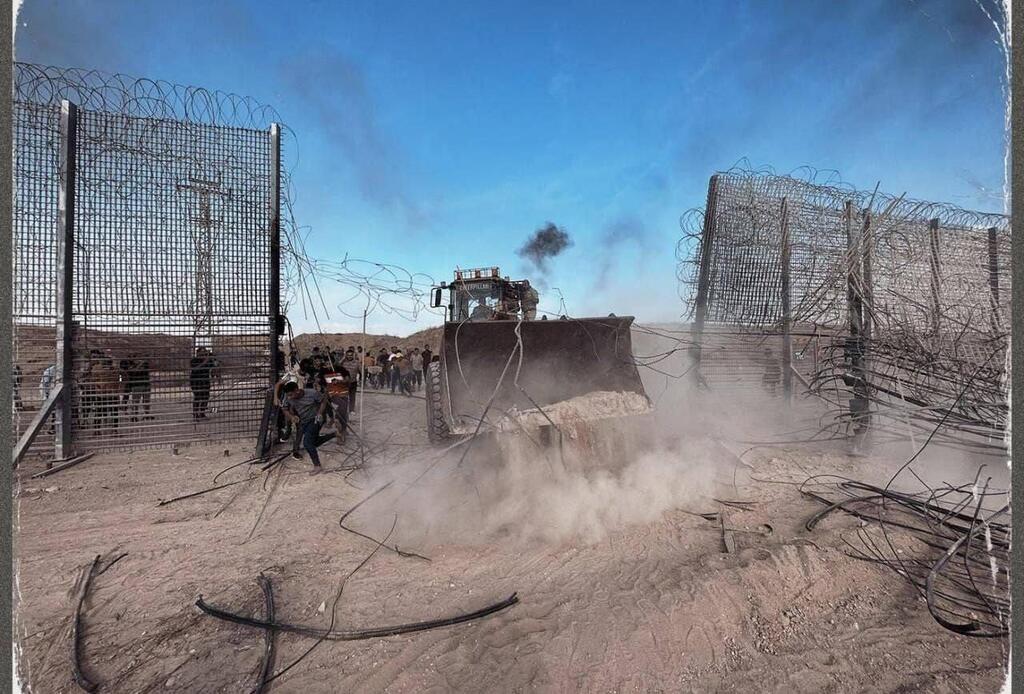
Only a state commission of inquiry will reveal the truth behind the Prime Minister’s Office statement that he set out only an hour later because of the need “to prepare the convoy,” why the time of the trip was blacked out on national security grounds in an earlier version, what time Netanyahu actually arrived at the Kirya and with whom he spoke during the three and a half hours that were surely, for him too, the most dramatic of his life. No less important is whom he did not speak with.
The two stories collide
For Sara Netanyahu to defend herself against Golan’s possible lawsuit, she must say that she attributed nothing serious to him: perhaps a friend told him about tensions, perhaps he heard something small, perhaps he simply got up with the sirens. If that is the truth, then the information held by the military was not a definitive warning maliciously concealed, but a collection of signs that were interpreted catastrophically and incorrectly.
To save Benjamin Netanyahu’s story, the information must have been clear and operational, the security chiefs must have known what was about to happen or at least been seriously concerned, and they must have decided not to wake him because they feared he would act.
But then Sara cannot claim that she was innocently talking about uniforms. She attributed to Golan advance knowledge of a serious event that was concealed from the prime minister. That could cost her a great deal of money.
To save Sara, Benjamin must admit there was no revolt. To save the revolt, Sara must admit that this is precisely what she accused Yair Golan of.
The machine sought to turn commanders’ fear of miscalculation into a motive for revolt, and professional failure into a plot. This week, it made a miscalculation of its own: it misjudged the public, Sara’s sentence and the collision between the two stories. At 6:29 a.m., they collide. In court, if they get there, both will collapse.