


The uncertainty surrounding U.S. President Donald Trump's decisions on whether to expand offensive operations against Iran is repeatedly forcing the IDF into heightened states of readiness, creating what security officials say is a growing challenge for an armed forces already engaged on multiple fronts.
Senior defense officials say the repeated cycle of preparing for a possible U.S. strike on Iran, only to see it delayed or canceled, is raising concerns about whether Israel can sustain maximum operational readiness over time without affecting other missions.
Trump arrives at Camp David for a Cabinet meeting
(Video: from X)


The concern resurfaced over the past two weeks, when expectations mounted that the United States was preparing a large-scale attack on strategic Iranian targets. The prospect prompted Israel to raise its alert level once again. Last weekend, that readiness was intensified further, including targeted call-ups in several Israeli Air Force units, before Trump again called off the anticipated operation after issuing public threats and then announcing on Truth Social that he had canceled the strike.
Military officials say every signal from Washington has an immediate impact on the IDF's force deployment and operational planning, particularly as Israeli divisions remain engaged simultaneously in the Gaza Strip and southern Lebanon.
Meanwhile, the security situation in the West Bank has intensified. The military has reinforced the territory with additional battalions, bringing the total number of battalions operating there to about 26, according to defense officials.
Central Command has already approved plans for a series of targeted operations in the West Bank, including missions expected to last 48 hours or longer. The planning comes after Prime Minister Benjamin Netanyahu and Defense Minister Israel Katz instructed the military to prepare for the possible seizure of another Palestinian refugee camp.
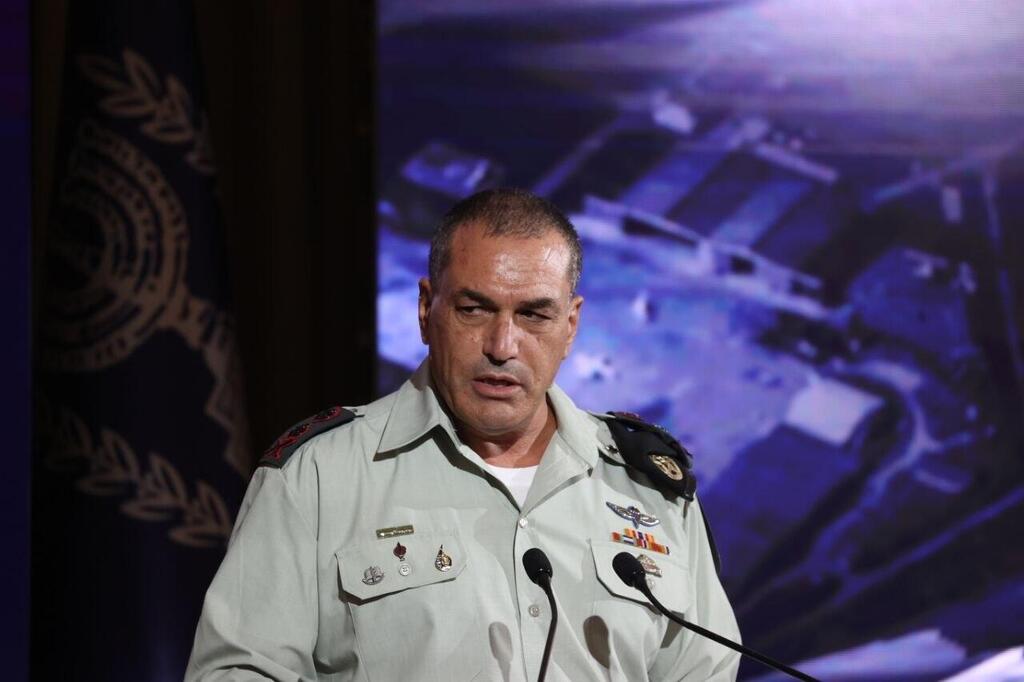
Such an operation would require not only the forces needed to capture the camp but also sufficient troops to hold it over an extended period. It would also require intelligence assets and air support — the same capabilities that are either unavailable or only partially available when much of the IDF is focused on preparing for a potential confrontation with Iran.
"In the current situation, the Iran front takes priority over everything else, and resources are directed there," a senior security official said, speaking on condition of anonymity because of the sensitivity of military planning. "But when it isn't clear what decisions will be made in the White House, it creates real difficulties in allocating forces and resources."
Despite those challenges, military officials stressed that strategic cooperation with the United States remains one of Israel's greatest security assets.
"Our work with Washington is so strategically important that the repeated need to place the system on high alert is a price worth paying," military officials said, adding that the challenge had been anticipated from the outset.
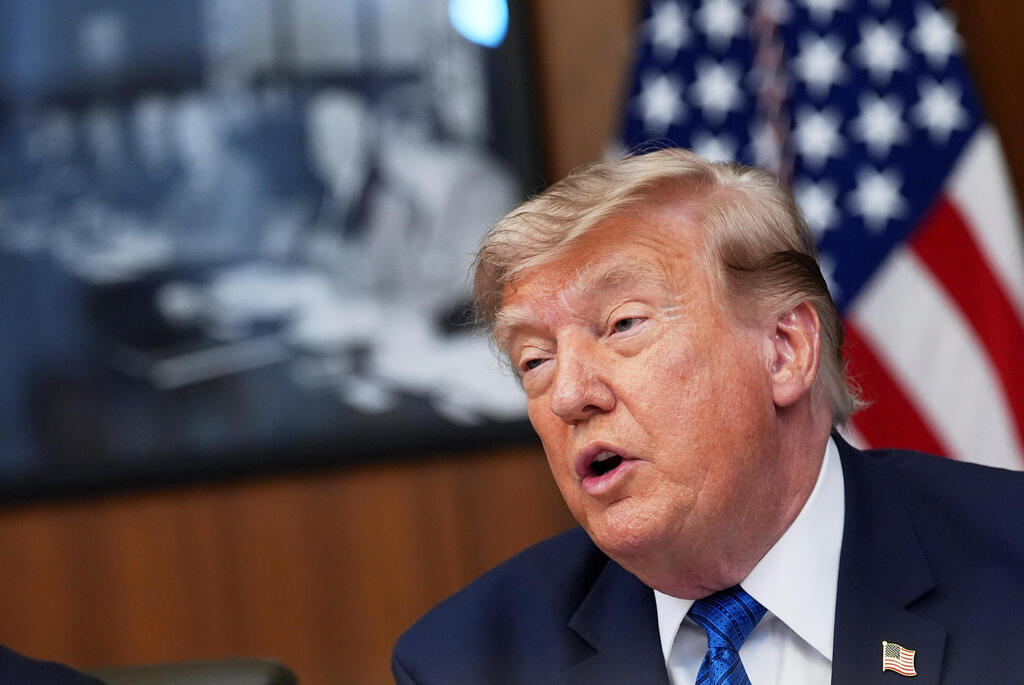
US President Donald Trump
(Photo: AP Photo/Jacquelyn Martin)
Officials contrasted the current situation with Operation Roaring Lion in March, when the United States took the lead in planning and coordination, requiring close synchronization with Washington's decisions.
That differed from Operation Rising Lion the previous year, when Israel planned and carried out its military campaign independently, with the exception of a last-minute U.S. strike on Iran's Fordo nuclear facility.
Ultimately, Israeli officials say, the decision on whether Israel enters another direct military confrontation with Iran depends largely on a single person in Washington.
Military leaders acknowledge the operational cost of repeatedly raising and lowering the country's level of preparedness. But they also recognize that the pace of events — and the diplomatic negotiations that may determine them — lies largely outside Israel's control.
Gulf states also frustrated by Trump's zigzaging
Israel is not the only country frustrated by Trump's shifting approach toward Iran, according to a report in The Wall Street Journal, which said not all Gulf states supported efforts to halt a large-scale U.S. strike.
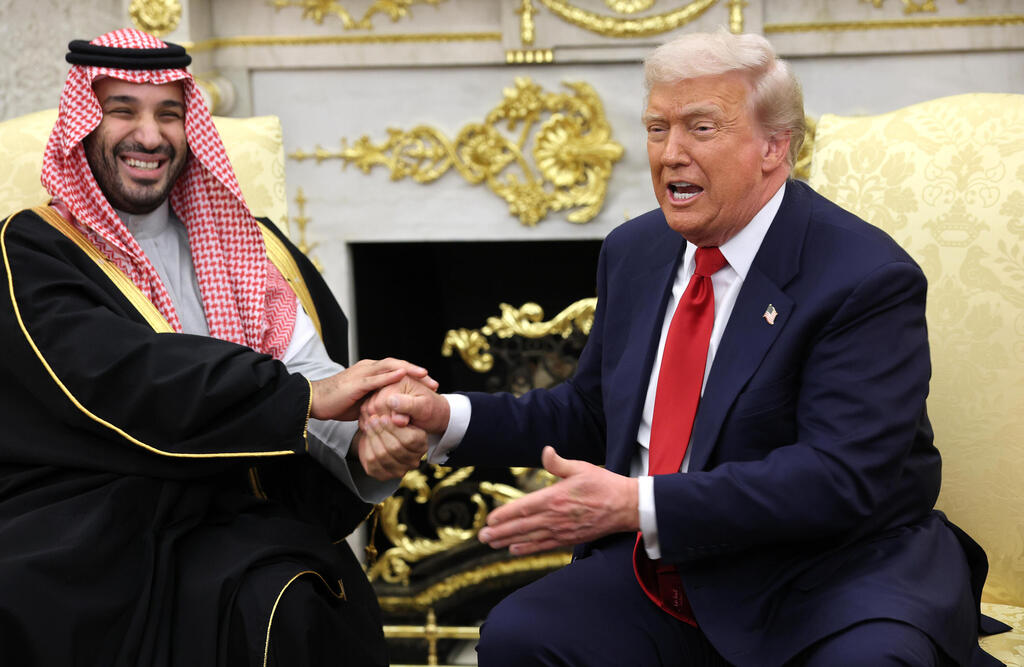
Saudi Crown Prince Mohammed bin Salman and Trump
(Photo: Win McNamee/Getty Images)
According to the report, the United Arab Emirates urged Trump to carry out a broader attack, senior Gulf officials familiar with the discussions said.
Those officials said Iran's paramilitary Revolutionary Guard would not compromise unless the United States escalated the conflict, took control of the Strait of Hormuz and even considered a ground operation.
Saudi Arabia, by contrast, quietly urged Trump to refrain from launching the attack, according to the report, and ultimately prevailed.
According to an Associated Press report, Saudi Crown Prince Mohammed bin Salman worked behind the scenes to prevent the strike. The reports said he warned Trump that a U.S. attack on Iranian energy facilities could trigger retaliatory strikes on oil and gas infrastructure in Saudi Arabia and elsewhere in the Gulf. Qatar, Turkey and Pakistan have also worked in recent days to promote de-escalation and revive negotiations.
According to The Wall Street Journal, Trump canceled the planned strike after Iranian negotiators responded positively to a new Qatari proposal to reopen the Strait of Hormuz. An Iranian diplomat said the Revolutionary Guard, which is expected to oppose the proposal, is considering a preemptive strike if diplomacy fails.
A regional official involved in the mediation efforts said Trump's proposal "calls on the United States and Iran to return to the negotiating table and continue discussing the many issues that have so far prevented progress toward an agreement."
The official said the proposal includes reopening the Strait of Hormuz and halting attacks across the region, including those carried out by Iranian-backed militias in Iraq against Gulf Arab states and Jordan.
In return, the United States would end its naval blockade of Iran and allow Tehran to resume oil exports, as outlined in a draft ceasefire agreement signed in June.
The official said no agreement has yet been reached, but mediation efforts remain ongoing. The official spoke on condition of anonymity because they were not authorized to speak publicly.
Trump again threatens major strike — then cancels it
In a statement posted overnight, Trump unexpectedly announced that he had decided to cancel a planned U.S. strike on Iran after, he said, Tehran and other Middle Eastern countries asked him not to proceed because the "framework" of a possible agreement had been reached.
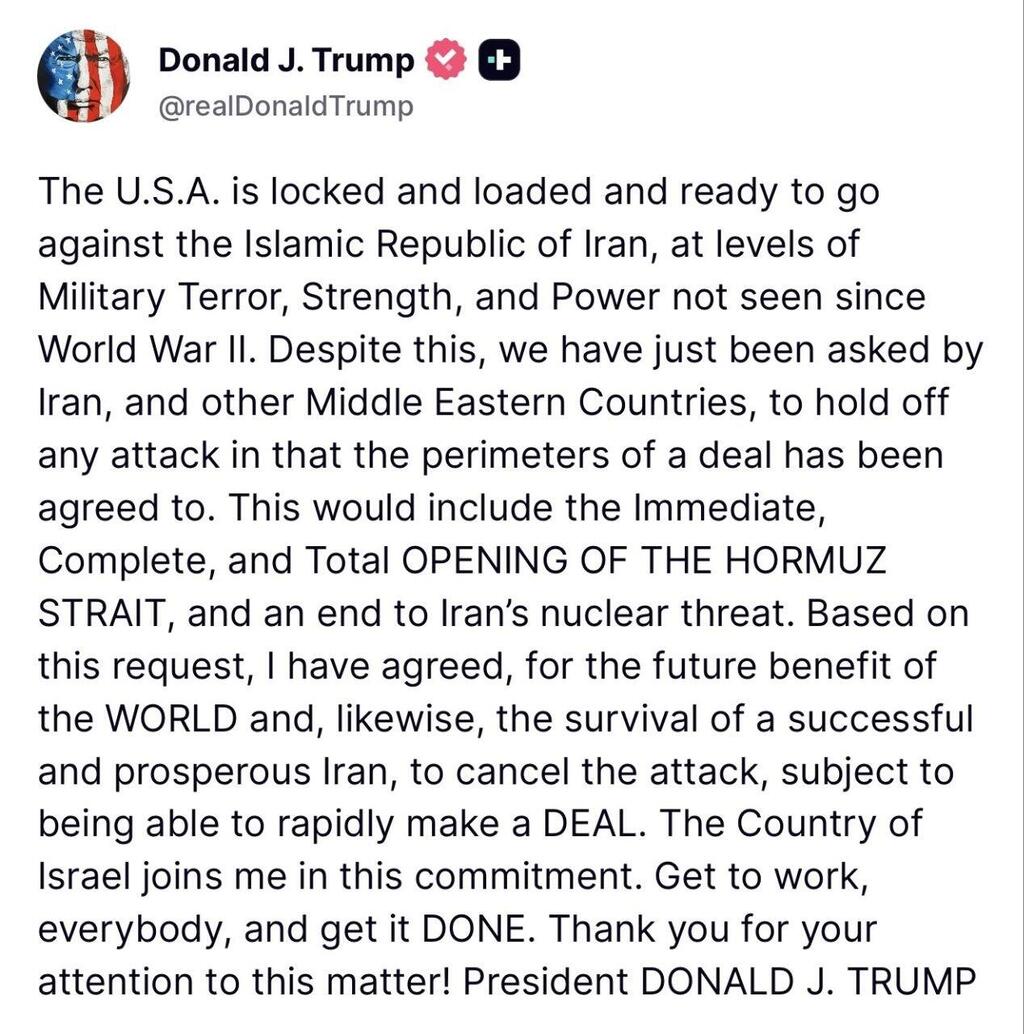
Trump's Truth Social post announcing the cancellation of a large-scale attack on Iran
(Photo: Screengrab)
"The U.S.A. is locked and loaded and ready to go against the Islamic Republic of Iran, at levels of Military Terror, Strength, and Power not seen since World War II," Trump wrote on Truth Social. "Despite this, we have just been asked by Iran, and other Middle Eastern Countries, to hold off any attack in that the perimeters of a deal has been agreed to."
Trump said the emerging understanding would include "the Immediate, Complete, and Total OPENING OF THE HORMUZ STRAIT" as well as an end to the nuclear threat posed by Iran.
"Based on this request, I have agreed, for the future benefit of the WORLD and, likewise, the survival of a successful and prosperous Iran, to cancel the attack, subject to being able to rapidly make a DEAL," Trump wrote.