


Officials in Israel say preparations are underway for the possibility that the war with Iran will continue into April, as the conflict enters a prolonged phase and expectations for the immediate collapse of Iran’s regime appear to be more restrained.
Israeli officials say the current focus is on stripping Iran of both its missile launch capabilities and its ability to manufacture new missiles, preparing for a scenario in which the ruling clerical leadership remains in power.
Israeli F-35s on their way to Iran
(Video: IDF)


At the same time, the idea of encouraging public unrest inside Iran has not been abandoned, though officials acknowledge uncertainty about how effective such efforts might be.
The approach has also been reflected in comments by Prime Minister Benjamin Netanyahu, who has repeatedly said that “in the end it is in the hands of the people.”
U.S. officials are said to be more optimistic, believing that additional strikes could lead to Iranian capitulation.
President Donald Trump said Saturday the United States targeted what he described as the “crown jewel” of Iran’s oil infrastructure — Kharg Island — and warned that if Iran blocks passage through the Strait of Hormuz, the United States could seize the island, cutting off Iran’s oil revenues.
Israeli officials said that in recent days, they have identified signs of awakening among segments of the Iranian population and movement among opposition groups that appear to be organizing for possible action.
“We continue to strike regime targets, mainly in Tehran,” one official said. “We are entering the decisive phase. We are aiming to bring the people out into the streets. It’s not only us — the Americans are also working toward that.”
“Not everything can be controlled, but everything possible is being done to make it succeed,” the official added. “The regime must be weakened as much as possible, including the Basij. We are striking them and killing them in the thousands.”
US strikes on Kharg Island
Officials said weakening the regime’s security forces could make it more difficult for authorities to suppress potential uprisings.
“No one knows how many people will take to the streets,” the official said. “It’s a process. We hope it will be widespread and effective.”
Meanwhile, the Mossad’s Persian-language Telegram account escalated its messaging, calling on Iranian security personnel to remove their uniforms and defect.
In a message posted in Persian, the account said: “Some people have understood — the time to act has come. The first step begins with a simple decision. If you are also counting your steps, a short conversation can open a new chapter for you. Contact us through a secure line.”
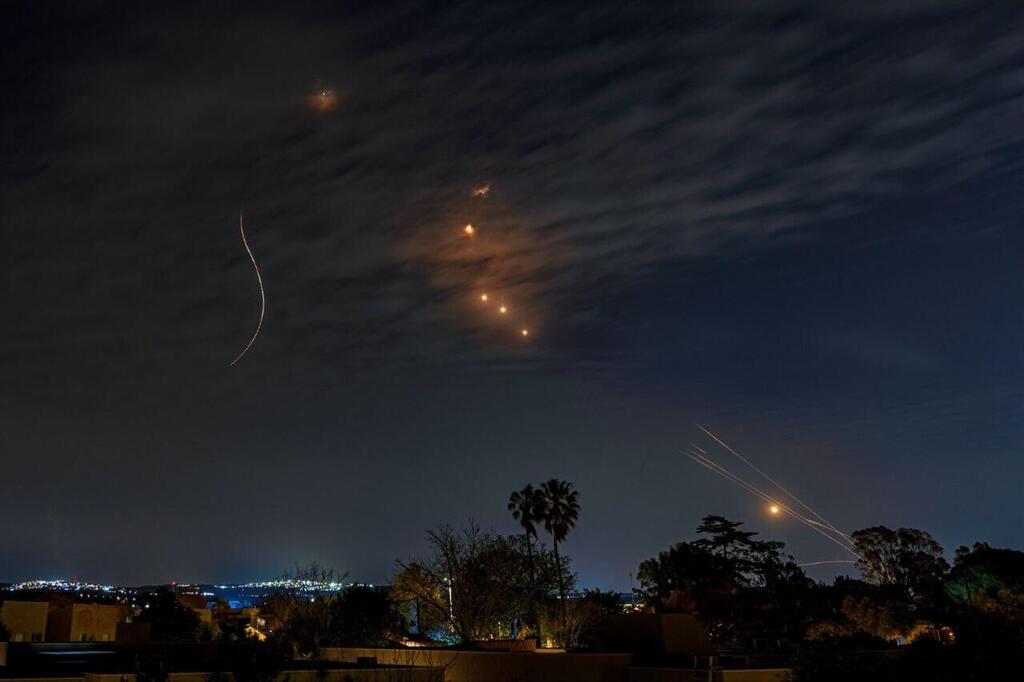
Reports circulated Saturday that Israel had informed the United States that its interceptor stockpile was running low, but Israeli officials denied the claim.
“There is an airlift of munitions from the United States to Israel,” one official said. “They are sending thousands of munitions and continuing to bring more all the time.”
“In principle, there is no shortage of interceptors. We will manage. There are many defense systems. The fact is that we are operating under a policy of maximum interceptions. We are not being stingy,” the official added.
The same official said the war could still be ongoing in about two weeks, or even further.
Against the backdrop of the reports about interceptor shortages, Defense Ministry Director-General Maj. Gen. (res.) Amir Baram traveled on Sunday to Washington for meetings with senior Pentagon and State Department officials.
According to a Defense Ministry statement, Baram will hold a series of discussions aimed at advancing critical procurement deals and strengthening strategic cooperation between the two countries.
Meanwhile, officials expect the conflict in the north to last even longer.
Defense Minister Israel Katz has been pushing in internal discussions for expanding the ground operation in Lebanon and capturing territory to push anti-tank threats farther away from the border.
Katz presented this approach in both the expanded and smaller security cabinet forums and has so far received backing from Netanyahu.
At the same time, former minister Ron Dermer is involved in discussions regarding potential negotiations with Lebanon’s government focused primarily on postwar arrangements, though they could also influence the scope of the current military operation.
A senior Israeli official said the two tracks do not contradict each other and that Israel will not compromise on holding territory in order to push threats farther away.
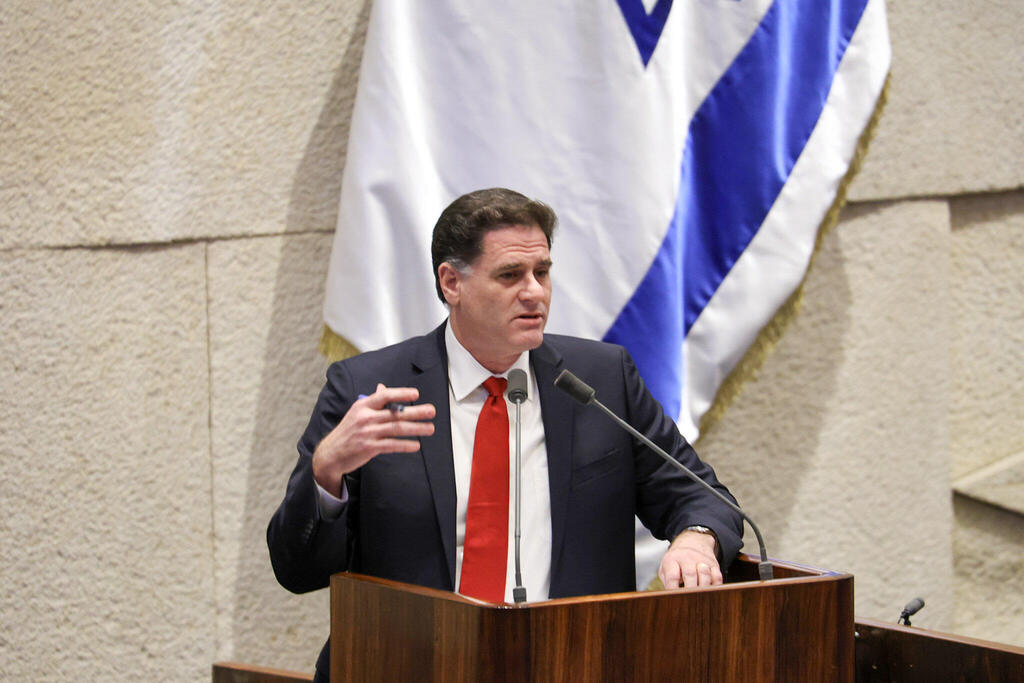
Ron Dermer
(Photo: Knesset Channel)
Officials in Israel say they do not believe Lebanon’s government is capable of disarming the Hezbollah terror group, and the understanding is that only the IDF can achieve that goal.
Still, Israeli officials say there is a willingness to explore an agreement with Lebanon’s government that would allow it to assume responsibility for territory after Hezbollah is disarmed.
The negotiations involve the United States, France and Saudi Arabia.
Army Radio reported Sunday that Dermer, who has been tasked with handling the “Lebanon file,” recently made a secret visit to Saudi Arabia as part of the discussions. The Prime Minister’s Office declined to comment.
No agreement has yet been reached on when the negotiations would begin or where they would take place.
Foreign Minister Gideon Sa'ar said direct talks with Lebanon are not expected to begin in the coming days.
Speaking to reporters at the scene of a recent strike in the northern community of Zarzir, Saar said Lebanon’s government and military must act to stop attacks carried out by Hezbollah from Lebanese territory.
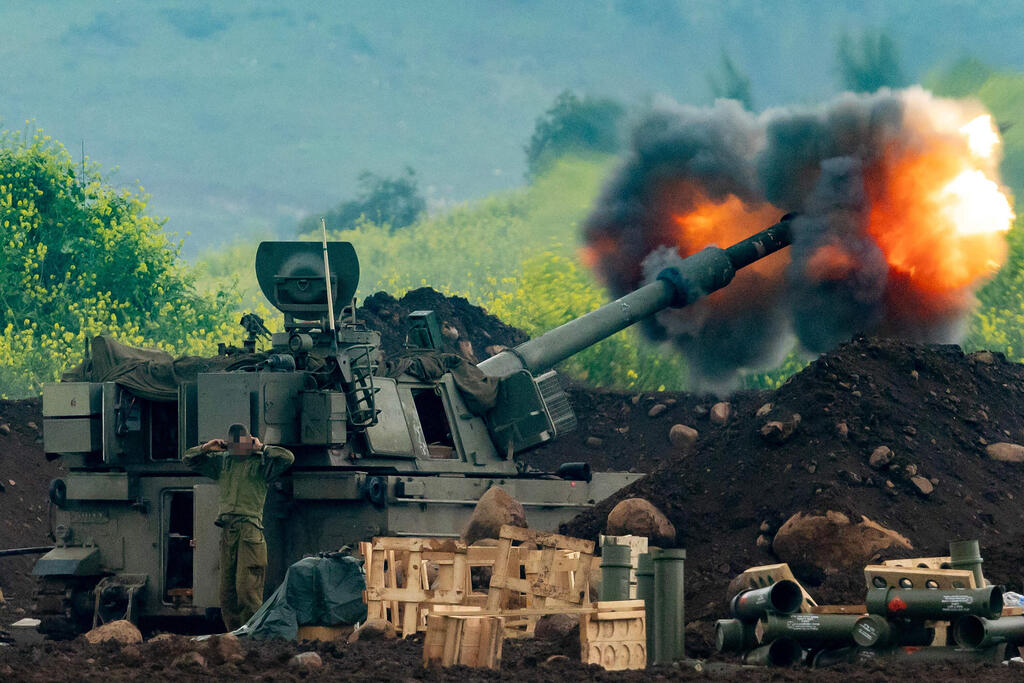
IDF forces on the Lebanese frontier
(Photo: ODD ANDERSEN/AFP)
“Until now they have not done anything significant to stop it,” Saar said. “Ministers identified with Hezbollah are still members of the Lebanese government.”
“We support peace and normalization in the future, including with Lebanon,” he added. “We have no real deep disputes with the state of Lebanon. The problem is Hezbollah.”
“Hezbollah operates according to instructions from Tehran, not Beirut, against the wishes of Lebanon and its citizens,” Saar said. “Since the ceasefire in November 2024, Lebanon has not truly done what it was supposed to do to disarm Hezbollah. We are seeing the results now.”
“We expect serious steps from Lebanon to stop the fire toward Israel. That is what must happen now.”