


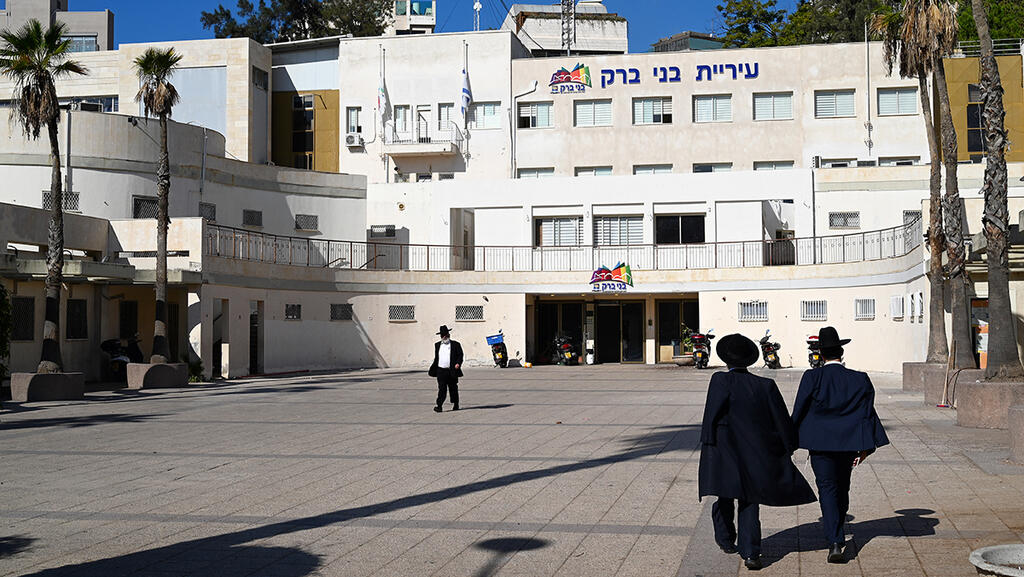
A document from the largely haredi-populated Bnei Brak municipality reveals how the city allocates food vouchers as financial aid to residents ahead of holidays, giving priority to criteria that have already faced legal criticism.
According to the document, families eligible for a property tax discount, with seven or more members, received 750 shekels ($210), while families of reserve soldiers received 400 shekels ($112).
Welfare-recognized families received the same amount, regardless of household size. Widows received nearly 1,000 shekels ($280), and families with orphans received 150 shekels ($42) per child. Families with seven members received the largest share of vouchers—85%. The document was submitted in response to a request from the Hiddush nonprofit under Israel’s Freedom of Information law, regarding vouchers distributed last Passover.
The main criterion, granting 750 shekels ($210) to any family eligible for a 90% property tax discount, has already drawn criticism from Israel’s High Court. At the time, the court noted that the criteria “overlook other vulnerable populations who also deserve food assistance” and that prioritizing large Haredi families ignored other low-income families in need.
This approach effectively benefits large Haredi families who may not need the vouchers more than other struggling families, while non-Haredi needy families are left out. Despite these legal concerns, the Bnei Brak municipality continued distributing vouchers according to the same system.
IDF forces in Gaza
(Photo: IDF)
Dr. Yifat Solel, legal adviser and vice president of Hiddush, said: “The municipality of Bnei Brak is ignoring the court ruling and distributing food vouchers under the guise of ‘Passover aid’ without clear criteria, discriminating between different needy populations and using vague definitions.”
She added that following their petition, the state revised the criteria to grant equal eligibility to income-supported families who still require additional assistance. However, Bnei Brak bypassed this adjustment, giving 85% of vouchers to families receiving a 90% property tax discount—mostly large Haredi families—while other groups received vouchers at unspecified times and amounts, contrary to the legal framework. Solel called the practice “improper and inconsistent with basic principles of proper administration.”
In response, the Bnei Brak municipality said: “The city supports and assists reserve soldiers’ families throughout the year, including before Israeli holidays and Passover. ‘Passover aid’ is distributed based on clear eligibility and need criteria for low-income families. Assistance will be provided to all qualifying needy families, including reserve soldiers’ households.”