


Over the past year, even before the war with Iran, there were concrete warnings about possible attacks on Israeli ambassadors around the world. This occurred in countries with large Muslim immigrant populations. In some cases, threatened ambassadors were forced to leave their homes and move to safe apartments for extended periods. Some were even evacuated for varying lengths of time outside their host countries.
Threats against Israeli diplomats serving abroad have intensified since the start of Operation Roaring Lion. Iran, which has so far failed to inflict heavy losses on the Israeli home front, is seeking ways to strike Israeli symbols that could deliver propaganda victories. According to media reports, Iran has begun activating sleeper terror cells around the world with the aim of assassinating Israeli diplomats and targeting Jewish and Israeli communities.
Leaving the house requires security approval
Since the October 7 massacre — and even more so since the first round of fighting with Iran in June — security at Israeli missions abroad has been reinforced, with particular emphasis on diplomats and their families. But the challenges facing the Foreign Ministry’s security division since the start of the current escalation are extremely significant.
Gallery
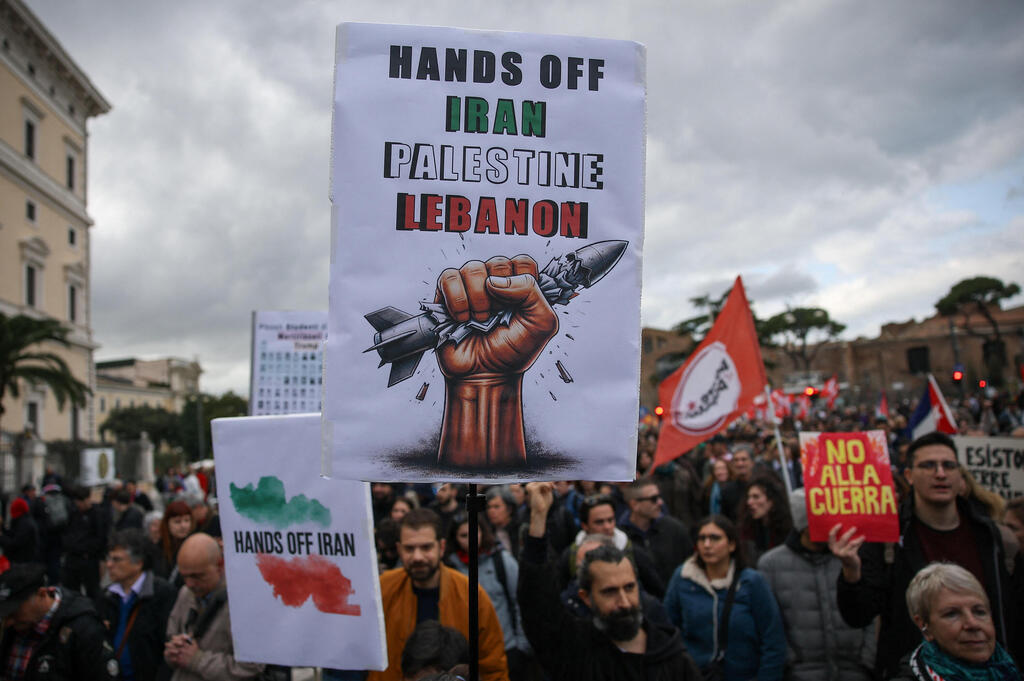
Demonstration against Israel and the US and against the war on Iran in Rome
(Photo: Francesco Fotia/Reuters)
To avoid unnecessary risks, many Israeli ambassadors have been instructed to remain and work from their homes, and some have even been barred from leaving their residences. Many Israeli missions around the globe remain closed, with work conducted from the diplomats’ homes.
This situation applies to many countries in Europe that were previously considered relatively low-risk security environments compared with other parts of the world. Recent antisemitic incidents, accompanied by a wave of arson attacks and terrorism, only underscore that the concern for the safety of Israeli diplomats is real.
Israeli diplomats and their families are restricted in their movements and in leaving their homes even outside working hours. Any outing — even to buy food — requires prior approval from the mission’s security officer, and even then only under very strict limitations.
Will this become the new normal?
One veteran diplomat told Ynet that security measures have never been as strict as they are now.
“We are restricted in our outings, in our movements and in every activity we want to carry out," the diplomat said. "Unlike in the past, this time we feel that the Iranian terror ring is tightening around our necks and that there is a real threat to our lives and the lives of our family members.”

Foreign Minister Gideon Saar
(Photo: Kevin Lamarque/Reuters)
Some diplomatic missions have been asked to approach local security authorities to request increased protection around embassy buildings and diplomats. While some countries agreed, others refused — raising questions about whether those embassies will be able to reopen in the foreseeable future.
“Unlike in the past, this time we fear the situation will continue for a long time," another diplomat told ynet. "There is even a possibility that this will become the new routine we will have to get used to, and it will have serious implications for family members — especially young children. On the one hand, we don’t want to describe the real situation to them so they won’t suffer anxiety. On the other hand, how do you explain to a small child that they can’t go down to the playground or attend the activities they used to go to?”
A new work framework for embassies
This week the Foreign Ministry distributed a new operational framework for Israeli embassies abroad. Ynet has learned that Israel’s missions worldwide have been divided into four groups, each with a different operating model based on security needs:
- 65 missions will remain open with 50% staff presence and six-hour workdays.
- 12 missions will operate with 30% staff presence and six-hour workdays.
- 10 missions will open three times a week with 30% staff presence and six-hour workdays.
- 12 missions will operate entirely from diplomats’ homes, without staff arriving at the embassy.
Under the new framework, embassies will provide services only to Israeli citizens, and employees who are not part of essential teams will work exclusively from home.
First published: 22:48, 03.16.26