

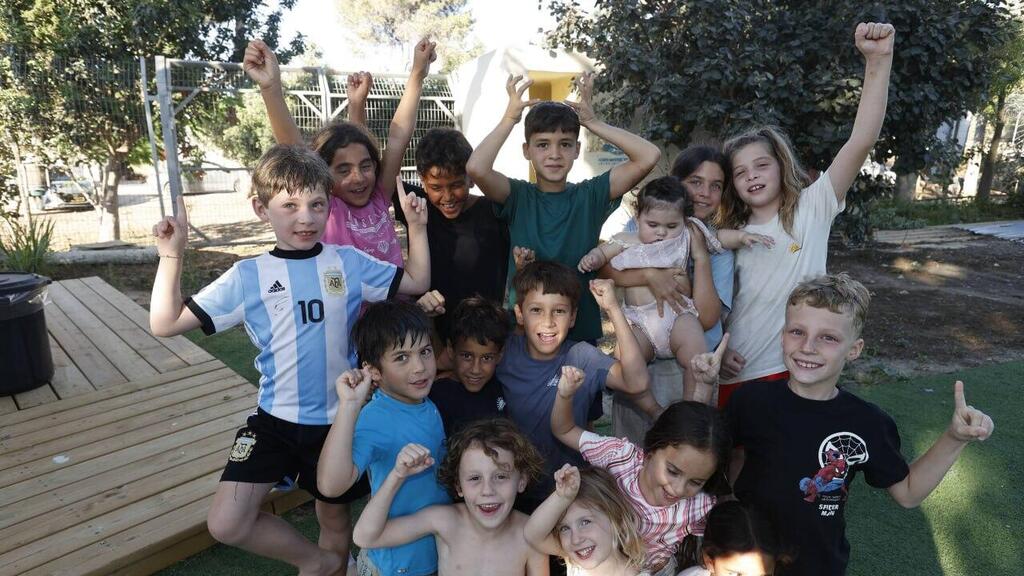
Nearly three years after the October 7 massacre, Kibbutz Kissufim, one of the Gaza border communities hit hard in the Hamas terror attack, is slowly and visibly coming back to life.
Most of its residents have chosen to return to the kibbutz, located about 1.5 kilometers from the Gaza border. Between temporary caravillas and permanent homes being rebuilt, children are once again riding bicycles through familiar paths, the swimming pool and pub have reopened, and residents are trying to restore the rhythms of communal life.
For Mazal Mansour, the return has a deeply personal meaning. She drives her mobility scooter to the cemetery, the only place where she can still be close to her husband, Shlomo Mansour, who was abducted on October 7 and murdered.
This week marked a turning point for Kissufim, founded in 1951. According to the kibbutz, about 90% of the residents who survived the massacre have now completed their official return. The move is another milestone in the rehabilitation of Israel’s Gaza border communities, narrowing the list of kibbutzim that have not yet formally returned to four. First families from Holit have begun coming back, residents of Kfar Aza are expected to begin returning in about two months, Be’eri’s official return is planned for December and Nir Oz is not expected to return until summer 2027.
Twenty people from Kissufim were killed during the October 7 massacre and in the days that followed, including 14 members of the community and six foreign workers. One of the victims was 85-year-old Shlomo Mansour, who was abducted on October 7 and later murdered.
‘I came back for Shlomo’
Mazal Mansour now sits in the temporary caravilla she moved into two weeks ago, waiting for the home that was completely destroyed to be rebuilt.
“I came to Kissufim when I was 11 and a half, at the end of 1958, as part of a youth group,” she recalled. “Shlomo arrived a little later. He was a camping instructor, he taught me all kinds of things, and that is where our relationship began. I left, and Shlomo left after me because he wanted to be close to me.”
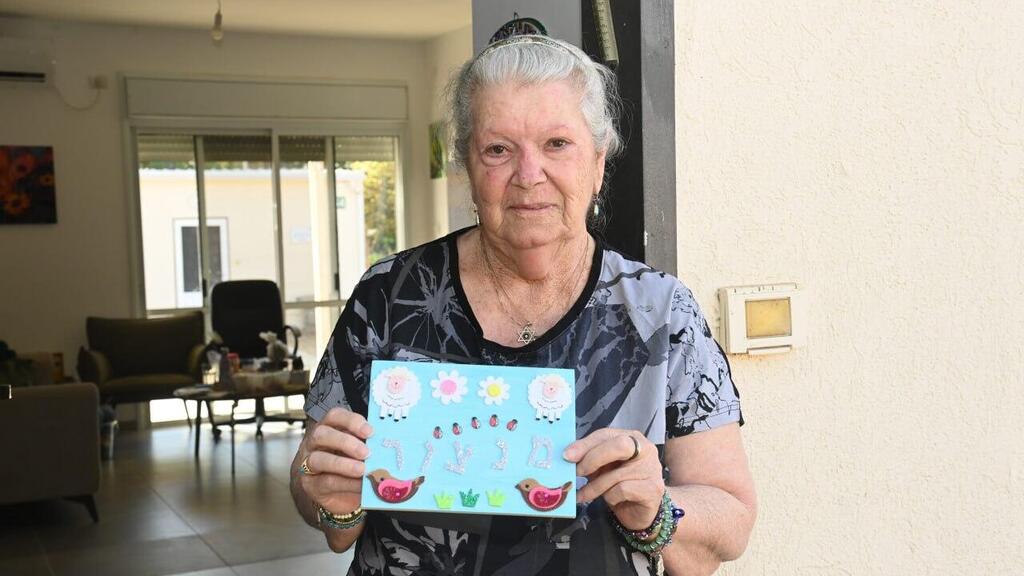
Mazal Mansour returns to Kibbutz Kissufim
(Photo: Herzl Yosef)
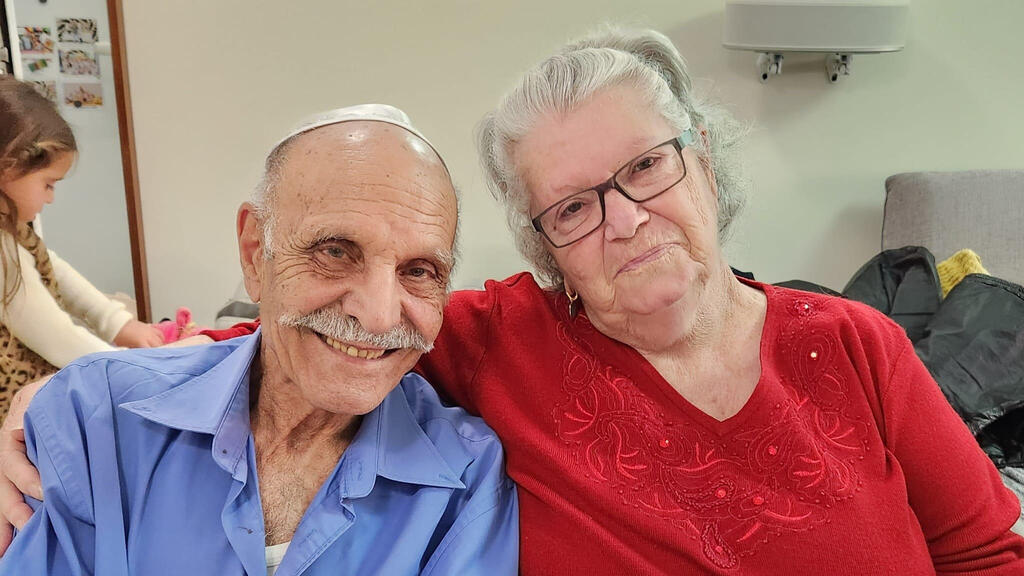
Shlomo and Mazal Mansour
The couple married in Jerusalem in 1964 and later returned to the kibbutz after their first son was born.
“A delegation from the kibbutz came and offered us to return. I didn’t want to. I didn’t like communal sleeping arrangements, it was hard for me, that unnatural thing of children growing up in children’s houses, but we came back because life in the city was difficult,” she said.
The couple raised five children in the kibbutz where they had met.
When Mansour speaks about October 7, she breaks down.
“We heard the siren and woke up. Shlomo went to the safe room to turn on the television and couldn’t. I went to the living room, and while I was there I heard gunfire at the door. The terrorists broke it down. I hid in the bathroom and they came to me. I was afraid they would shoot me, and I told them, ‘No, no.’ One of them, their sheikh apparently, said: ‘We won’t kill you, bring the car key.’
“When I came out, I saw them taking Shlomo out, his hands tied behind his back with a zip tie. We walked toward the parking area and suddenly one of them slapped Shlomo. I said to him, ‘Why? That’s not nice, he’s an elderly man.’ It just came out naturally. There was no response. Shlomo also said, ‘I didn’t do anything.’ They continued toward the car and I stayed behind. I ran to a neighbor who lived next door, entered her safe room and suddenly we heard a very loud explosion. They fired an RPG at my house. Later they came and shot at the neighbor’s safe room, at the window, but they couldn’t get in. At 2:20 a.m. we were rescued.”
For a year and a half, the Mansour family lived with agonizing uncertainty, until they received the devastating news: Shlomo had been murdered, apparently in the first days after the massacre.
“I had a bad feeling the whole time. I didn’t want to deceive myself,” Mazal said. “He gave me so much love and respect. He was a devoted father to the children. I had to share him with all of Kissufim because he invested in everyone, but that didn’t bother me.”
Her children do not live in Kissufim, but she chose to return on her own.
“I need my corner, my quiet, and of course, to visit Shlomo. He is buried here, so I have someone to visit. I asked for my house to be rebuilt in the same place and in the same form, and I am waiting for that to start happening,” she said, before getting on her mobility scooter to visit his grave.
‘The children brought us back here’
The first signs of a return began in September 2025, when a group of families with children decided they would no longer wait and came back in order to open the school year within the Eshkol Regional Council education system. Among them was the Moses family.
Aviad Moses, 36, married and a father of three, served until two weeks ago as a career officer in Military Intelligence after 17 years in the IDF. He now works as a systems supervisor at WXG and chairs the kibbutz education committee. His family arrived in Kissufim in August 2022 as part of an absorption track. On October 7, they found themselves locked in the safe room for more than 30 hours.
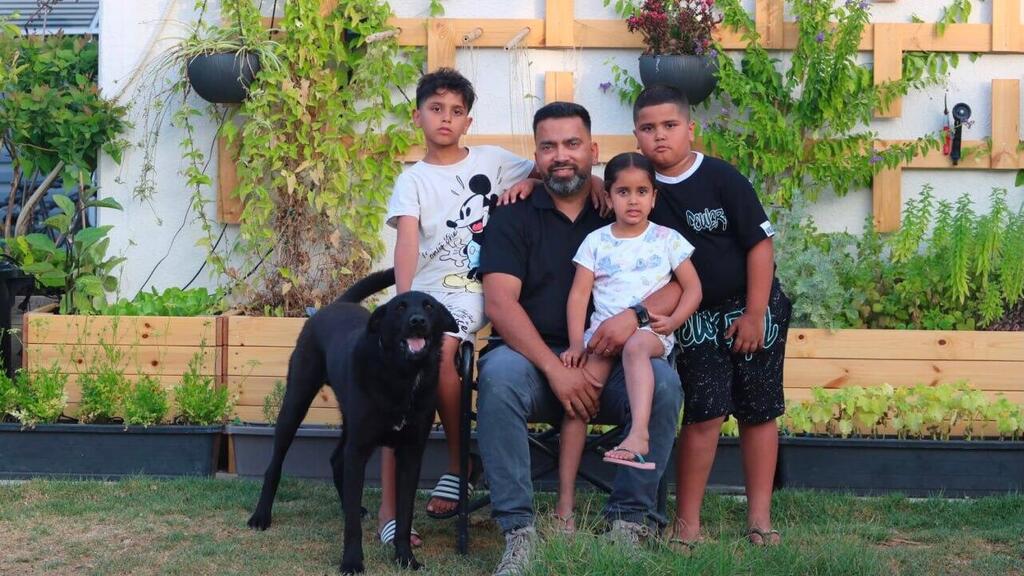
Among the first to return: Aviad Moses with his children and Simba
(Photo: Nofar Moses)
“I saw a terrorist fully equipped, with an RPG and a Kalashnikov, standing at the entrance to my pergola,” he recalled. “We have a dog, Simba, a big black mixed Labrador. Despite the fear and the explosions, Simba jumped, barked at him and scared him. The terrorist chose to turn around and leave. Simba saved us.”
The family was rescued under fire only on Sunday morning. From there they were evacuated to hotels at the Dead Sea, where they stayed for a year, and then to the community of Omer for another year.
“Already in the safe room, we started organizing things, clothes and medicine. We understood we were heading toward evacuation,” Moses said.
Last August, the family decided to return to the kibbutz.
“We said we would open kindergartens and educational frameworks no matter what happened. We wanted to be the magnet that pulls the other families back. Slowly, a critical mass of families began arriving. Almost every day another family came back. We felt like a pioneer force coming to inspect the terrain, modern pioneers. We lived inside a construction site. There were electrical problems and difficult growing pains. We are starting to bring back everything we are used to: ceremonies, traditions. Around the kindergarten buildings there were quite a few battles, and terrorists stayed inside those buildings. And now, those buildings have been reopened.”
Moses said the decision is best understood through the eyes of the next generation.
“The children returned to their dream. They run, take their bikes, walk through the familiar paths. For them, they simply came home. The return is complex, like everything over the past three years, but in the end, it feels like home, for us adults and for the children.”
Running a community from the safe room
At the center of the community’s efforts in its hardest hours was Sharon Ofri, 48, a mother of five who moved to Kissufim in 2018. On October 7, she was head of the community emergency team. During the months of evacuation, she formally became the kibbutz community manager.
“I found myself managing a deeply traumatized community from a hotel at the Dead Sea, while my own children had lost close friends,” she said.
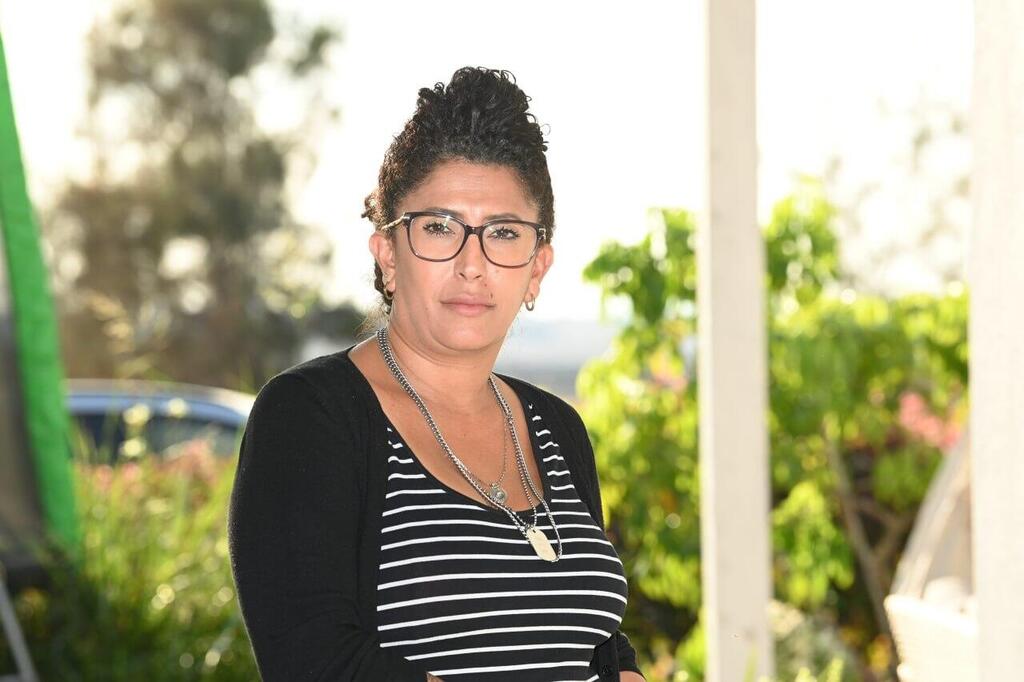
‘Protecting the community’: Sharon Ofri
(Photo: Herzl Yosef)
During the massacre, she managed the emergency response from her home safe room as terrorists fired, among other places, at her front door.
“I understood quite quickly that my local security coordinator was cut off from contact. I began mapping the residents. I opened a small and secret WhatsApp group for officials, because I didn’t want to create panic in the general groups and also because I needed to write what I knew: already from 6:40 a.m. I knew there were burned homes and abductions, that Roni, the security coordinator, was cut off from contact, that Shlomo Mansour had been abducted.”
At the end of last August, Ofri also returned to her home in the kibbutz. The push, she said, came from the youth of Kissufim, who declared: “We are going back. You do whatever you want.”
“Within less than 24 hours, everyone was outside here, and everything suddenly returned to what it had been,” she said. “I missed my kitchen. As someone who cooks and bakes, no hotel can replace your own space. You can’t explain the feeling of home, of your living room, whether it is messy or not. The adults came back here because of the children, and the strength of this community is the strongest thing there is. Now the goal is simply to protect it.”
Looking ahead
So far, about 92% of residents of the Gaza border region have reportedly returned. However, that figure does not include communities that have not yet returned, including Be’eri, Kfar Aza, Nir Oz and Holit, meaning the overall rate is slightly lower but still high.
The Tekuma Authority also says the number of residents in the area has grown from about 62,000 before the war to about 65,000 today, mainly due to the growth of the city of Sderot. Officials say the goal is to reach 120,000 residents by 2033, a decade after the devastating failure of October 7. The authority is currently expected to close at the end of 2028.