


The head of the Israeli Navy stepped down Thursday after four and a half years in the role, including more than two years during wartime, as Vice Adm. David Saar Salama handed command to Vice Adm. Eyal Harel.
Salama, who completed 39 years of military service, led the navy through a period of significant operational expansion, including strikes in areas where it had not previously operated. His tenure was marked by the Oct. 7 attack, when Hamas launched a surprise assault on southern Israel that exposed failures across the military, including in the maritime arena.
Israeli Navy activity in the region
(Video: IDF)


On that day, Hamas terrorists infiltrated Israel by sea near Zikim, killing 17 people before being stopped. An internal navy probe found forces responded relatively quickly and prevented a larger attack, but the investigation was later classified as inadequate in a broader military review led by a retired general.
Since the start of the war in Gaza, senior navy officials say Hamas’ maritime capabilities have been severely degraded. Most of its naval assets have been destroyed, and many operatives in its naval units have been killed or reassigned, leaving only a limited number still active. Officials said, however, that the threat has not been eliminated and could be rebuilt over time.
In the Lebanon theater, the navy has played a central role in operations against Hezbollah, carrying out dozens of strikes against the Iran-backed group. During the war, including a major operation in October 2024, most of Hezbollah’s shore-to-sea missile arsenal was destroyed, with roughly half of the systems struck in Beirut’s southern suburbs and the rest elsewhere in Lebanon. Israeli assessments now put Hezbollah’s remaining stockpile at about 100 such missiles.
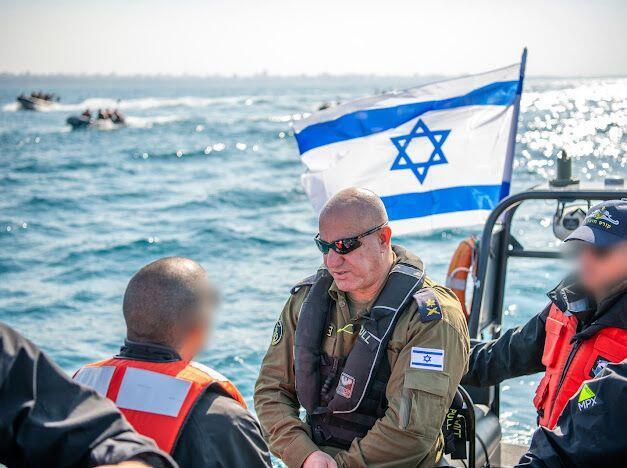
Military officials said intelligence gathering over several years enabled precise targeting of those systems. Naval commandos from the elite Shayetet 13 unit have also taken part in ground operations in southern Lebanon alongside army divisions.
In Syria, Israeli naval forces carried out significant strikes against the navy of former President Bashar Assad following the collapse of his regime in December 2024. Officials said the decision was made quickly once it became clear the government was falling, in order to prevent strategic assets from falling into the hands of future actors.
According to the military, 15 of Syria’s 21 naval vessels were destroyed in the strikes, including ships capable of launching long-range missiles. Around 30 missiles were fired simultaneously in the attack, and within an hour the targeted vessels had sunk, removing what officials described as a longstanding threat. Missile batteries and seven helicopters that Syria had sought to convert for naval use were also targeted.
The navy has also been involved in operations linked to Iran, including directing strikes on Iranian vessels in the Caspian Sea — a first for Israel — enabled by expanded intelligence cooperation with military intelligence and the U.S. Navy. Israeli naval teams also assisted in guiding U.S. landing craft that arrived on Israel’s shores.
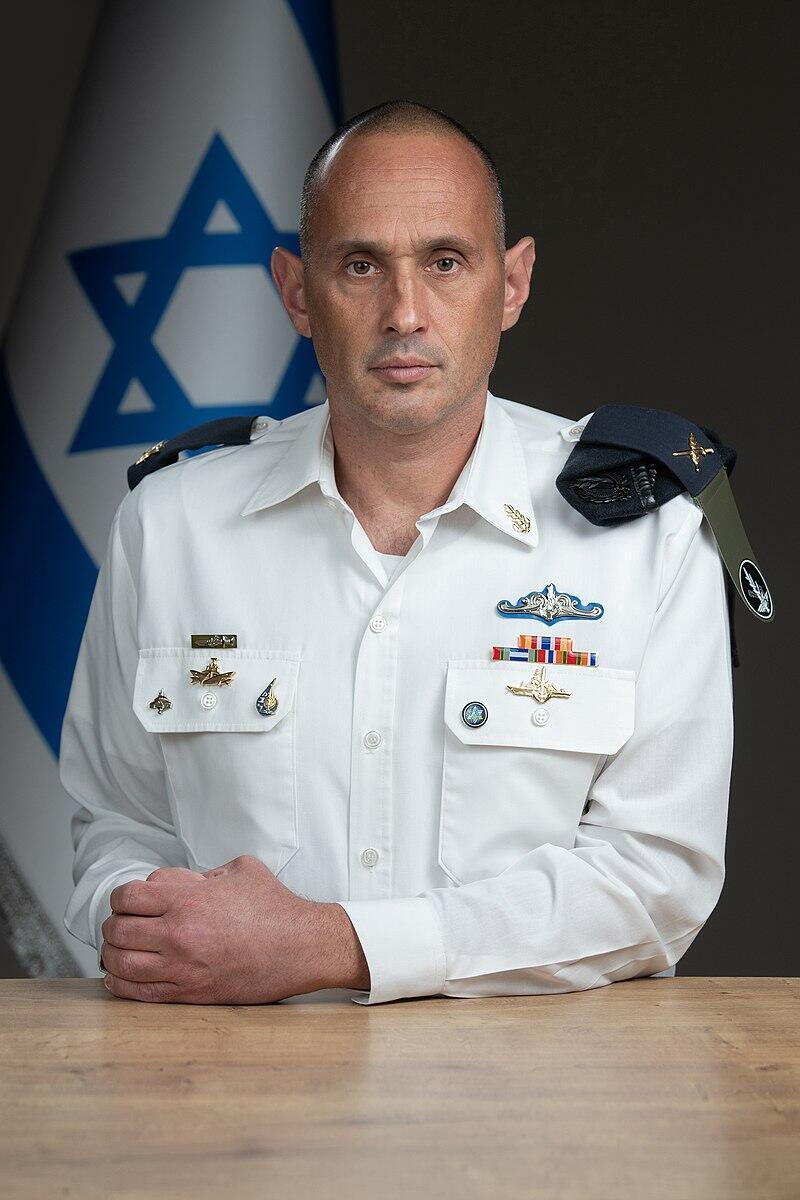
Vice Adm. Eyal Harel
(Photo: IDF)
Officials said the navy has participated in dozens of joint operations with U.S. forces, including 95 strikes in Iran, 27 of them carried out independently. During 48 days of fighting, the navy conducted 154 strikes overall, including 42 from the sea. Of those, 53 targeted Hezbollah in Lebanon, six targeted Hamas in Gaza and 95 targeted Iran-linked assets.
More than 1,000 personnel operated at sea during the campaign, logging some 26,000 hours and handling around 40 air defense incidents, the military said.
On the strategic front, officials pointed to the growing importance of maritime arenas such as the Strait of Hormuz, where threats are primarily land-to-sea rather than naval engagements. They said U.S. forces are leading efforts there due to greater experience, though such challenges could be addressed through both military and diplomatic means.
Looking ahead, the navy is preparing to expand its capabilities. It is expected to receive its seventh submarine, the “Drakon,” from Germany later this year, with plans to replace three older submarines by the end of the decade. The navy is also seeking to develop drone carrier capabilities and strengthen defenses for offshore gas platforms and other strategic assets.
Much of the navy’s activity remains classified, but officials say the incoming commander will face ongoing challenges across multiple fronts following two years of sustained conflict.