

Prime Minister Benjamin Netanyahu said Thursday that a newly announced ceasefire with Lebanon could create an opportunity for a historic peace agreement, following an announcement by U.S. President Donald Trump.
In a recorded statement released about two hours after Trump publicly declared the ceasefire, Netanyahu said the United States is seeking to convene talks between Israel and Lebanon.
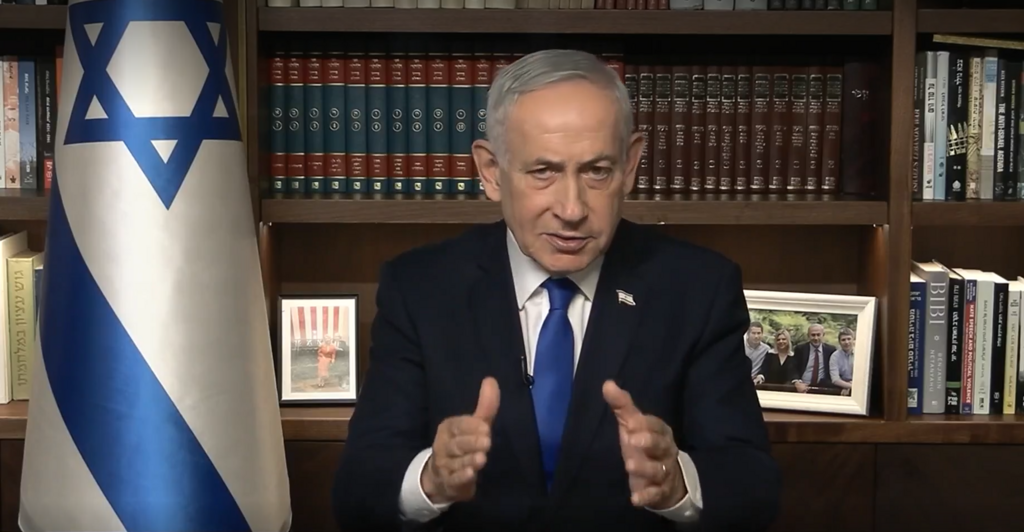
“We have an opportunity to make a historic peace agreement with Lebanon,” Netanyahu said. “President Trump intends to invite me and the president of Lebanon to try to advance this agreement.”
Netanyahu said that in recent weeks Israel has received rare overtures from Lebanon calling for direct peace talks, something that has not occurred in more than 40 years. He said he agreed to a limited pause in fighting in response.
“I responded to that call and agreed to a timeout, or more precisely a temporary ceasefire of 10 days,” he said.
Netanyahu outlined two core Israeli demands in any negotiations: the disarmament of Hezbollah, the Iran-backed militant group that wields significant power in Lebanon, and a “sustainable peace agreement — peace through strength.”
He said Hezbollah had pushed for two conditions in exchange for a ceasefire: a full Israeli withdrawal to the internationally recognized border and a “quiet for quiet” arrangement. Netanyahu said Israel rejected both.
“I did not agree to either of these, and indeed neither condition is being met,” he said. “We remain in Lebanon in an expanded security zone.”
According to Netanyahu, Israeli forces are maintaining a buffer zone about 10 kilometers (6 miles) deep inside southern Lebanon. He said the presence is intended to prevent cross-border incursions into Israeli communities and to stop anti-tank missile fire targeting border towns.
“The communities are now protected from these two threats,” he said, while acknowledging that Hezbollah still retains rocket capabilities that Israel will need to address as part of any broader security and peace arrangements.
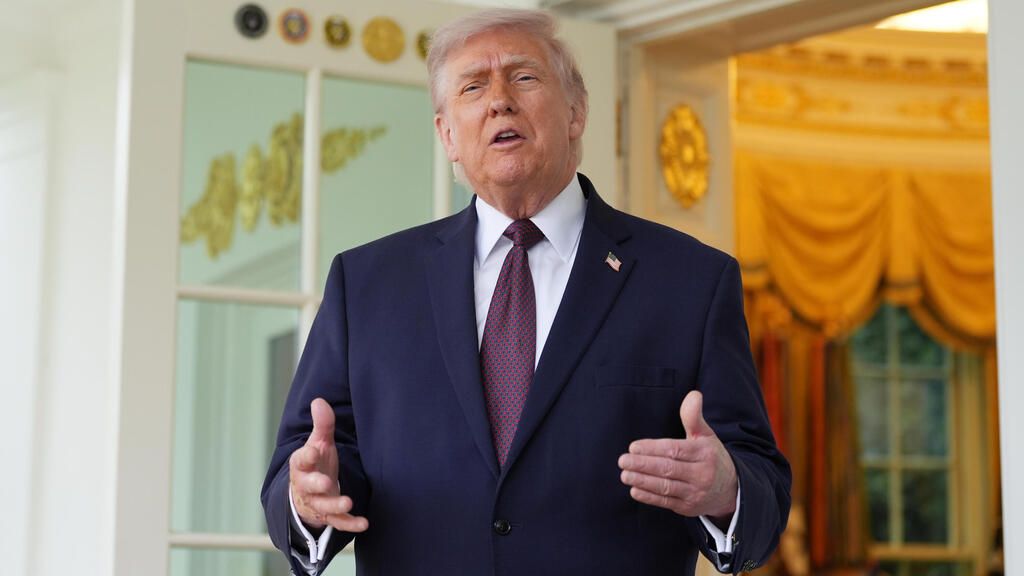
(Photo: AP Photo/Alex Brandon)
U.S. president Donald Trump described the ceasefire as a significant development and said it could lead to broader diplomacy.
“It’s very exciting because it’s 48 years,” Trump told reporters at the White House, without clarifying the reference. “We’re going to be meeting with Bibi Netanyahu and the president of Lebanon. They’re going to be having a ceasefire, and that will include Hezbollah.”
Trump also touched on separate tensions with Iran, Hezbollah’s main backer. He said Tehran has indicated it would refrain from developing nuclear weapons for more than 20 years, though he provided no additional details.
“We have a statement, a very powerful statement, that they will not have, beyond 20 years, that they will not have nuclear weapons,” Trump said.
At the same time, Trump said he was uncertain whether an existing ceasefire arrangement with Iran needed to be extended.
“I’m not sure it needs to be extended,” he said. “Iran wants to make a deal, and we’re dealing very nicely with them.”
The developments come amid ongoing regional tensions involving Israel, Lebanon and Iran, with the proposed ceasefire and potential talks marking a rare opening for diplomacy between Israel and its northern neighbor.
First published: 21:37, 04.16.26