


U.S. President Donald Trump’s announcement overnight Friday that he had decided to extend the ceasefire between Israel and Hezbollah by three weeks caught residents of Israel’s northern border communities by surprise and drew anger over what they described as the loss of their security, now placed in the hands of the American president.
Two days after Israel marked Independence Day, officials in Metula on Friday morning hung U.S. flags alongside Israeli flags and the local flags of the northern town, which is marking 130 years since its founding.
Trump announces Israel-Lebanon truce extension
(Video: News Nation)


It was not meant as a friendly gesture. “It is sad that the government of Israel and the person standing at its head are losing our independence as an independent, sovereign and democratic state,” Metula Council head David Azoulay said, explaining the decision to hang the flag.
On Thursday night, after fire was directed toward Shtula in the western Galilee, Azoulay accused the government of returning to a policy of restraint in the face of Hezbollah attacks.
“I did not know that firing at the community of Shtula counts as firing at IDF forces and can continue to be contained,” he said. “That is how it is when there is a prime minister held hostage by the American redhead,” he added, referring derisively to Trump.
“Remember the Hezbollah tent on Mount Dov before the terrible disaster of Oct. 7?” he said, referring to an outpost Hezbollah erected near the disputed border area months before Hamas’ attack, which critics saw as a symbol of Israel’s policy of containment. “We are returning again to the policy of containment.”
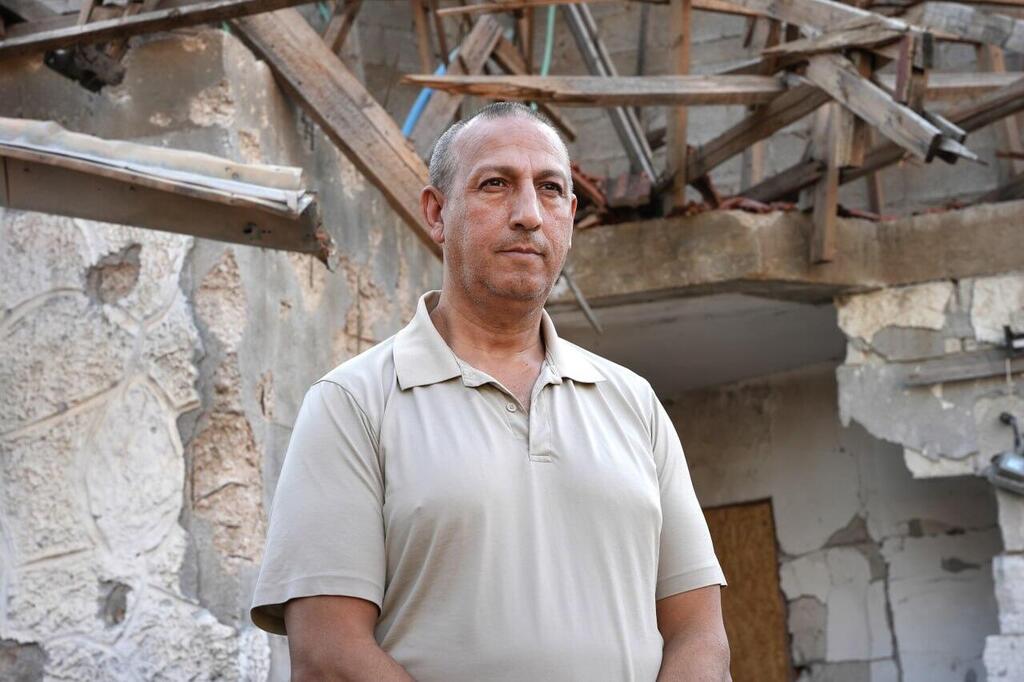
Gabi Naaman, head of the Shlomi Council on the Lebanese border, also addressed Trump’s announcement, though in a less forceful tone than Azoulay.
“The heads of the local authorities on the confrontation line understand very well that this ceasefire is not the proper end, and also not the final end, but a temporary one, to the campaign — not for our communities, not for the IDF and not for the State of Israel,” Naaman wrote Friday morning in a weekly update to residents.
Naaman said ending a war requires “a more stable and clear security reality.”
“I hope, believe, trust and am certain that the country’s leadership, together with the U.S. president, are working to create a safer future and a fundamental change in the Middle East for generations to come,” he said.
Naaman welcomed the return to routine and the reopening of schools after nearly two months under fire, but warned that residents must prepare for the possibility of renewed fighting.
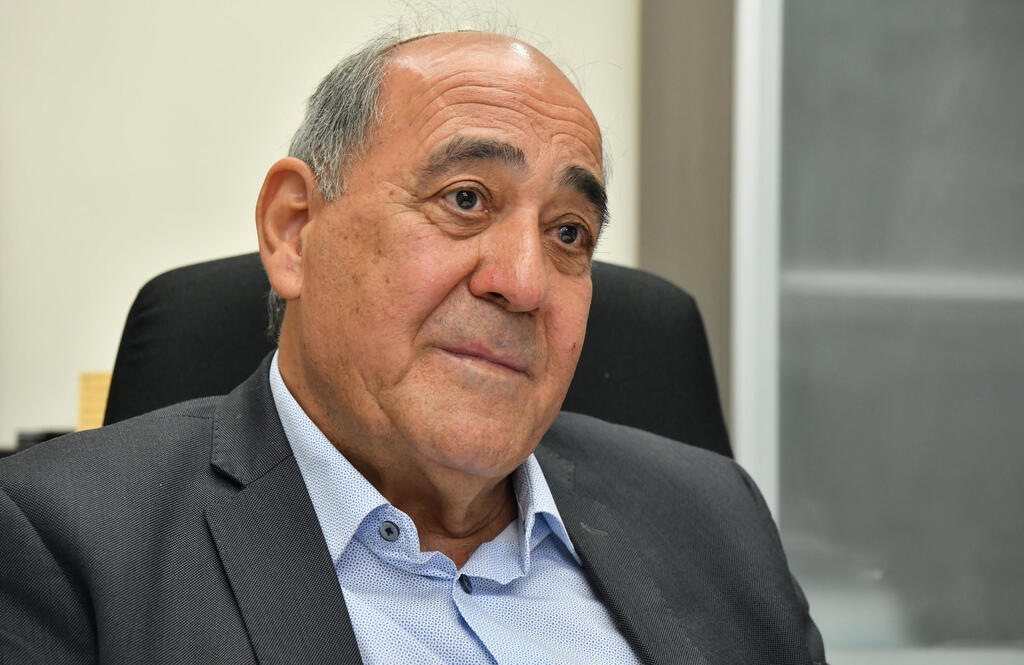
Shlomi Council head Gabi Naaman
(Photo: Nahum Segal)
“This readiness is based on the understanding that the current ceasefire is fragile and is not built on sufficient security foundations,” he said. “We will not be complacent for a moment and we will not delude ourselves. The ceasefire is very fragile.”
Naaman also pointed to what he described as achievements in the latest campaign, including the deployment of Israeli troops close to the Litani River, as well as U.S. understanding of the importance of defeating Hezbollah.
Hezbollah has escalated its attacks against Israeli troops and northern residents multiple times in violation of the ceasefire, but Israel is waiting to see how negotiations and talks between Israel and Lebanon, led by Trump, develop. Israeli political leaders hope the talks will bring about Israel’s objectives and the disarmament of Hezbollah at a lower cost than an Israeli conquest of Lebanon up to the Bekaa Valley and a long, bloody war.
Hezbollah took advantage of Thursday night’s White House talks to fire rocket barrages at Shtula in the western Galilee. Israel did not want to respond forcefully to violations of the agreements while the meeting was taking place.
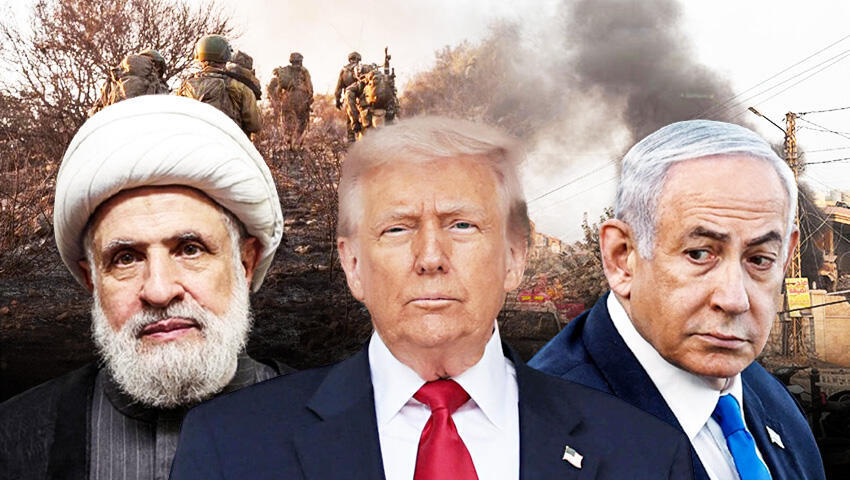
(Photo: IDF, REUTERS/Amir Cohen, REUTERS/Jessica Koscielniak)
On Friday morning, the IDF said it struck military buildings in the areas of Kherbet Selm and Touline in southern Lebanon that Hezbollah used “to advance terrorist operations.” Earlier, minutes after the fire at Shtula, the military destroyed two rocket launchers, including the one used to fire at the community.
Trump said Thursday night that “Iran will have to stop funding Hezbollah” in order to reach a deal with the United States.
Israeli officials believe it is right to give the process time and see where it leads as long as Trump is aligned with Israel, based on the understanding that Iran is central to the Lebanese theater as well.
“The alternative is not a picnic, but the conquest of Lebanon — with all the costs that carries,” an Israeli diplomatic official said. “For residents of the north as well, this is not a move that takes a week or even a month, and if it is possible to reach a similar result with less than that, it is certainly worthwhile.”
'Hezbollah has reestablished the balance of terror with Israel'
But residents of the north, long accustomed to disappointment, are watching the government’s security and diplomatic policy with deep concern, especially in its dealings with a friendly U.S. administration. Amir Assouline, a reserve soldier and resident of the northern coastal city of Acre, said that by renewing fire Thursday night, the Shiite terrorist group had effectively “reestablished the balance of terror with Israel.”
Hezbollah rockets intercepted over Shtula
(Video: from social media)
Assouline said Hezbollah “attacks openly and boasts about it, while Israel responds weakly because it has no choice, as Trump announces on Twitter that the ceasefire will continue and forces Israel to give Hezbollah time to regroup and recharge, just as happened, and is still happening, with Hamas.”
“All of this is for talks with the Lebanese state, which has nothing to offer and, for its part, denies any fantasy of possible peace,” he said. “Its only goal in the negotiations is the withdrawal of the forces and the reconstruction of the villages — all the places we paid for in blood to destroy so that we could create a buffer zone for the communities of the north.”
Assouline, who received an exemption from service but volunteers for reserve duty, has spent hundreds of days fighting in Gaza border communities, cities in the Gaza Strip and southern Lebanon. He sharply criticized what he called the government’s strategic policy, saying it is wearing down the combat troops now stationed in Lebanon, “like ducks in a shooting gallery,” for what he described as the wrong outcome.
He said the policy would “end with compensation from us, or ‘reconstruction,’ instead of our seizing assets from Lebanon and Hezbollah for the damage caused to us in the war they started.” This is happening, he said, “when there is no horizon for expanding the standing army, and the forces are exhausted.”
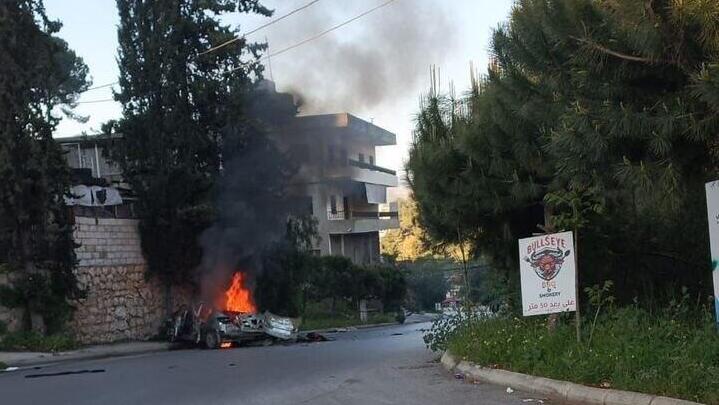
Aftermath of a targeted strike on a car in southern Lebanon
He accused the government of “recklessness and wastefulness” in the way it has used its best personnel since Oct. 7, calling it “an abandonment of the state in the face of an existential threat, beyond the injustice done to those who serve.”
“If Israel’s prime minister does not know how to tell the president of the United States that he does not issue us orders on Twitter, because our war is real and our soldiers are flesh and blood, not a game on social media, then he no longer has the moral authority to lead this country,” Assouline said. “If he does not know how to protect Israel’s sovereignty on the diplomatic front, he has no right to demand that we do so on the ground. He also does not need to, because we will do it anyway. But who will do what he is supposed to do?”
Yael Moad, a member of Kibbutz Yiftah in the Galilee Panhandle, also responded to the fire toward Shtula and Hezbollah’s violations with bitter frustration.
“I’m starting to think it may really be better for the IDF not to respond every time to Hezbollah’s attacks, because it creates a way of life we are not prepared to accept, and it could be accepted by the government and the public as a normal state of life, just as we accepted the drips of fire in the south,” Moad said.
“In a ceasefire situation, as I understand it, the restriction is on the scope and intensity, so every response like this is limited to destroying the launcher that fired and another two or three along the way, and every interception is targeted,” she said. “It would be better not to respond until there is an intention to take serious action. Let Israel be humiliated in the public consciousness, instead of only us being humiliated by the government.”