


Israel’s ambassador to Washington Yechiel Leiter, claimed Thursday that the Lebanese army is sidelining Shiite troops and officers who are unwilling to confront Hezbollah, saying the move reflects a growing readiness in Beirut to act against the terror group under the new framework agreement with Israel.
Speaking with Tamar Ish-Shalom on JPPI’s Jewish Crossroads podcast, Leiter said the Lebanese Armed Forces are more capable of confronting Hezbollah than they sometimes appear, but that willingness inside the army had been a central obstacle. “There has to first be will,” he said. “There are elements within the LAF, the Lebanese Armed Forces, that didn’t have the will to confront Hezbollah, because you have about 25% to 30% of the army which is Shia, and of the Shia Muslims you have anywhere between 30% and 50% support for Hezbollah.”
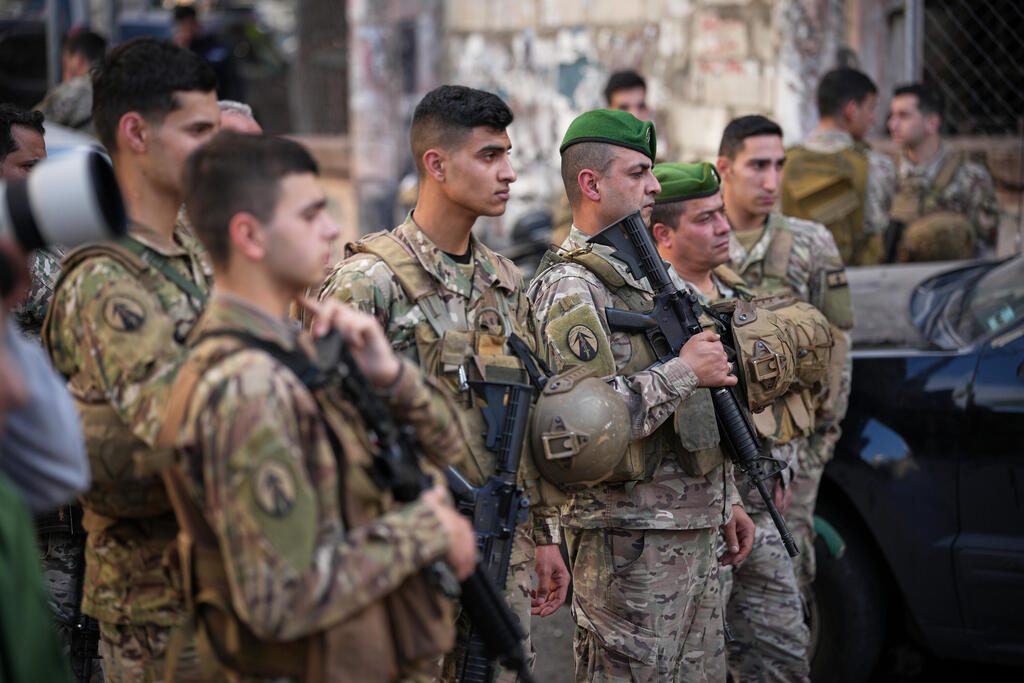
“So you had elements within the army itself that didn’t want to confront Hezbollah, that saw it as a challenge to their own theological affinities,” Leiter added. He said Lebanon’s government has now moved those elements aside: “The solidification of the government now has moved those elements within the army to the side. So there’s a greater will because of the degrading of Iran, and the degrading of Hezbollah and the fall of Assad.”
The ambassador linked the shift to a broader regional change, saying the fall of Bashar Assad’s regime in Syria had reduced pressure on Lebanon and weakened Iran’s regional axis. “They were always intimidated by Assad, which was a long arm of Iran sitting on their border,” Leiter said. “Now, Assad has been toppled, thanks in no small measure to Israel. By degrading Hezbollah, Assad didn’t have a proxy to defend him either.”
Leiter said the next stage would require vetting, training and performance-based U.S. support for the Lebanese army. “We came to our senior partner here in the United States and we said, look, this can really work if the little bit you’re doing can just increase a little bit more,” he said. “You’re already funding, to a large extent, the Lebanese Armed Forces. If you fund them a little bit more, but now make it progress-based, performance-based, not timelines, that’s another piece of magic we put into this agreement.”
He said the central point of the agreement is not Israel’s withdrawal from southern Lebanon, but the dismantling of Hezbollah. “The focus of this agreement is the dismantlement of Hezbollah. It’s not the withdrawal of Israel,” Leiter said. “Israel is not going to be in Lebanon the moment Hezbollah is dismantled. Hezbollah is dismantled, Israel withdraws and we have full peace.”
Leiter said the agreement deliberately does not include a formal timetable, but argued that implementation was already moving quickly. He said U.S. CENTCOM commander Adm. Brad Cooper was in Beirut shortly after the signing to meet with the Lebanese army and prepare plans for pilot zones. “There’s not a formal timeline. And we didn’t put a formal timeline into the agreement, but look how fast it’s moving,” Leiter said. “We just completed the signing on Friday, and already yesterday the head of CENTCOM, Admiral Cooper, was already in Beirut meeting with the Lebanese army in order to prepare the plans for the pilot zones.”
Under the framework described in the interview, Israel would first expect Lebanon to establish effective control in areas where the IDF is not currently positioned. Leiter said Israel would not leave its current security zone until all of southern Lebanon south of the Litani River is under Lebanese army control. “We’re in a security zone right now,” he said. “The security zone we will not leave. We won’t compromise that until all of south Lebanon, south of Litani, is under complete control of the Lebanese army.”
He stressed that Israel was demanding more than nominal control. “It is not only just operational control, but it’s functional control,” Leiter said. “There will be no Hezbollah there with arms.” He said Hezbollah’s tunnel infrastructure in southern Lebanon must also be destroyed, describing it as a threat to Israeli border communities. “These are the tunnels that Hezbollah built with tens of millions of dollars that are aimed to do two things,” he said. “Number one, provide them cover so that they can come out of the tunnels, shoot missiles into our northern towns and run back in and we can’t get them. The other one is to use these tunnels to penetrate Israel by foot like the Nukhba did in Gaza and actually attack our citizens.”
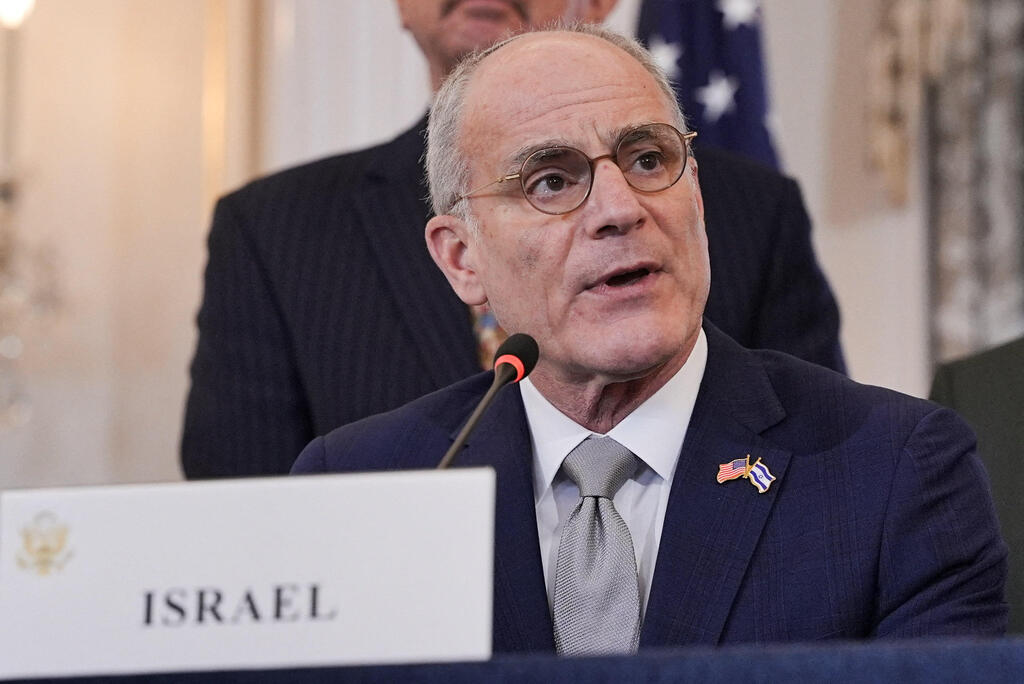
Israel’s ambassador to Washington Yechiel Leiter
(Photo: REUTERS/Ken Cedeno)
“That infrastructure has to be destroyed,” he added. Leiter said Israel and Lebanon now have a shared interest in preventing Iran and Hezbollah from returning to influence the process. “We don’t both want Iran in the equation,” he said. “We were able, by working together, to move it out of the equation. As I said in my remarks at the signing, Iran is out. Hezbollah is out. Now, they’re going to try to work their way back in.”
He also described the agreement as historically significant because it explicitly refers to peace between Israel and Lebanon. “The magic of this agreement that we signed just this past Friday is that peace, full peace, is mentioned 10 times in the document,” he said. “And there’s a recognition of each other’s sovereignty and recognition of each other’s ultimate border between the two countries that needs to be respected.”
Leiter said Israel and Lebanon would form a working group to address remaining border issues, involving “topographers and geographers and mapmakers,” and prepare what he called a shelf agreement for full peace once Hezbollah is dismantled. “We need to create that shelf agreement, keep it ready,” he said. “So the moment that Hezbollah is dismantled to the extent that we can live in full and secure peace with Lebanon, we’ll be able to take that agreement off the shelf and consummate it.”
The ambassador also praised Lebanon’s ambassador to Washington, Nada Hameda, who led the Lebanese delegation in the negotiations. “She provided a challenge, and I think by providing that challenge, by being such a good negotiator, she made us better,” Leiter said. “She forced us to sharpen our arguments. She’s a lovely person, but she is tough in the courtroom. She is one tough lady.”
“I said to her, you fight like a lioness,” he added. Leiter said Hameda and former Lebanese ambassador to the United States Simon Karam “gave everybody a lesson in patriotism,” describing them as “fiercely patriotic” for Lebanon.
The interview also touched on Leiter’s rare public criticism of Israeli ministers, including National Security Minister Itamar Ben-Gvir, after videos showed pro-Palestinian flotilla activists being humiliated, and Social Equality Minister May Golan, after she made comments in the Knesset about Reform Jews and “dog weddings.”
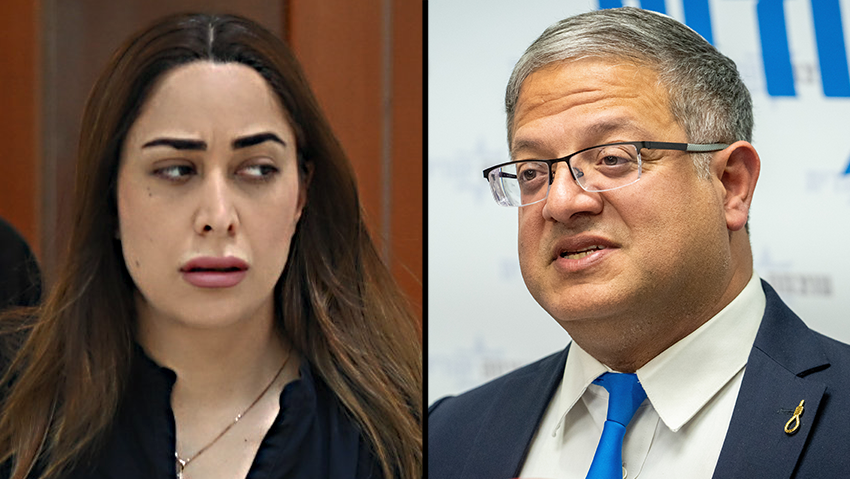
Social Equality Minister May Golan and National Security Minister Itamar Ben-Gvir
(Photo: Shalev Shalom, Yair Sagi)
Leiter said diplomatic protocol generally bars him from criticizing elected officials, but that he would speak out when he believed Israel’s standing was being seriously damaged. “If I detect something which is egregious, which egregiously damages Israel’s standing, which embarrasses Israel, which lends credibility to our worst haters, then I’m going to speak out,” he said.
On Golan’s remarks, Leiter said he could not remain silent. “It was reprehensible,” he said. “I can’t stay quiet in the face of something so egregiously offensive to a large segment of the Jewish people.” He said he later changed his schedule to speak before 350 Reform rabbis at the Stephen Wise Free Synagogue in New York and “offer a personal apology.”
“I did not plan on being in New York that day. I planned on being in Congress, but I canceled my schedule to travel to New York,” he said. Leiter stressed that such public comments were exceptions. “You’ve pointed out a number of exceptional statements that I’ve made,” he said. “I’ve been here for a year and a half. Those are three statements. I speak a lot, so most of my statements are not exceptional and don’t make headlines.”
On Iran, Leiter rejected criticism that Israel made a strategic mistake by going to war. “I think Tamir is actually making a grave mistake,” he said, referring to former Military Intelligence chief Tamir Hayman. “We’ve degraded Iran to the point of decimation.” He added: “I think it’s premature to determine that it was not a worthwhile endeavor. I think it was very much a worthwhile endeavor. We’ve set them back tremendously.”
Leiter also denied that relations between Jerusalem and Washington were in crisis, despite public comments by U.S. President Donald Trump and Vice President JD Vance that drew attention in Israel. “There’s certainly not a crisis,” he said. “There are differences of opinion on certain issues and we try to work them out. The relationship is good. It’s solid.” He said he was in “daily contact with the White House,” sometimes “hourly when necessary.”