


Hamas officials are reassessing their stance on hostage negotiations with Israel following an Israeli airstrike in Qatar targeting senior members of the terrorist group—an incident that has complicated ongoing mediation efforts led by Doha.
Qatar's Prime Minister Mohammed Al Thani said his country is now reconsidering its entire role as mediator, casting uncertainty over whether the Israeli operation was meant solely to target Hamas leadership or to deliberately undermine the diplomatic track and distance both Qatar and Egypt from the process.
Aftermath of Israeli assassination attempt on Hamas leadership, Doha, Qatar
(Video: Reuters)


In an interview with CNN on Monday, Al Thani said, “I think that what Netanyahu has done yesterday, he just killed any hope for those hostages,” the prime minister said. A Hamas source told Ynet that his remarks “should be taken seriously.”
According to the source, contacts with Israel are currently frozen. Although there had been an internal push within Hamas to consider constructive steps, the Israeli strike in Qatar has reinforced opposition to any form of compromise, the source added.
With Qatar pausing its involvement, Egypt remains the lead mediator, though there is growing speculation that the United States may pursue direct engagement with Hamas. Despite the current deadlock, both sides are expected to return to the negotiating table, as no alternative path toward a deal appears viable.
Hamas sources told Saudi daily Asharq Al-Awsat that there is broad internal agreement on the need to resume talks—provided they secure Palestinian demands, especially a full ceasefire and the withdrawal of Israeli forces from Gaza. The group said it plans to hold renewed contacts with mediators “in the coming days,” once the security situation stabilizes enough to restart negotiations.
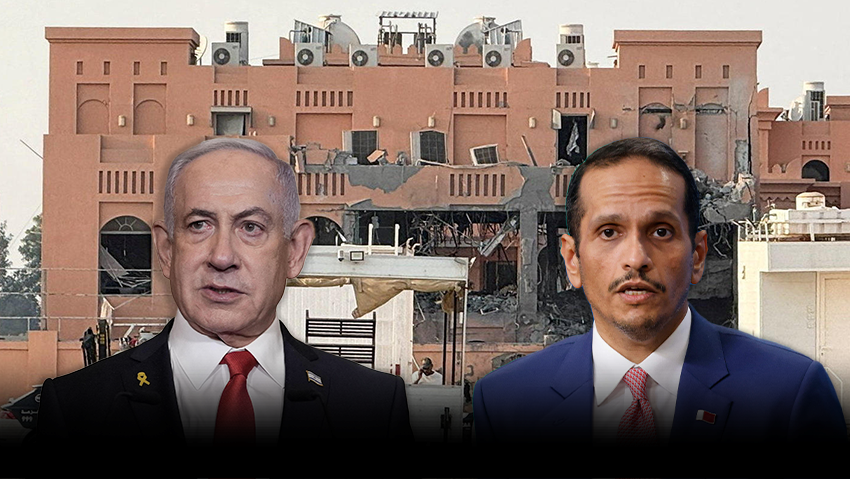
Prime Minister Benjamin Netanyahu, Qatari Prime Minister Mohammed Al Thani
(Photo: REUTERS/Ibraheem Abu Mustafa, Ludovic MARIN / AFP, Oliver CONTRERAS AF)
Hamas officials added that internal consultations would be held discreetly to determine how best to proceed with talks in a way that ensures the group’s core demand—ending the war—is met without repeating past mistakes.
A Palestinian source told Ynet that the talks are expected to remain dormant until around Sept. 22, when Palestinian Authority Chairman Mahmoud Abbas is scheduled to deliver a pre-recorded speech at the United Nations General Assembly, followed by the return of Prime Minister Benjamin Netanyahu from the event. That timeline could shape the next phase, potentially leading to either renewed tensions or a limited de-escalation.
Shalom Arbel, a former Israeli government liaison to Gaza and Shin Bet officer, said Hamas—an organization that glorifies martyrdom and rarely compromises unless its demands are fully met—could still bend under pressure. “The combination of Israeli military pressure and internal tensions in Gaza is mounting significantly,” Arbel said. “The more pressure increases, Hamas will either double down or signal to Egypt that it wants the war to end.”