

At least five terrorists emerged from a tunnel in Rafah on Wednesday, with one managing to fire an RPG or attach an explosive device to an IDF Namer armored personnel carrier, in a rare clash that left five soldiers wounded, one severely. Hours after the incident, as the search for several assailants continued, additional details surfaced about the firefight. Following the attack, Prime Minister Benjamin Netanyahu convened a late-night consultation with Defense Minister Israel Katz, IDF Chief of Staff Lt. Gen. Eyal Zamir, Shin Bet Director David Zini and other senior security officials.
Participants in the meeting resolved to respond forcefully to what Israel described as a blatant violation of the ceasefire agreement by Hamas. Officials also examined freezing the plan to reopen the Rafah crossing for Gazan departures. Israel informed the United States of the incident and of its intention to respond sharply. A security official stressed that “Israel will not let the Rafah incident pass in silence.”
Documentation from the attacks in Khan Younis, last night


Hours after the clash, the IDF said that “in response to the ceasefire violation IDF and Shin Bet forces struck a Hamas terrorist.” According to the military, “Hamas carried out a blatant violation of the ceasefire agreement when terrorists attacked IDF forces deployed in the Rafah area, wounding five soldiers. In response, the IDF, guided by Military Intelligence and the Shin Bet and using the Air Force, struck a Hamas terrorist in southern Gaza.”
Hamas-run authorities in Gaza reported at least four Israeli airstrikes in western Khan Younis Wednesday. According to those reports, at least six people were killed and several others wounded in a strike on tents for displaced families in the Mawasi zone. Separately, the IDF carried out strikes in the Rafah area, targeting weapons stockpiles, arms workshops, Hamas command-and-control centers and terrorist operatives including senior field commanders.
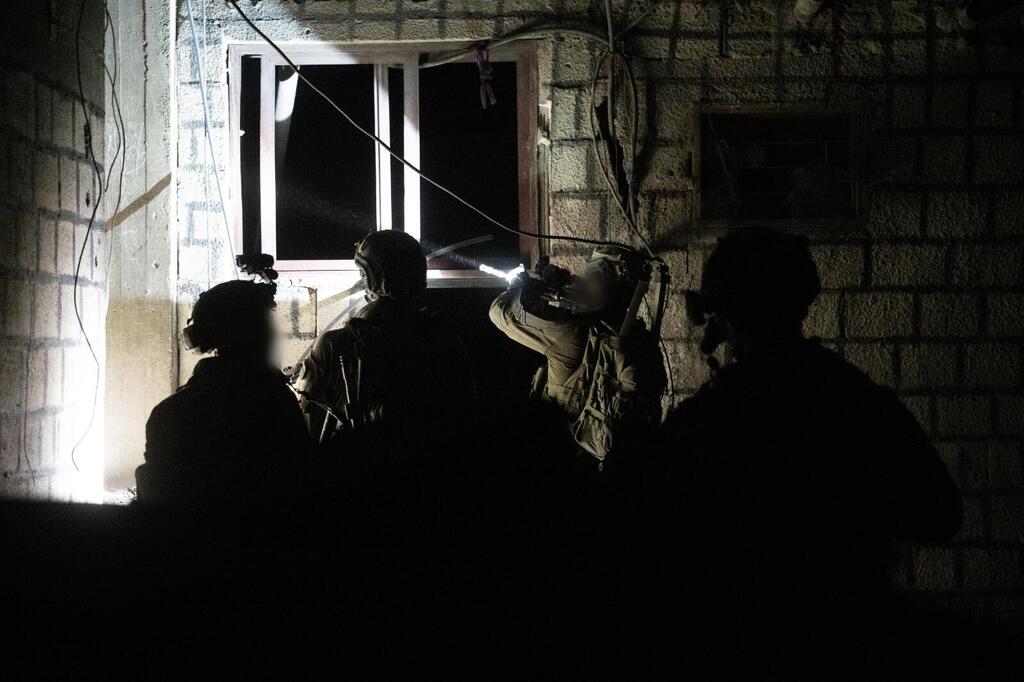
The Rafah clash
The incident in Rafah began around 3:15 p.m. when Golani Brigade forces operating in the Jenina neighborhood searched for and prepared to destroy another tunnel shaft believed to be sheltering terrorists. Troops first spotted a suspect near one of the openings and pursued him. About 30 minutes later, while continuing to sweep the area, the force was ambushed at close range by at least five terrorists who emerged from the tunnel system.
One terrorist fired an RPG or planted an explosive device on a Namer armored vehicle, injuring four soldiers — a Golani commando critically, two others moderately, and a fourth lightly. At least two terrorists were killed, while several others escaped back underground.
The IDF said the injured troops were evacuated to a hospital and their families were notified.
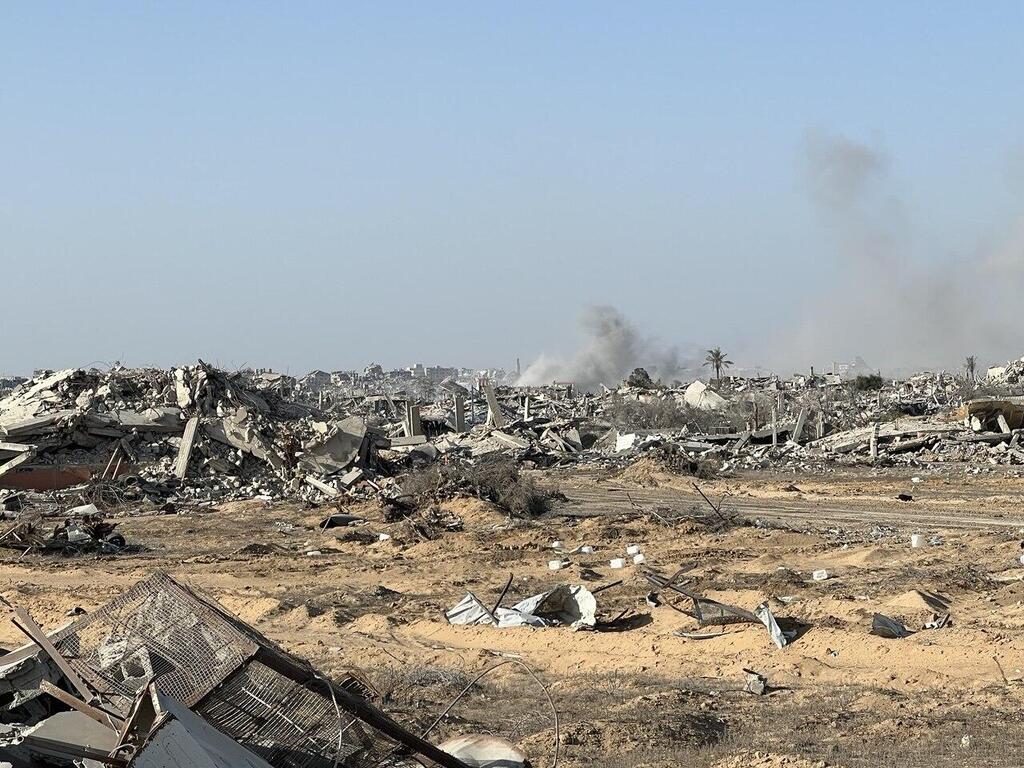
IDF: 'The forces remain deployed according to the ceasefire framework and will continue to remove any immediate threat'
(Photo: Ron Crissy)
Israel: Hamas 'violating the ceasefire'
“The forces remain deployed according to the ceasefire framework and will continue to remove any immediate threat,” the IDF said.
Prime Minister Benjamin Netanyahu said: “Hamas continues to violate the ceasefire and carry out acts of terror against our forces. Israel will not tolerate harm to IDF soldiers and will respond accordingly.”
Military officials estimate only a few dozen weakened, hungry and leaderless terrorists remain trapped in Rafah tunnels. The standoff is expected to last several more weeks until they surrender, attempt escape or initiate further attacks.
Elsewhere in Gaza, dozens to hundreds of terrorists involved in the Oct. 7 massacre remain effectively off-limits under the terms of the ceasefire arrangement, shaped by Qatari and Turkish pressure. As a result, Israeli operations on the Hamas side of the “yellow line” dividing Gaza have been largely defensive rather than offensive.
US pressure and the test ahead
Israel, under heavy American pressure, is allowing Hamas more time to locate and return the final two bodies of Israeli hostages still held in Gaza — one of which may have been transferred Wednesday, though identification is pending. Returning both is required to complete the first phase of the ceasefire agreement.
The larger test will follow: whether a multinational force meant to enforce Hamas’ disarmament actually deploys, even as the terror group uses the lull to rebuild its capabilities and reassert control.
IDF officials currently assess that if implementation stalls, Washington will likely prevent a renewed Israeli ground offensive beyond limited and targeted airstrikes — though Israel is expected to be permitted to maintain positions along the “yellow line” splitting the Gaza Strip.
First published: 23:02, 12.03.25