

According to reports from Gaza, IDF forces operating in the Gaza Strip have pushed the Yellow Line forward by dozens of meters. Three years after the October 7 massacre, the IDF controls approximately 64% of the Gaza Strip, with two divisions deployed across a broad area and about 30 military outposts.
Israeli defense officials say the military's defensive lines have been completely overhauled since the massacre and the failures that preceded it. Pushing the Yellow Line forward serves several operational purposes. It allows the IDF to improve its operational control in areas where it detects significant Hamas efforts to regroup or indications that terrorists intend to carry out attacks or launch terrorist operations from those locations.
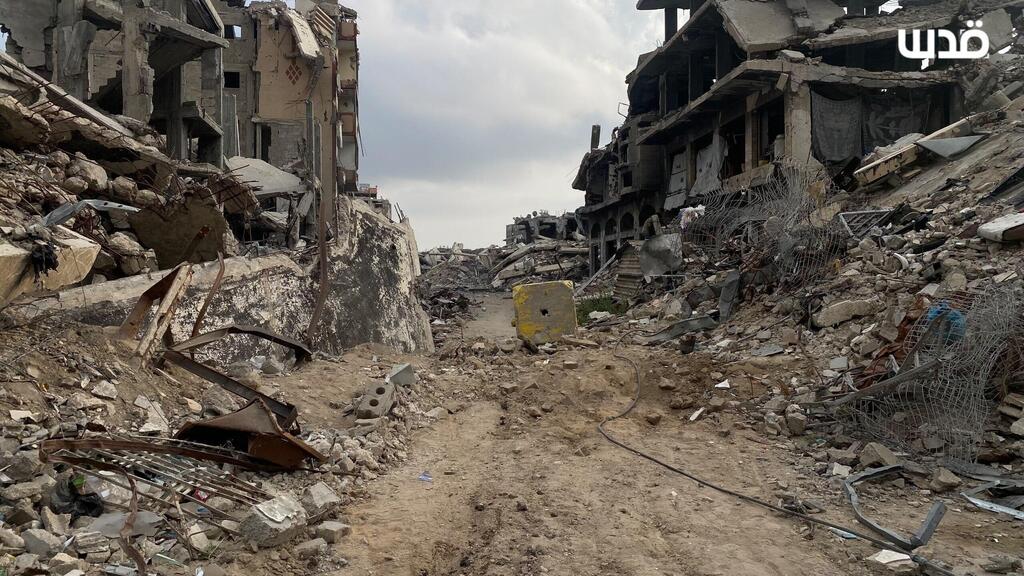
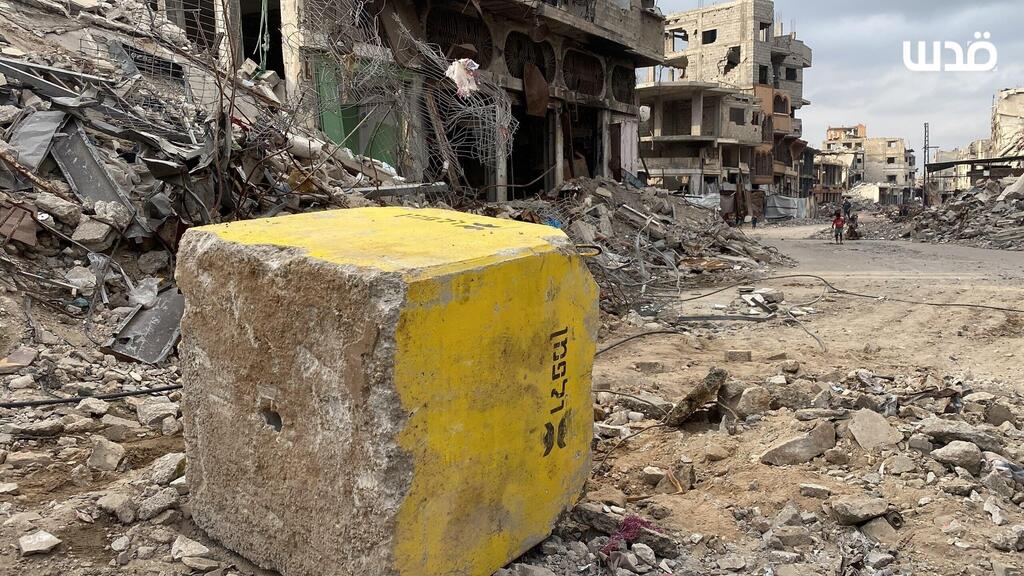
Shijaiyah, Gaza, after the Yellow Line was moved


"Even if Hamas tries to do something, it will encounter IDF forces positioned on the front line. Our defense does not begin at the border fence but deeper inside the territory," a senior defense official told ynet and Yedioth Ahronoth.
Since October 7, holding territory has become a cornerstone of the IDF's offensive defense strategy across most fronts, particularly in Gaza, Syria and Lebanon. The idea is not to wait for the enemy to reach Israeli communities but to establish a buffer zone where threats can be identified, intercepted and confronted before they reach populated areas.
The IDF did not always embrace this approach. For years leading up to October 7, 2023, Israel's defense doctrine was built around intelligence and technological superiority. Oct. 7 exposed the limitations of a doctrine focused primarily on preventing surprise attacks. The failure went deeper than the lack of an intelligence warning and the inability to prevent the surprise assault: The IDF was not prepared to fight such an attack once it was underway. That lesson is now being applied in different ways across all fronts.
In Gaza, the IDF has shifted from a defense strategy centered on defending the border to one focused on shaping the territory beyond it. The military controls key routes, operates outposts and forward positions and continues efforts to locate and dismantle underground infrastructure in areas under its control.
This marks a dramatic departure from the defense doctrine that prevailed before the massacre, when the military's instructions were to defend the border and enter Gaza when necessary. The question today is not simply how much territory the IDF holds, but how long it can maintain control, at what cost and with how many troops.
The military is pursuing a similar approach on other fronts, including Lebanon and Syria. The lesson drawn from the failures of three years ago is the need to establish defensive depth and maintain a presence on the ground, creating a security buffer of roughly 10 kilometers (6 miles), while conducting operations aimed at pushing threats farther away and preventing hostile forces from reestablishing themselves.
This new defense strategy also requires a larger deployment of forces. Some 40,000 reservists have been added to the military's personnel roster since the start of the war, tens of thousands of reservists have been reassigned, approximately 30 battalions have been added to the military's operational force structure and mandatory military service has been extended to 32 months.
New formations have been established, additional battalions and rapid-response units have been created and drone and remotely piloted aircraft capabilities have been expanded. Intelligence-gathering and firepower capabilities have also been strengthened, while new formations have been established to provide greater military strength within each operational sector.
Beyond the operational costs, holding territory also carries a price on the international stage. Israel is already facing U.S. pressure to withdraw from areas it captured in southern Lebanon. The IDF's new strategy is also hampering normalization with Arab countries, which are increasingly alarmed by what they perceive as a "plot to expand Israeli territory at their expense."