

U.S. military transport and refueling aircraft were documented Monday at Ben Gurion Airport as part of a major American military buildup in the Middle East, amid preparations for a possible strike on Iran. Earlier, the aircraft carrier USS Gerald R. Ford was spotted near Crete after being deployed from the Caribbean, reportedly in part to help defend Israeli cities in the event of an Iranian response.
During a 40-signature debate in the Knesset, Prime Minister Benjamin Netanyahu addressed the regional tensions in a speech shorter than usual. Turning to opposition lawmakers who criticized him, Netanyahu said: “We are in very complex and challenging days, the public knows, and every member of Knesset knows it. No one knows what tomorrow will bring. We are keeping a watchful eye and are prepared for any scenario.”
Gallery
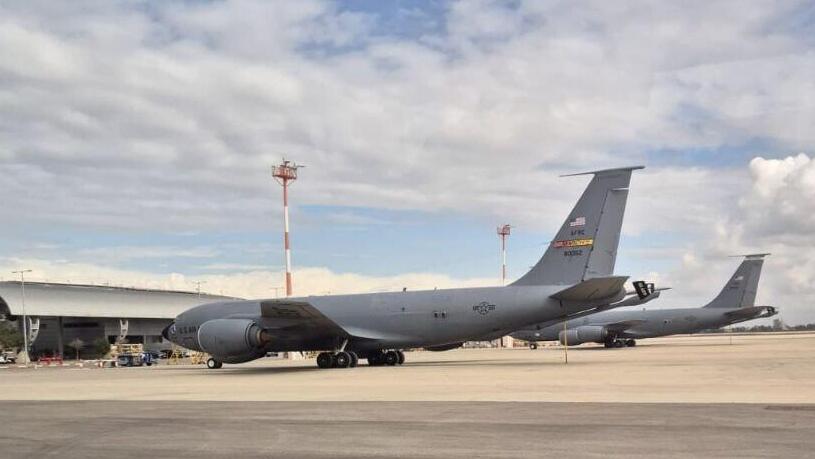
US refueling aircraft and C-17 Globemaster heavy transport planes at Ben Gurion Airport ahead of a possible strike on Iran
(Photo: Social media)
Netanyahu added: “I have made it clear and conveyed to the ayatollah regime that if they make the mistake, perhaps the gravest in their history, and attack the State of Israel, we will respond with a force they cannot even imagine. This is not a time for polemics. In these days, on the eve of the holiday of Purim, in those days as in this time, we must close ranks, stand shoulder to shoulder.”
It remains unclear what U.S. President Donald Trump has decided, if anything. Talks are scheduled to take place Thursday in Geneva, Switzerland, between Trump’s envoy Steve Witkoff and Iranian Foreign Minister Abbas Araghchi.
Further evidence of rising tensions with Iran came at midday with a U.S. decision to evacuate dozens of American citizens from Lebanon, including nonessential staff at the U.S. Embassy in Beirut and their family members. A source at the U.S. Embassy told Reuters that 50 people were evacuated, while an official at Beirut’s airport told the news agency that 32 embassy staff members and their relatives departed the airport.
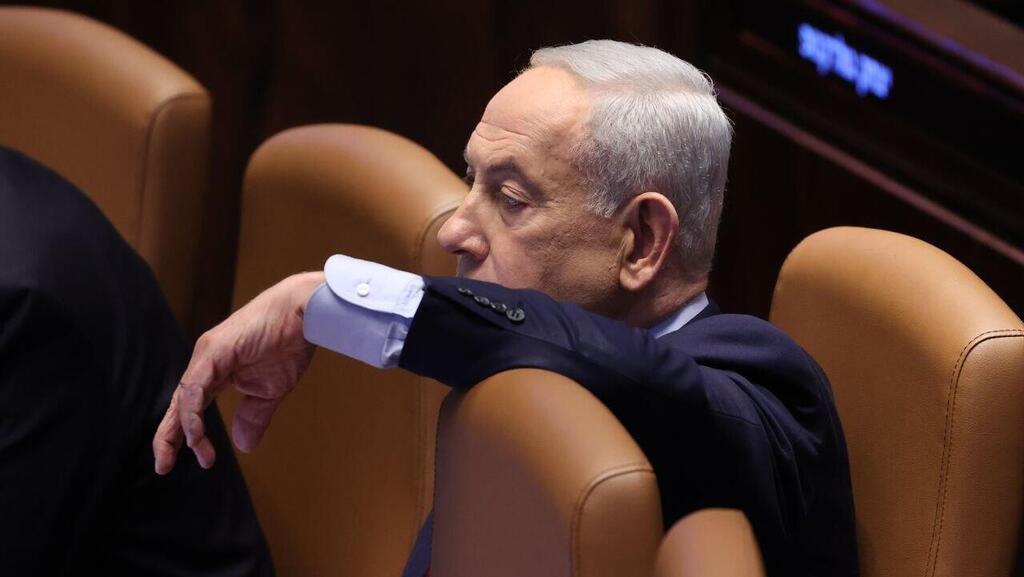
Netanyahu ahead of his remarks in the 40-signature debate in the Knesset
(Photo: Alex Kolomoisky)
A senior U.S. State Department official told Lebanon’s MTV network: “We continually assess the security environment and based on our latest review, we decided it was appropriate to reduce our presence at the embassy in Lebanon to essential personnel only. The embassy in Beirut remains operational with essential staff. This step is temporary and intended to ensure the safety of our personnel.”
In another update from Washington, Secretary of State Marco Rubio postponed a planned visit that had been scheduled for Saturday night. He is now expected to arrive Monday, although the State Department noted that the schedule could still change.
According to the opposition-affiliated Iran International network, student protests against the regime continued in Tehran on Monday. Videos were published of demonstrations at universities in the capital, including Alzahra University and Amirkabir University of Technology. Iranian media outlets identified with the regime also reported that residents received text messages from an unknown source stating that U.S. President Donald Trump “is a man of action.”
According to the Institute for National Security Studies, more than 200 U.S. fighter jets are currently in the Middle East, and more than 300 including those stationed in Europe. These include 36 F-15 aircraft and at least 48 F-35 stealth jets. Twelve F-22 stealth jets are stationed in Britain, along with 36 F-16 aircraft in the region.
In addition to fighter jets, U.S. forces in the region include more than 100 refueling, command and control, intelligence and transport aircraft. American strike groups include two aircraft carriers — the USS Abraham Lincoln, which arrived weeks ago, and the USS Gerald R. Ford, now in the Mediterranean and continuing eastward after being spotted near Crete — as well as 12 destroyers. Additional destroyers may also be en route.
First published: 18:05, 02.23.26