

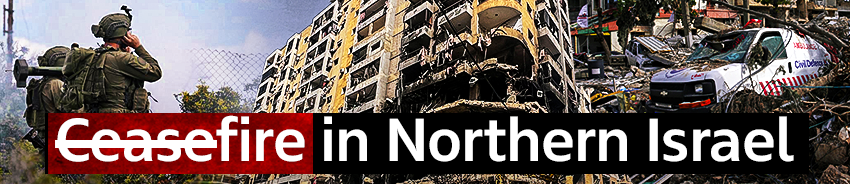
The IDF is continuing to investigate how Hezbollah FPV drones managed in recent days to strike troops in southern Lebanon at night for the first time. The first incident occurred on Saturday, when Givati Brigade soldier Staff Sgt. Michael Tyukin, 21, of Ashkelon, was killed. A second incident followed overnight Sunday into Monday, when Maglan commando Staff Sgt. Adam Tzarfati, 20, of Rosh HaAyin, was killed.
"It’s quite unusual that the drone struck a force at night. That still hasn’t happened to combat teams before," a Givati reconnaissance soldier said after visiting troops wounded in the drone strike on a force that was en route to the Beaufort area. On Sunday, Givati Brigade’s Shaked Battalion physician, Capt. Dr. Ori Yosef Silvester, was killed in a daytime FPV drone strike.

The military had been concerned that Hezbollah could equip fiber-optic FPV drones with thermal systems, enabling them to operate at night. Such a development would be significant because every additional component added to a drone increases its weight, reducing both flight time and maneuverability. For that reason, the deaths of Tyukin and Tzarfati in nighttime FPV drone attacks are causing considerable concern within the military.
Until now, the assessment had been that the drones involved did not carry thermal systems, which would indicate improved operational capabilities after dark. The IDF is treating the incidents with the utmost seriousness.
"There is a steadily rising learning curve, and not only with drones," military officials said. "They improve the accuracy of their fire every time. That’s why we try to keep moving as much as possible, both in the security zone along the Yellow Line and during maneuver operations, rather than remaining static."
The IDF and Hezbollah are engaged in what officials describe as a battle of adaptation. According to security sources, Hezbollah studies IDF tactics and improves over time. Its operatives have largely withdrawn from direct face-to-face firefights, but they continue to learn Israeli operational methods throughout the campaign.
At the start of the ground operation, Hezbollah relied heavily on rockets and anti-tank missiles. After being pushed back, it increasingly turned to FPV drone attacks. The group has continued to refine its use of the weapon. Initially, it struggled to operate drones effectively and had difficulty identifying targets. IDF drone specialists have since reported improvements in Hezbollah’s piloting capabilities and its ability to approach troops more closely.
At the same time, the IDF has significantly expanded its use of protective netting and sharpened procedures for detecting and intercepting FPV drones.
As part of efforts to counter the drone threat, the military has sharply reduced its use of heavy engineering equipment such as excavators and bulldozers, which had become easy targets. One objective of expanding operations toward the Beaufort area is to make it more difficult for Hezbollah to launch FPV drones at communities along the northern border.
Catching a drone with a net-firing gun


"They are withdrawing toward the next line of houses, sometimes hundreds of meters farther back," a military official said. "We hope that in the near future we will see some change in this threat, especially for residents of northern Israel."
Meanwhile, wounded soldiers continue to receive visits from fellow troops at Rambam Medical Center in Haifa. Many described a sense of frustration.
"Fifteen people have been killed during what is supposed to be a ceasefire, when there really is no ceasefire," one soldier said while visiting a friend wounded in an FPV drone attack. "Maybe Hezbollah’s drones now have new thermal cameras and they can actually see our forces moving."
Family members of the wounded voiced similar concerns. The father of one hospitalized soldier said: "The forces used to move at night, and now there have been two fatalities in nighttime incidents. It’s unbelievable. Everything is happening during those hours. This will certainly be examined.
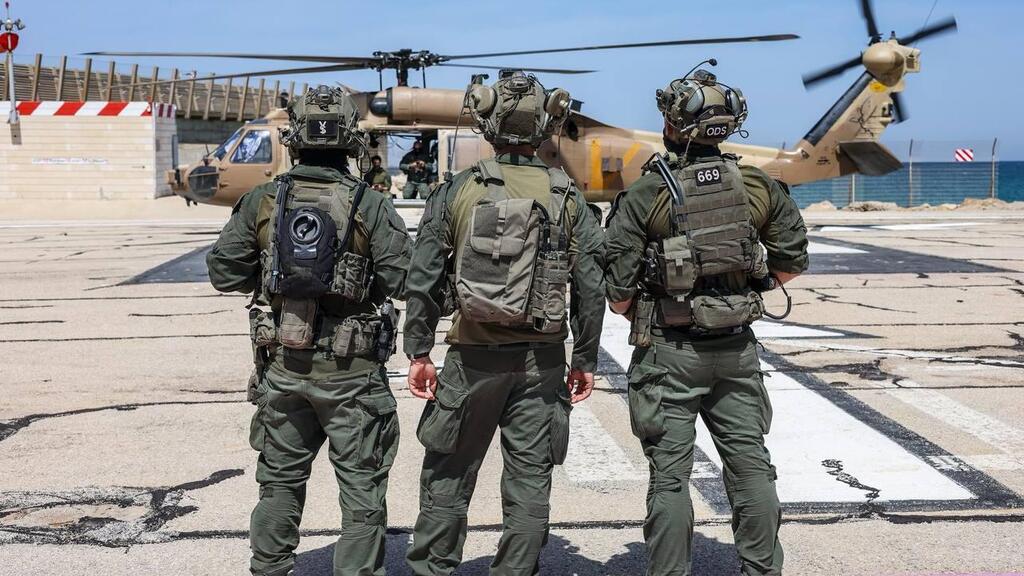
(Photo: Rambam)
He added: "How many more people will be killed during this 'ceasefire'? How many? The time has come to act and explain to U.S. President Donald Trump that action is necessary."
'Game-changing' waves of nighttime drones
Separately, a security expert told Fox News that Hezbollah FPV drones are flying at night using thermal sensors and tracking heat signatures to locate IDF troops.
Cameron Chell, a security expert and CEO of Draganfly, one of the world’s oldest commercial drone manufacturers, said Hezbollah has begun deploying what he described as "game-changing" waves of very small lethal nighttime drones against Israel.
"These drones are typically used by teams in the field to carry out lethal missions or immediate surveillance missions directly in the operational area," Chell said. "What they are able to do is use thermal sensors to fly at night and use heat signatures to identify IDF forces."
Chell also warned that Hezbollah’s drone campaign is likely to intensify.
"What you’re going to see is an escalation in drone usage and innovation in asymmetric warfare in this particular region by Hezbollah," he said.
According to Chell, the IDF will need to employ a range of countermeasures, including electronic jamming, net guns and protective netting placed around facilities and vehicles in an effort to prevent drones from reaching their targets.
"The IDF will have to change much of its strategy regarding its ability to move and operate at night," he said. "They will now have to take into account that Hezbollah has nighttime capabilities, at least for surveillance through thermal cameras and also for attack operations."
Hezbollah Secretary-General Naim Qassem has also praised the organization’s drone capabilities, describing them as an effective weapon against Israeli forces operating near and inside southern Lebanon. Chell noted that Hezbollah appears to have an established supply chain, emphasizing that the group is not using breakthrough technologies.
"These are very old technologies and strategies that they are employing," he said.
"However," Chell added, "someone is providing Hezbollah with the equipment. Whether it comes through Iran, China, Russia, Afghanistan or the black market, someone is obtaining enough products and feeding them into their supply chains."