

Negotiations between the United States and Iran, which Israeli officials widely doubt will yield an agreement preventing a U.S. strike on the Islamic Republic, are set to begin. At 8 a.m. Israel time on Friday. Representatives of President Donald Trump, special envoy Steve Witkoff and the president’s son-in-law Jared Kushner, are due to meet in Muscat, the Omani capital, with Iranian Foreign Minister Abbas Araghchi.
Tehran is presenting the talks as limited to its nuclear program, but The New York Times reported that Iran has agreed to discuss its ballistic missile program and its support for regional proxies as well, provided the “focus” remains on the nuclear issue.
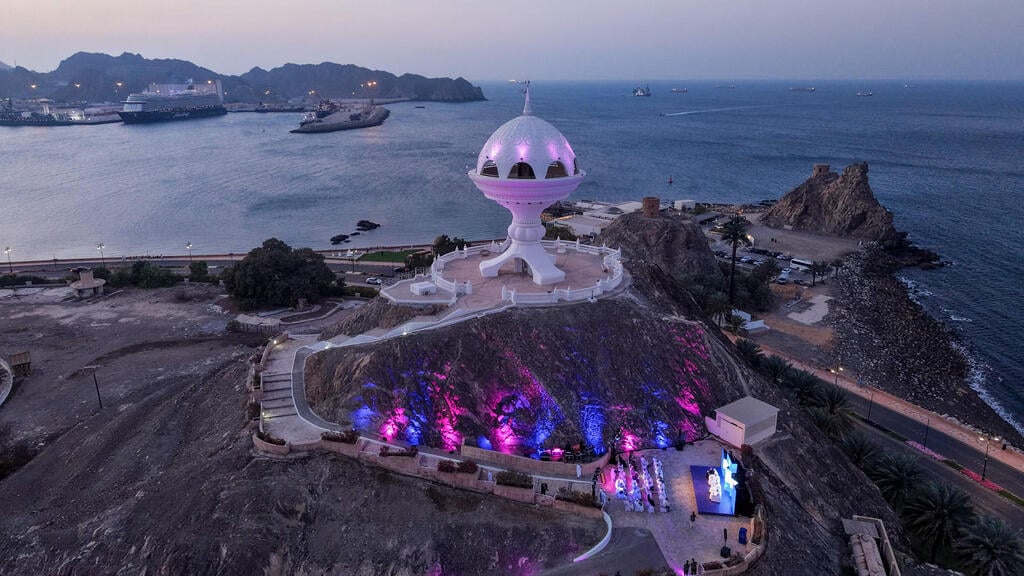
Oman's capital, Muscat
(Photo: Haitham AL-SHUKAIRI / AFP)
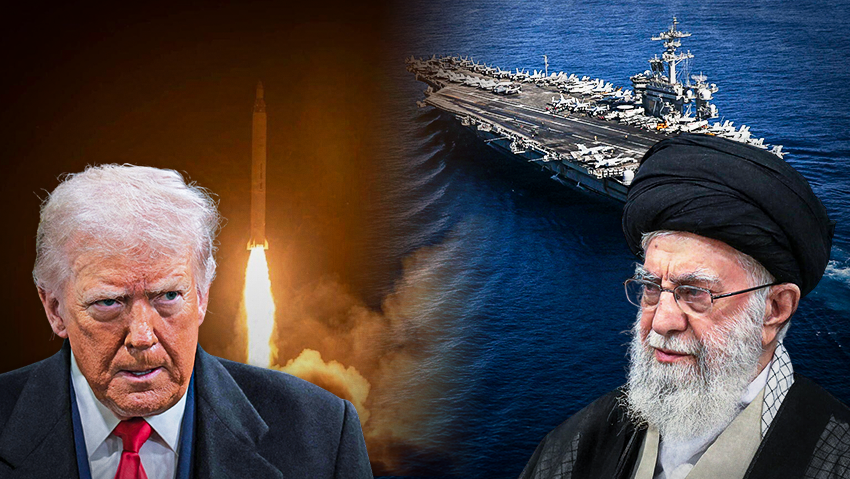
The talks come after weeks of peak tensions. They trace back to last month’s protests in Iran, when Trump promised demonstrators that “help is on the way.” He did not follow through on that pledge, but sent what he described as a “big armada” to the region, including the aircraft carrier USS Lincoln and eight destroyers, and threatened to strike Iran unless it quickly reached an agreement with Washington — one that would effectively leave the ayatollahs’ regime in place. Trump has not set a formal deadline but has said “time is running out,” and on Saturday warned Supreme Leader Ayatollah Ali Khamenei that “he should be very worried.”
According to Reuters, U.S. demands include a total ban on uranium enrichment, limits on the number and range of Iran’s ballistic missiles — reportedly to 500 kilometers, putting Israel out of range — and an end to Iranian support for its proxies across the Middle East, including Hezbollah in Lebanon, militias in Iraq and the Houthis in Yemen. U.S. officials have also signaled they may raise Iran’s treatment of protesters after the brutal crackdown in which thousands were killed, possibly seeking commitments to refrain from further violence. Despite Israeli concerns that Trump might ultimately settle for a narrow nuclear-only deal, a senior Israeli official told ynet that Washington does not intend to “blink.” “I wouldn’t bet on the Americans folding,” the official said. “They have very clear red lines, and if the Iranians don’t dance to their tune, they will feel American power very soon.”
In Israel, as among many U.S. officials, expectations for an agreement are low. Still, officials believe the talks could create positive momentum or a framework for continued negotiations. It remains unclear whether Iran will try to drag out the process. Israeli assessments hold that Washington lacks the patience for prolonged talks, given the high cost of its expanded military presence in the region and may soon present Tehran with an ultimatum: an agreement on U.S. terms or war.
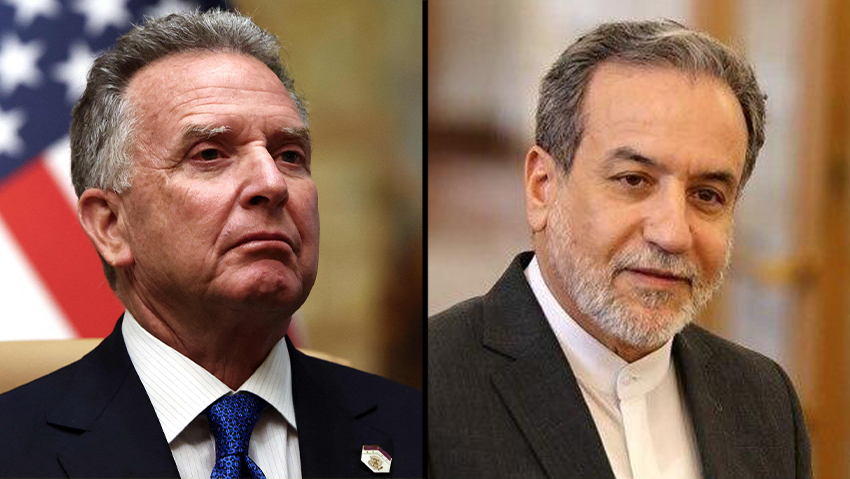
Iranian Foreign Minister Abbas Araghchi and US envoy Steve Witkoff
(Photo: REUTERS/Evelyn Hockstein/Pool )
The video released by Iran on the eve of the talks: the launch of a Khorramshahr-4 missile


Israeli officials nonetheless fear Trump could be satisfied with a nuclear achievement alone and ease up on missile limits, proxy activity and human rights. Prime Minister Benjamin Netanyahu told ministers at a Cabinet meeting that he does not know how Trump will act, though he stressed there is “excellent coordination” with Washington. Netanyahu briefed ministers on preparatory talks he held Tuesday with Witkoff, who visited Israel, and reiterated that if Iran attacks Israel, it will face a response “unprecedented in its intensity,” stronger than Israeli strikes during the 12-day war last June.
Limiting the range? Iran boasts of a missile that 'reaches 2,000 kilometers'
On the eve of the talks, Iran sent fresh threats. The Fars news agency published footage of the launch of what it described as a Khorramshahr-4 ballistic missile, calling it one of Iran’s “newest and most powerful,” with a reported range of 2,000 kilometers and a 1,500-kilogram warhead. Fars claimed the missile had been deployed for the first time in underground bases of the Revolutionary Guard and that it reaches speeds of up to Mach 16 outside the atmosphere and Mach 8 within it, shortening flight time to 10 to 12 minutes and limiting interception.
Yadollah Javani, a senior Revolutionary Guard official, told Al-Mayadeen that the missile’s “exposure” was a message to the United States. “When we sit at the negotiating table, we do not give up our military capabilities,” he said. “We do not seek war, but if the enemy makes a mistake, we will respond with force.” He added that a war with Iran would become regional and warned that U.S. power is weaker than before.
Footage of takeoffs and landings aboard the aircraft carrier Lincoln
(Video: CENTCOM)
Despite the rhetoric, Iran enters the talks in a weakened position. The regime fears renewed domestic unrest, and Reuters reported that senior officials warned Khamenei a U.S. strike could spark another uprising. Iran’s proxy network has also been badly damaged during the Gaza war: Hezbollah was battered in Lebanon, the Assad regime fell in Syria, and Iraqi militias refrained from aiding Iran during last year’s 12-day war. The concern now is that a U.S. attack would prompt Iranian strikes on Israel and draw in its remaining allies. Israel is preparing accordingly and says it will respond forcefully to any escalation.
The buried uranium and the fear of producing 3,000 missiles a year
In a more conciliatory tone, Iran’s Foreign Ministry said Saturday that the goal of the talks is “to reach a fair, mutually acceptable and dignified understanding on the nuclear issue,” adding that diplomacy should not be wasted and thanking regional states that helped shape the process.
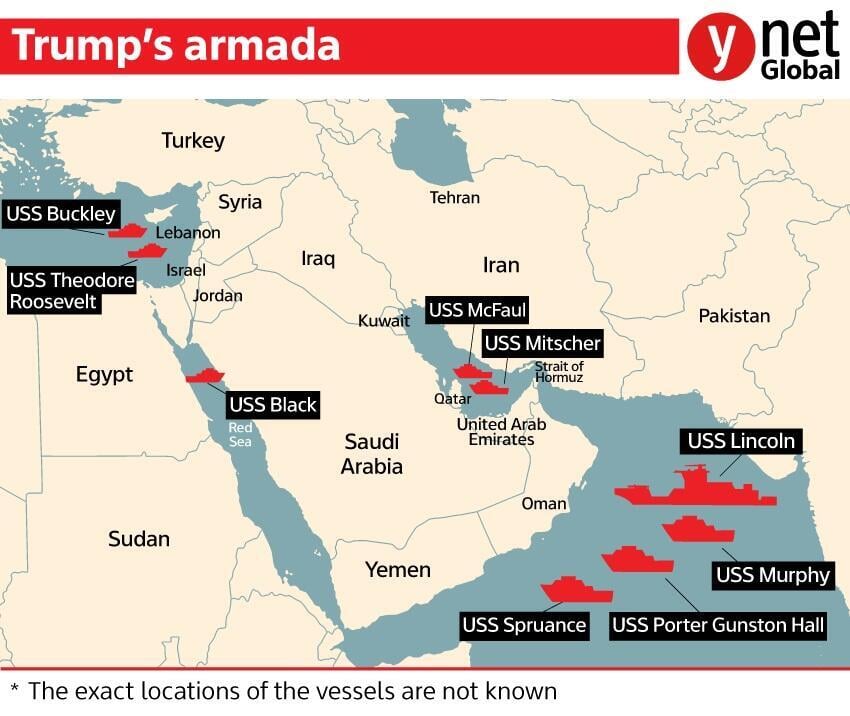
Trump's armada
The Muscat talks will be the first since five rounds of U.S.-Iran negotiations in the first half of last year, also led by Araghchi and Witkoff and mostly mediated by Oman. According to The New York Times, Witkoff and Kushner are expected to meet Araghchi directly, though it is unclear whether the talks themselves will be face-to-face or indirect.
Gaps between the sides remain wide. Iran insists on limiting negotiations to its nuclear program. In a CNN interview this week, Araghchi said that if the United States avoids what he called “impossible demands,” meaning missile restrictions, “there is a chance for an agreement within a short time.” The Times reported that Iran may consider a compromise floated last year: a regional consortium with Arab states to enrich uranium for civilian energy purposes outside Iran. Publicly, Tehran continues to insist on its right to enrichment, which it is currently believed not to be carrying out after last June’s Israeli and U.S. strikes.
Another key issue is Iran’s stockpile of uranium enriched to 60 percent, close to weapons-grade. The estimated 440 kilograms — theoretically enough for nine bombs — is believed to be buried underground after strikes on nuclear sites at Natanz, Fordo and Isfahan. U.S. and European intelligence officials told The New York Times there is no sign Iran has accessed the buried material. Iran may agree to transfer enriched uranium to Russia, as it did after the 2015 nuclear deal that later collapsed.
The central dispute, if Iran agrees to discuss it at all, is the U.S. demand for limits on Iran’s ballistic missile program. Iran has built one of the region’s largest missile forces over decades and views it as critical to deterrence and regime survival, a perception reinforced by the weakening of its proxies. During the 12-day war, Israel repeatedly struck facilities tied to missile production, including equipment used to make solid fuel. Netanyahu said afterward that Israel removed an existential threat and prevented Iran from fielding 20,000 missiles. Still, Iran retains a sizable arsenal and has been working to rebuild it. NBC reported in December that without changes, Iran could produce 3,000 missiles a year.
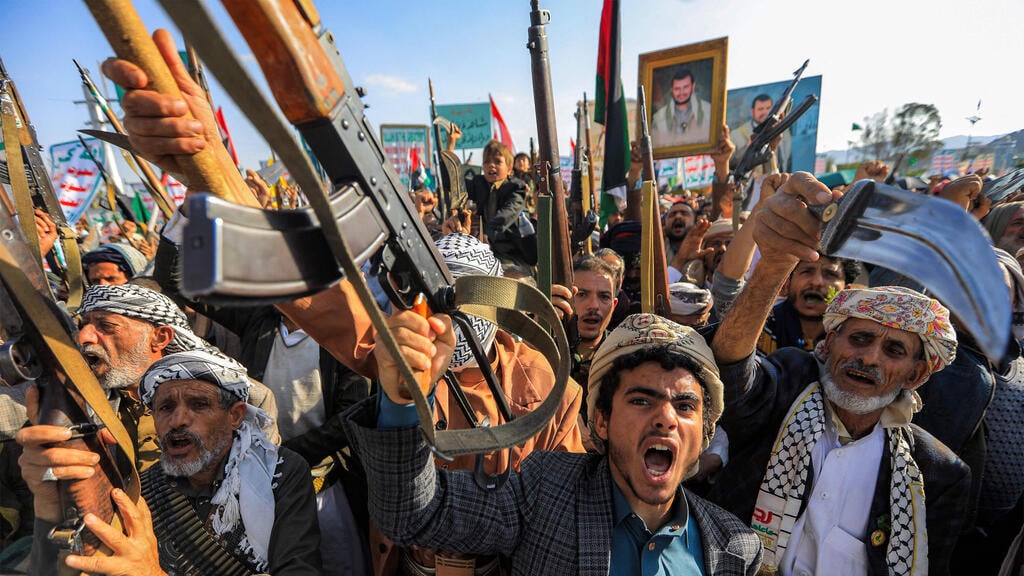
Houthi supporters demonstrate in Sanaa
(Photo: Mohammed HUWAIS / AFP)
U.S. demands reportedly include caps on missile production, a 500-kilometer range limit and verification measures to prevent covert manufacturing. Iranian officials told Reuters such limits would be unacceptable, as missiles are seen as Iran’s strategic shield.
A third U.S. demand is curbing Iranian support for militant groups. Israeli and U.S. officials have little optimism, noting enforcement would be difficult and that Iran could circumvent restrictions through charities or religious institutions, allowing funds to flow back into militant activity.