


The United States on Wednesday evening canceled the talks it had planned to hold with Iran on Friday. The decision followed Washington’s refusal to limit the scope of the negotiations, as demanded by Tehran.
U.S. President Donald Trump said in an interview broadcast Wednesday evening on NBC that Tehran is still negotiating, but claimed that Iran's Supreme Leader, Ali Khamenei, should be very concerned. He added that the US had identified that Tehran was trying to build a new nuclear facility, and warned: "I said, 'You do that, we are going to do really bad things to you.'"
The breakdown in the talks was first reported by Axios, and immediately afterwards a U.S. official said that American envoy Steve Witkoff, who was slated to represent the Trump administration in the talks, will leave the Middle East on Thursday and return to Miami. “The gaps between the United States and Iran are very, very large — and not bridgeable,” a senior Israeli official said Wednesday evening.
Iran sought to confine the negotiations solely to the nuclear issue, saying other matters, including ballistic missiles and the financing of terror organizations in the region, were not on the table. An indication that the planned talks were likely to be canceled came earlier in the day from Secretary of State Marco Rubio, who said that if Iran wants the talks to lead to something meaningful, they must include, among other things, the issue of ballistic missiles — which Tehran insists on excluding — as well as the financing of terror groups in the region and the “treatment” of the Iranian people.
Gallery
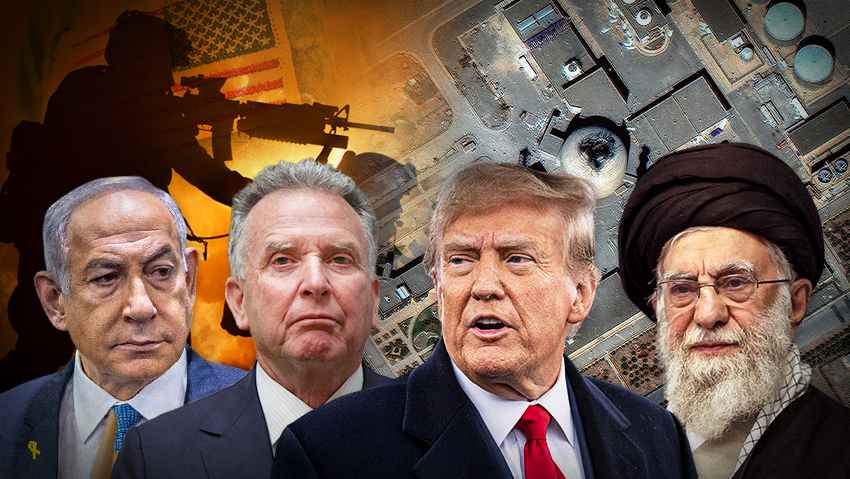
(Photos: lev radin/Shutterstock, AP, Chaim Goldberg/Flash 90, Satellite Image ©2025 Maxar Technologies/AFP, Getmilitaryphotos/Shutterstock, A)
Rubio later clarified, however, that “if Iran wants to meet on Friday — we are ready. Ultimately, the United States is willing to talk and has always been willing to talk with Iran.” Speaking at a news conference, he did not confirm reports of a change in the location of the talks and said it appeared the Iranians had changed their minds after refusing to hold them in Turkey and instead demanding a move to Muscat, the capital of Oman.
After reports of the cancellation, a senior Iranian official told Reuters that “the U.S. insistence on discussing issues unrelated to the nuclear file could jeopardize the talks.” According to the official, “Tehran is fully prepared to hold talks with the United States — only on the nuclear issue.”
What the U.S. wants — and what Iran wants
Iran demanded that the negotiations be limited strictly to the issue of its stockpile of enriched uranium — 400 kilograms. The American interest, shared by Israel, is to broaden the talks to additional issues, such as future uranium enrichment. Iran has refused to give up its right to enrichment, while the Americans have insisted on zero enrichment. The United States is also demanding that Tehran allow oversight of its nuclear program and immediately cooperate with inspectors from the International Atomic Energy Agency, including permitting surprise inspections.
On the missile issue, the United States has also raised demands: to impose limits on the quantities Iran produces, on missile ranges and, above all, to establish supervision and monitoring to ensure Iran is not “deceiving” the world and producing additional missiles. Iran, according to assessments, will not agree under any circumstances to enter negotiations on missiles, which it views as its Iron Dome against other countries in the region. For Israel, this is considered an existential threat, to the point of a red line.
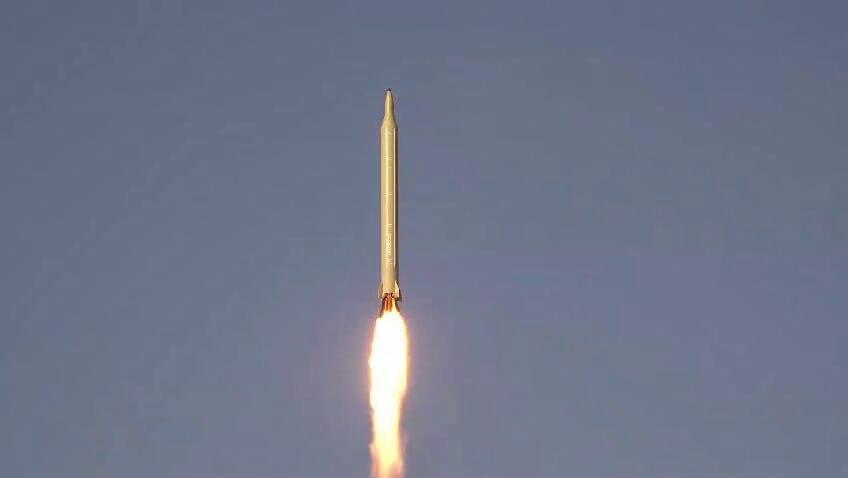
Iranian missile moments after launch
The third issue the Americans sought to address is assistance to terror organizations in the region. In Israel and the United States, there is little optimism on this front, in part because it would be extremely difficult to enforce. Iran can circumvent restrictions in various ways, including through charitable or religious organizations, from which the path to terror financing is short.
US to Israel: No rash steps
The cancellation of the Iran-U.S. talks also comes after two Iranian provocations were recorded Tuesday amid the growing buildup of U.S. forces in the region. The first was an attempt to seize a tanker flying the U.S. flag in the Strait of Hormuz. The second was the downing of an Iranian drone that approached the aircraft carrier Abraham Lincoln, sailing about 800 kilometers from Iran. The Wall Street Journal reported Wednesday that President Trump considered withdrawing from the talks with Iran following the two incidents in the Persian Gulf, but ultimately decided not to do so.
The United States is not overly alarmed by the Iranian provocations and needs more time to build readiness vis-à-vis Tehran. As a result, it is holding back, perhaps even biting its lip — but not for much longer. The Americans are not naive and are logging every incident.
Trump to Iran: If no deal is reached, bad things will happen


The United States has conveyed a message to Israel urging it to wait and refrain from rash steps such as a preemptive strike. Coordination between the two countries is extremely close, almost unprecedented. A senior Israeli official said that “the number of Israeli officers visiting the United States and American officers visiting Israel is crazy. The level of coordination is the highest ever.”
In talks held Tuesday between Witkoff and Prime Minister Benjamin Netanyahu, the IDF chief of staff, the Mossad director and senior military commanders, the U.S. envoy was presented with the latest intelligence picture on Iran’s nuclear program and ballistic missile program, as well as information on the massacre of Iranian civilians. Witkoff, for his part, addressed the obstacles Iran is placing in the way and made clear that the United States is not naive and will stand by its terms.
First published: 20:22, 02.04.26