

U.S. envoy Steve Witkoff said Thursday he will travel to Moscow later in the day for talks aimed at ending the war in Ukraine, saying negotiations are close and now hinge on resolving a final issue.
“I think we’ve made a lot of progress,” Witkoff told an audience at the World Economic Forum. “Negotiations are down to one last issue. If both sides want to solve this, we’re going to get it solved.”
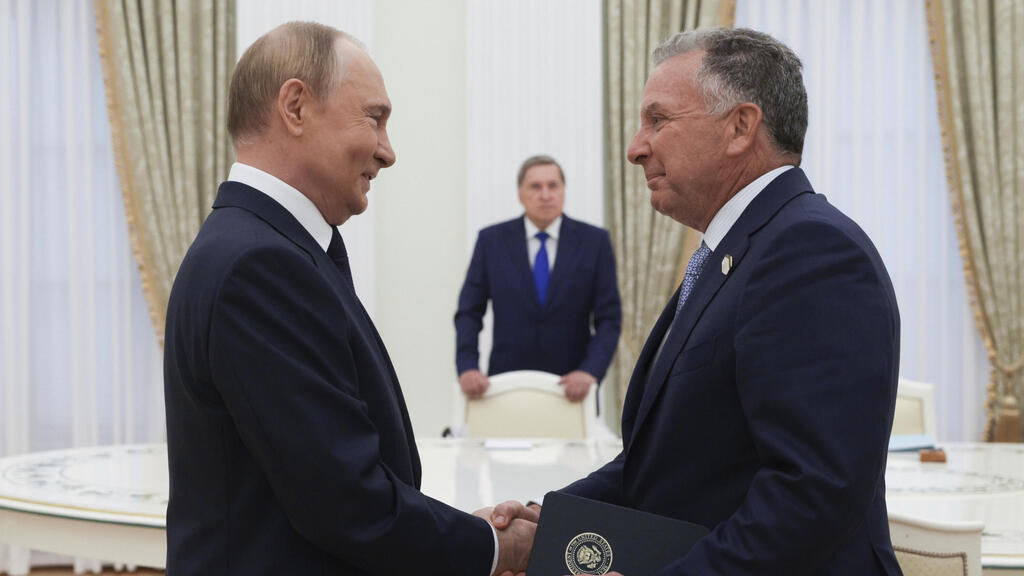
(Photo: Gavriil Grigorov, Sputnik, Kremlin Pool Photo via AP)
Witkoff’s trip comes as President Donald Trump said a deal to end the war was “reasonably close,” though no agreement has been reached despite months of talks involving Washington, Moscow, Kyiv and European leaders.
Russian President Vladimir Putin said late Wednesday that he would meet Witkoff in Moscow to continue discussions on what he described as a settlement of the conflict in Ukraine, as well as Trump’s proposal for a “Board of Peace” and the possible use of frozen Russian assets.
The talks focus on ending the deadliest conflict in Europe since World War Two, determining Ukraine’s future and defining the role of European powers in a U.S.-brokered peace deal.
Trump said both sides were nearing the point where an agreement could be reached, though he has repeatedly criticized Ukrainian President Volodymyr Zelenskiy and last week described him as a key obstacle to progress.
Russia launched its full-scale invasion of Ukraine in February 2022 after years of fighting in the east, triggering the sharpest confrontation between Moscow and the West since the Cold War.
European leaders and Ukrainian officials say Russia must not be allowed to benefit from what they describe as an imperial-style land grab, warning that a Russian victory would pose a threat to NATO. Moscow rejects those claims and says it has no intention of attacking NATO members.
Russian officials accuse European governments of trying to derail peace talks by pushing conditions they know Moscow will reject, while saying Russian forces have continued to advance in 2025.
Witkoff also said economic measures could play a role in stabilizing Ukraine after the war, including the creation of a tariff-free zone, which he described as “game changing” for the country’s economy.
Putin has repeatedly said he is open to peace talks, casting the war as a turning point in relations with the West and blaming NATO expansion for the breakdown in ties.