

Prime Minister Benjamin Netanyahu said overnight Tuesday that “we agreed to give peace a chance, but President Trump’s conditions were clear: Hamas must disarm. It must give up its weapons in Gaza, or all hell will break loose.”
In an interview with CBS, Netanyahu warned Hamas that “they will disarm. It will happen quickly — and perhaps violently.”
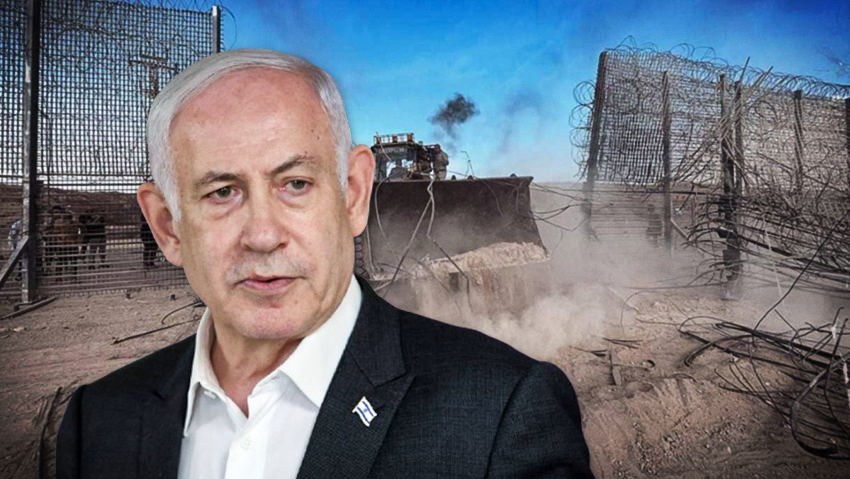
Referring to the release of all living hostages, Netanyahu said later in the interview that he “hopes” the next stage of Trump’s plan for Gaza will go forward. “After Hamas gives up its weapons, we must make sure there are no weapons factories inside Gaza. There will be no smuggling. That’s demilitarization,” he said. “I hope we can do this peacefully. We’re ready for it. Those who doubt it should look at the Abraham Accords. We have an opportunity to expand them, to expand peace. That’s the greatest gift we can bring to the people of Israel and to the people of the world.”
CBS host Tony Dokoupil confronted Netanyahu with a comment U.S. President Donald Trump made in the Knesset, where he said of Netanyahu: “He’s not easy. I want to tell you, he’s not the easiest guy to deal with. But that’s what makes him great.”
Netanyahu replied: “I hope that’s what he thinks. I’m very tough on issues that concern Israel’s future. That’s my responsibility — that’s why I’ve done what I’ve done. That’s why we struck in Iran, to make sure the Jewish state isn’t in danger. Iran threatened to destroy us, to drop atomic bombs on us.”
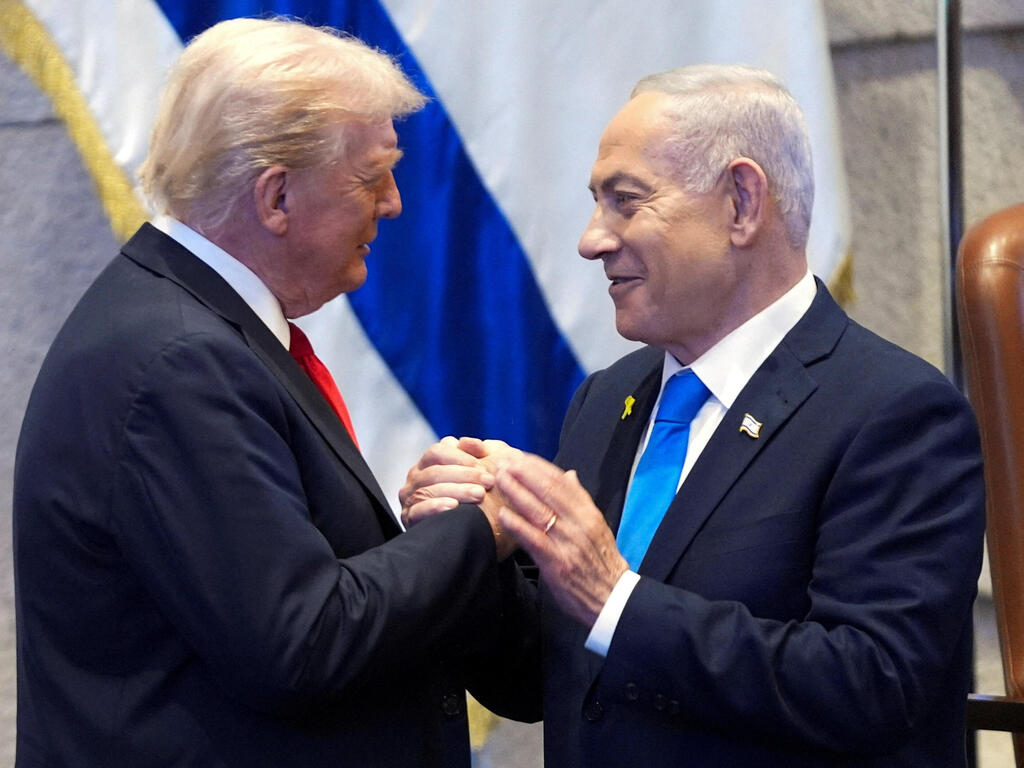
Prime Minister Benjamin Netanyahu and US President Donald Trump in the Knesset plenum
(Photo: Jalaa Marey/Pool via Reuters, Chip Somodevilla / POOL / AFP)
While Netanyahu continues to speak about his willingness “to expand peace,” frustration is growing among far-right members of his coalition over the fact that the war in Gaza ended without fulfilling promises to dismantle Hamas and rebuild Gaza without Palestinian Authority involvement. As a result, it is believed Netanyahu canceled his participation in the “Peace Summit” in Egypt, fearing another internal political crisis.
The official explanation from Netanyahu’s office for not attending — after initially not being invited — was the proximity to the holiday. However, it is clear the prime minister had other considerations as well, including concerns that Israel might be drawn into a process leading to a Palestinian state or another outcome he opposes.
His absence from the summit, attended by regional and European leaders, did not help Israel’s standing in the world, which has become increasingly isolated in the past two years. Ultimately, Netanyahu’s absence, alongside the participation of Palestinian Authority President Mahmoud Abbas, positioned Israel as one of only two key parties not present — the other being Hamas. Netanyahu’s presence at an Arab-hosted peace summit, some analysts noted, could have clarified for the world “who really won the war.”