

A political upheaval in Slovenia with direct implications for Israel appears to be taking shape after nationalist right-wing leader and former prime minister Janez Janša announced Monday night that he had secured a coalition agreement that would allow him to return to power for a fourth term, two months after the country’s tight election. If completed, the move could sharply alter the direction of Slovenia, one of the European Union’s harshest critics of Israel in recent years.
Janša, leader of the Slovenian Democratic Party (SDS), told local media that “the conditions are ripe” for presenting his candidacy for prime minister and said the process could be completed as early as Tuesday. If approved in parliament, he would replace outgoing Prime Minister Robert Golob, whose liberal Freedom Movement party won the March 22 election but failed to find coalition partners needed to form a government.
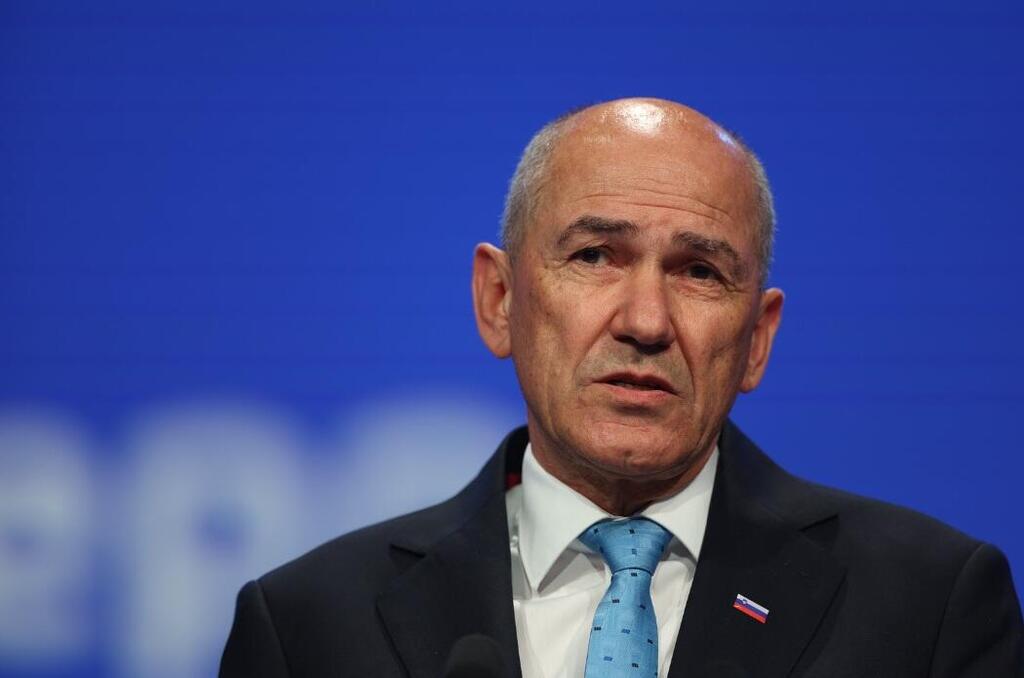
Golob’s party won 29 seats in the 90-member parliament, while Janša’s SDS secured 28. Golob initially declared victory and attempted to form a government, but last month admitted he had failed to secure a majority and announced his party would move into the opposition. The collapse of his coalition efforts cleared the way for Janša, a three-time former prime minister regarded as one of the most controversial figures in Slovenian politics.
Under the agreement announced by Janša, he would form a government with two center-right parties: the Christian Democratic party New Slovenia and the Democrats party led by Anže Logar. Together, the three parties control 43 seats, short of the required majority, but Janša is expected to receive outside support from the five lawmakers of the anti-establishment Resnica party. That would give him a fragile 48-seat majority dependent on partners with widely differing views.
For Israel, Janša’s possible return is far more than a routine government change in a small European country. Under Golob, Slovenia became one of the EU’s most outspoken critics of Israel. It recognized a Palestinian state in June 2024, positioned itself at the forefront of diplomatic pressure against Israel over the Gaza war, promoted legal measures against it in international forums and adopted a series of practical steps that placed it among the most hardline members of the European camp.
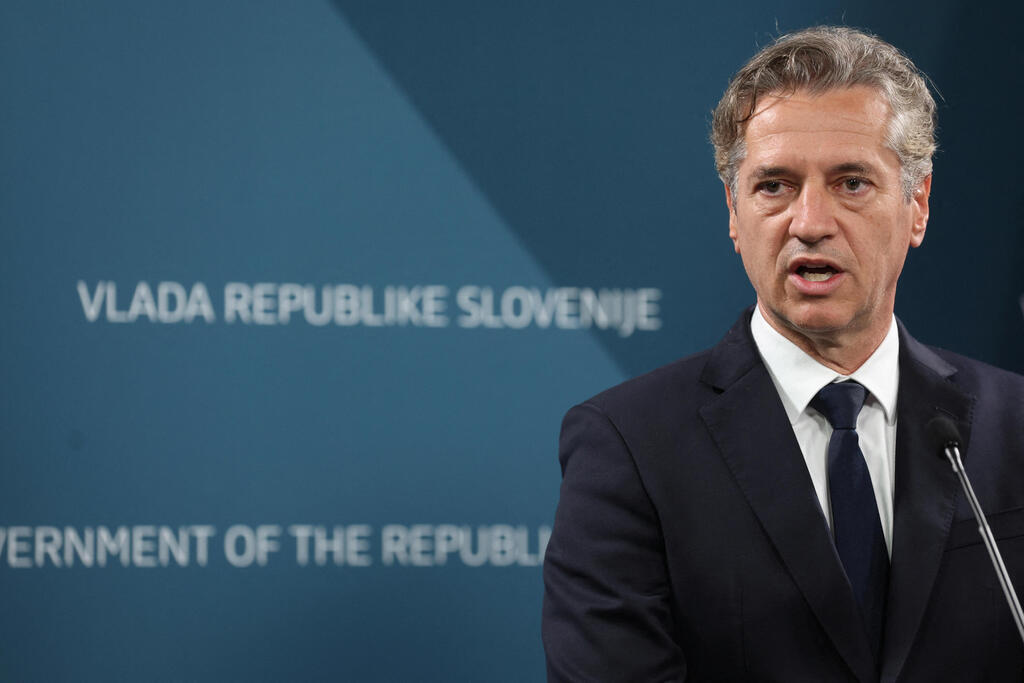
Prime Minister of Slovenia Robert Golob
(Photo: REUTERS / Borut Zivulovic)
Among other measures, Golob’s government announced in July 2025 a ban on the import, export and transit of weapons and military equipment to and from Israel, describing it as the first move of its kind in Europe. Shortly afterward, it also banned imports of products from Israeli settlements. Earlier, the government moved against ministers Itamar Ben-Gvir and Bezalel Smotrich, declaring them persona non grata, and later barred Prime Minister Benjamin Netanyahu from entering the country, citing Slovenia’s commitment to decisions by international courts.
Slovenia also considered joining South Africa’s genocide case against Israel at the International Court of Justice in The Hague, though it ultimately decided against doing so. Even so, Foreign Minister Tanja Fajon said Ljubljana would continue pursuing a hardline policy against Netanyahu’s government and support the work of international courts.
Janša, by contrast, is associated with an almost entirely opposite approach. He is considered strongly pro-Israel, supports US President Donald Trump and is a close ally of former Hungarian prime minister Viktor Orbán, who left office after losing last month’s election following 16 years in power. Janša sharply criticized Golob’s decision to recognize a Palestinian state and in recent years aligned himself with the European right-wing camp critical of Brussels’ hardline stance toward Israel.
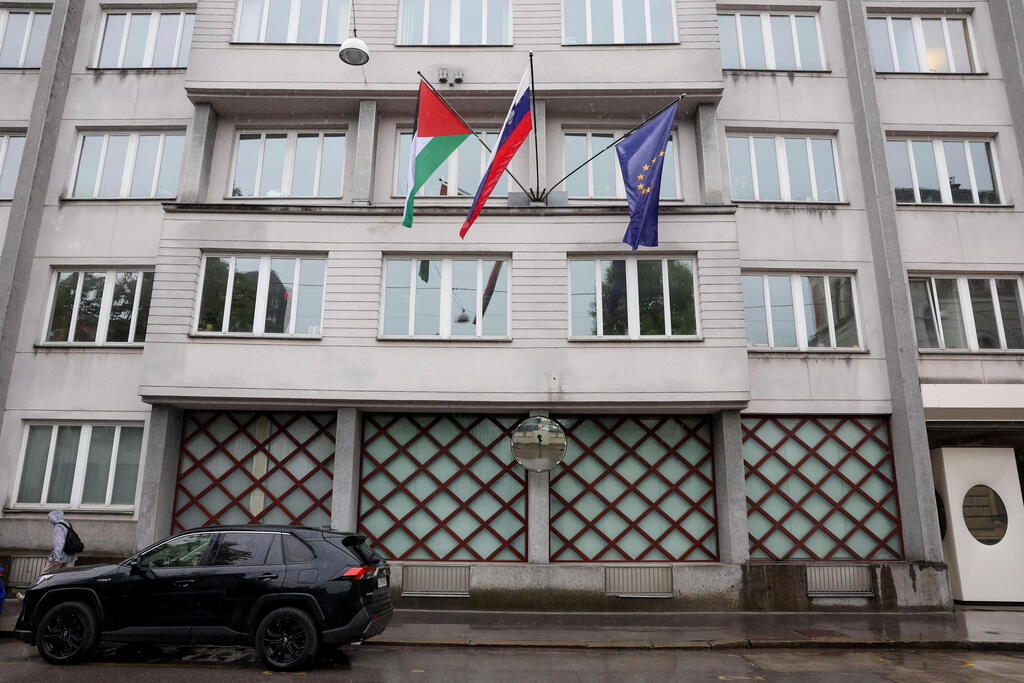
The Palestinian flag is raised outside the government building
(Photo: REUTERS / Borut Zivulovic)
At the same time, Janša’s possible return has raised concerns among his opponents in Slovenia and across the EU. During his previous term between 2020 and 2022, he was accused of authoritarian handling of the COVID crisis, undermining the media and attempting to weaken independent institutions — allegations he denied. His tenure was accompanied by massive street protests and ended in 2022 with a landslide victory for Golob, then a relatively new political figure who promised to return Slovenia to a liberal, pro-European path.
Janša now says he intends to “restore Slovenian values,” promote “traditional family” policies, cut taxes and reduce funding for non-governmental organizations that he claims have become overly political. He has also promised a “cheaper and higher-quality state” after sharply criticizing the spending of the outgoing government. His critics, meanwhile, warn of illiberal policies similar to those associated with Orbán’s Hungary.
The emerging coalition structure also offers little guarantee of stability. Resnica, the party expected to provide Janša with outside support, has said it will not formally join the government and will remain a “combative opposition” closely monitoring it. Slovenian political commentators warned the arrangement could quickly unravel because of divisions between the partners and alleged pro-Russian positions linked to some Resni.ca members.
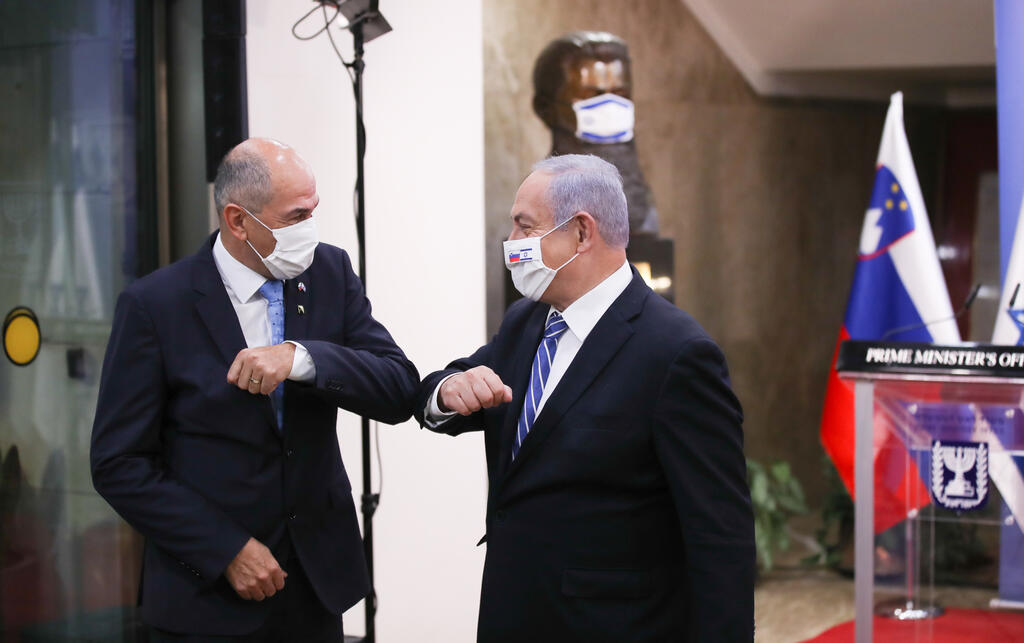
Prime Minister Netanyahu in a meeting with Janez Janša
(Photo: Ohad Zwigenberg)
Golob’s party sharply attacked the coalition agreement. Its parliamentary faction leader, Borut Sajovic, called it “a government the voters did not vote for,” adding that it was born out of “deception, broken promises and manipulation.”
The election campaign itself was also overshadowed by allegations of foreign interference after Slovenian authorities opened an investigation into the publication of embarrassing recordings allegedly linked to associates of Golob’s government. Claims surfaced that Israeli business intelligence firm Black Cube had been involved in distributing the recordings. Janša acknowledged meeting a senior company official but denied any connection to the dissemination of the videos.
First published: 06:54, 05.19.26