


The question echoes in the corridors of power in Iran and on the streets of Tehran: Where is Supreme Leader Ali Khamenei? An extensive New York Times report focused on this pressing question and the internal disagreements within Iran about the path forward.
The report opened with a stark query posed by an Iranian TV host to Khamenei's aide: "People are very worried about the supreme leader. Can you tell us how he is?" The host noted that viewers had also flooded the program with messages on the subject. However, the aide, Mehdi Fazaeli, offered no explicit answer.
Gallery
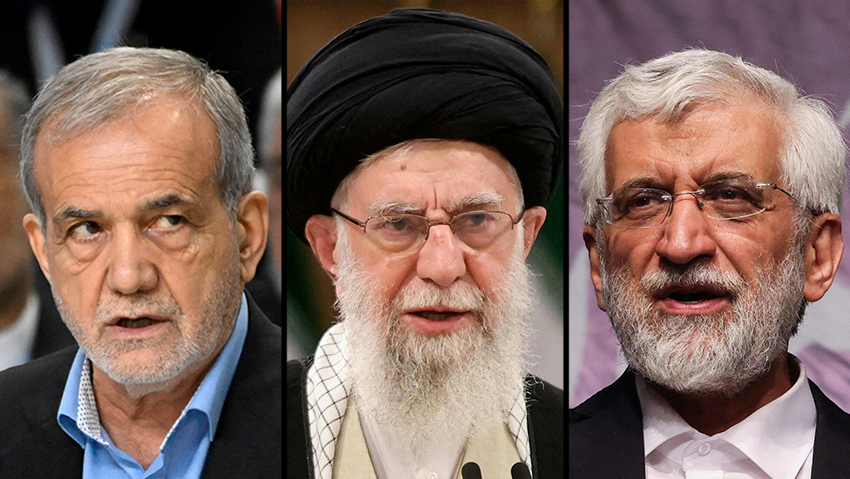
Iranian President Masoud Pezeshkian, Supreme Leader Ali Khamenei, Saeed Jalili
(Photo: ATTA KENARE / AFP, CHARLY TRIBALLEAU and ATTA KENARE / AFP, Alexander NEMENOV / POOL / AFP)
Instead, he said he received numerous inquiries as well. "We should all be praying," Fazaeli said. "The people who are responsible for protecting the supreme leader are doing their job well. God willing, our people can celebrate victory next to their leader, God willing."
Khamenei has not been seen in public or heard from in nearly a week. He has issued no official statements or recorded messages during a period when Iran faced unprecedented attacks, first by Israel and subsequently by the United States.
Mohsen Khalifeh, editor-in-chief of economic daily Khaneman, said that Khamenei's "days-long absence has made all of us who love him very worried." He voiced a possibility considered unthinkable just two weeks prior, speculating that if Khamenei were dead, his funeral procession would be “the most glorious and historic.”
As supreme leader, Khamenei holds ultimate authority over all major state matters. As military commander-in-chief, he must approve significant military actions, such as attacks on U.S. bases or ceasefire agreements.
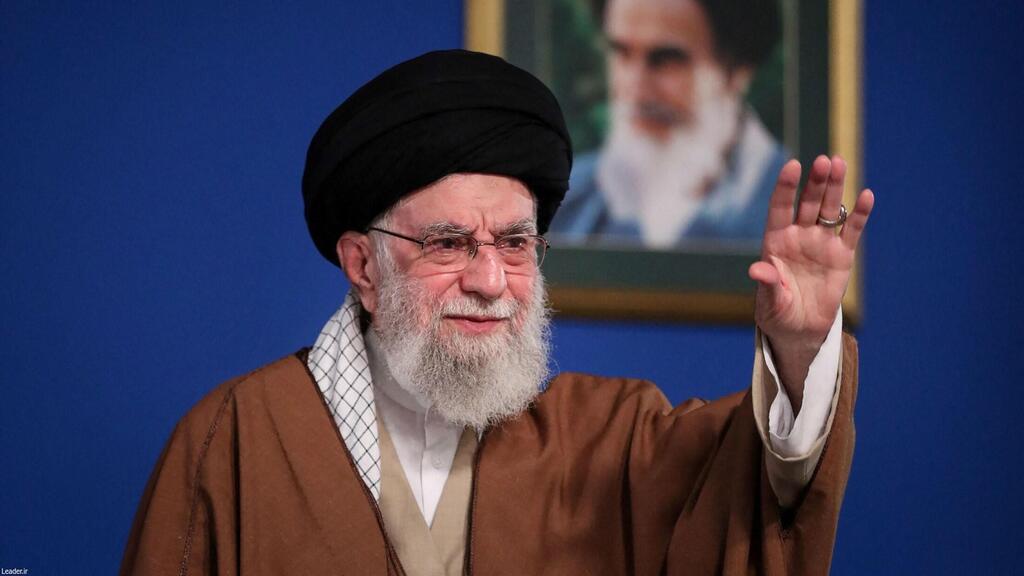
Khamenei
(Photo: AFP)
Senior Iranian military and government officials evaded questions about whether they had spoken with Khamenei in recent days, particularly concerning the coordinated launch of 14 missiles targeting a U.S. military base in Qatar and the subsequent Qatar-mediated ceasefire requested by U.S. President Donald Trump.
Who fills the vacuum?
Political analyst Hamzeh Safavi, son of a senior Islamic Revolutionary Guard Corps (IRGC) officer, suggested Iranian security forces believe Israel might still attempt to assassinate Khamenei, even during the ceasefire. Consequently, he said, they are implementing stringent security measures, including severing contact with the outside world.
Safavi noted that other leaders, such as Iranian President Masoud Pezeshkian, have seen their stature rise, but he assessed that Khamenei likely remains involved in key decisions, even if remotely.
Get the Ynetnews app on your smartphone: Google Play: https://bit.ly/4eJ37pE | Apple App Store: https://bit.ly/3ZL7iNv
Four Iranian sources familiar with current decision-making discussions reported that during Khamenei's absence, senior military and political figures have forged alliances in a bid for influence.
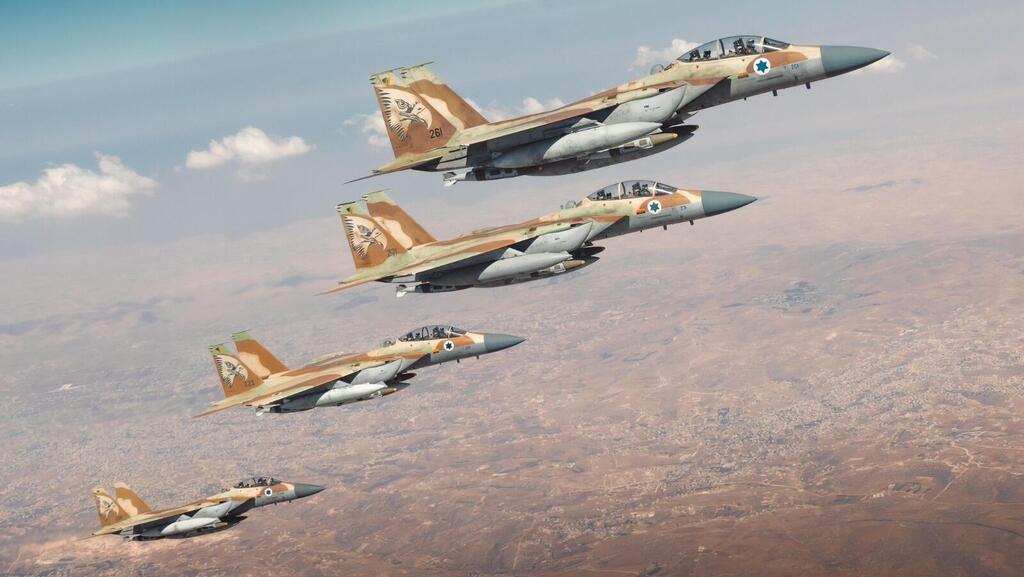
Israeli Air Force fighter jets in Iran
(Photo: IDF Spokesperson's Unit)
These factions reportedly hold differing positions on critical issues like Iran's nuclear program, negotiations with the U.S. and the confrontation with Israel. According to these sources, the faction advocating for diplomacy and moderation appears dominant for now.
This faction includes President Pezeshkian, who has publicly signaled his desire to return to the negotiating table, even after the U.S. bombing of Iranian nuclear sites. His allies include the head of the judiciary, Gholam-Hossein Mohseni-Ejei, a Khamenei confidant and the new commander of the regular armed forces, Abdolrahim Mousavi.
At a cabinet meeting Wednesday, Pezeshkian – elected last year on promises to make Iran prosperous – indicated it was time for a change in how the country is governed.
Elite power struggle: Pezeshkian vs. hardliners
"The war and the unity among the people have created an opportunity to change our views on governance and the behavior of our officials," Pezeshkian declared at a cabinet meeting. "This is a golden opportunity for change."
Meanwhile, his government is attempting to harness the wave of nationalism sparked by the attacks. Senior officials claim more than 600 people in Iran were killed by Israeli strikes.
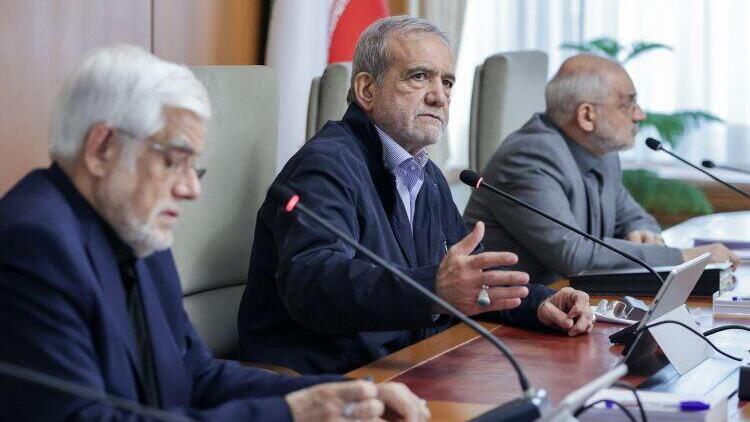
Pezeshkian (center)
On Tuesday, Tehran's Azadi Square hosted a performance by the National Symphony Orchestra, followed by a light show projecting images of rescue workers onto the Azadi (Freedom) Tower arch – an apparent effort to galvanize patriotic public sentiment.
However, prominent hardliners are attacking the president and his approach. Leading the charge is politician Saeed Jalili, who publicly criticizes the ceasefire and opposes renewing contacts with the U.S. Jalili, formerly Iran's nuclear negotiator with the West, is backed by a majority of parliament members and some IRGC commanders.
Foad Izadi, an analyst close to Jalili and the IRGC, wrote that merely discussing negotiations now shows "Iran’s president lacks the necessary political competence to govern the country."
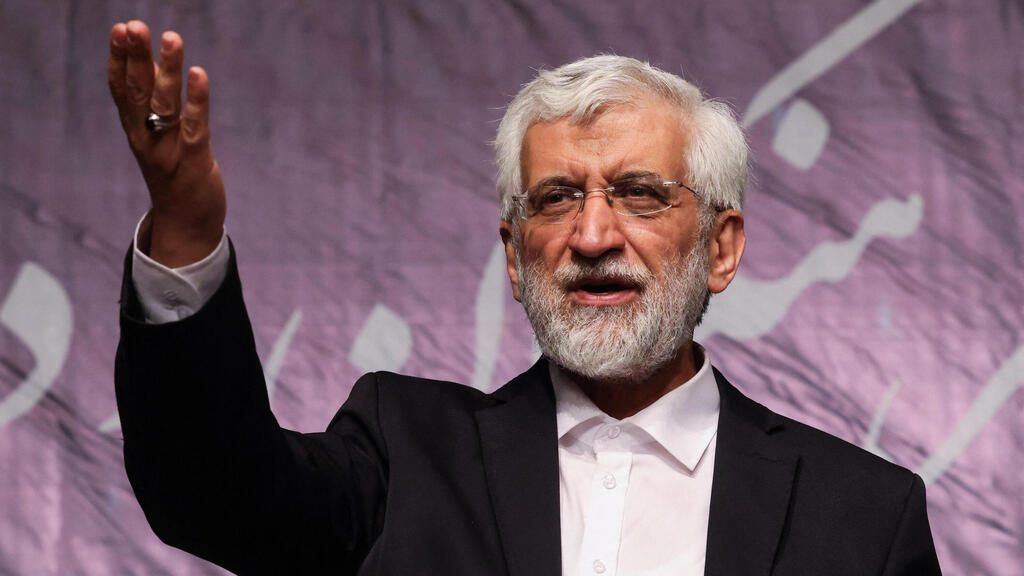
Jalili
(Photo: ATTA KENARE / AFP)
Presidential spokesman Ali Ahmadnia fired back on social media: "We’re not supposed to fight Israel day and night for 12 days and now deal with the likes of you! Who are busy completing the enemy’s puzzle with your pens."
Nuclear question looms
Regardless, the nuclear issue remains unresolved. Iran’s Foreign Minister Abbas Araghchi and Atomic Energy Organization head Mohammad Eslami declared that Tehran would rebuild its nuclear facilities and continue enriching uranium, despite extensive destruction caused by the U.S. strikes.
Sanam Vakil, head of the Middle East program at Chatham House, told The New York Times that Khamenei's absence at such a time is extraordinary and was "extremely careful and security-minded." She warned: "If we don’t see Khamenei by Ashura (important Shiite Muslim procession), that is a bad sign. He has to show his face.”