


More than 3,000 Iranian soldiers and operatives linked to the Iranian regime have been killed since the start of the war in strikes carried out by the Israeli Air Force and U.S. forces, according to Israeli assessments presented to the political leadership.
The estimate, discussed in recent security briefings, is significantly higher than figures released by Iranian authorities. Iran’s Red Crescent said Wednesday that 940 people have been killed in Iran since the start of the fighting.
Strikes in Tehran


Israeli security officials say the higher toll reflects strikes on military headquarters, launch sites and other installations across Iran, with some casualties believed to remain buried under rubble in Tehran and other locations.
Since the start of the campaign, the Israeli Air Force has dropped roughly 5,500 munitions across Iran, averaging about 1,000 per day, according to Israeli military assessments. The air force has carried out 12 large-scale strike missions targeting Tehran, destroying dozens of military headquarters and government institutions where Iranian operatives were present.
Israeli officials say the military campaign, carried out together with the United States, was designed in multiple phases and that the first stage has largely been completed after the opening 100 hours of fighting.
According to Israeli security officials, the initial phase relied on tactical surprise that enabled the killing of about 40 senior commanders in Tehran, including Iran’s Supreme Leader Ayatollah Ali Khamenei.
The following stage focused on sustained attacks on Iran’s air defense network, including surface-to-surface missile systems, radars and detection systems. A senior IDF official said those strikes have allowed the Israeli Air Force to achieve what he described as “air freedom of action” not only over Tehran but across Iran.
The campaign then shifted toward disrupting Iran’s missile-launch capabilities. According to the chairman of the U.S. Joint Chiefs of Staff, those efforts have reduced Iranian missile fire by about 86%.
Israeli officials say the decline has been noticeable on the home front, where missile alerts have become less frequent than expected. Officials say that without ongoing rocket fire by Hezbollah from Lebanon, the situation inside Israel would resemble lower-intensity confrontations such as the conflict with the Houthis rather than a full-scale war with Iran.
In the past 48 hours, Israel and the United States have intensified strikes on command centers belonging to the Iranian regime in an effort to disrupt its ability to manage the war.
Israeli officials say that after more than 100 hours of fighting, Israel and the United States are now operating with near-total air superiority over Iran, while Iranian command and control capabilities have been significantly degraded.
The next stage of the campaign is expected to focus on the systematic destruction of Iran’s remaining military capabilities.
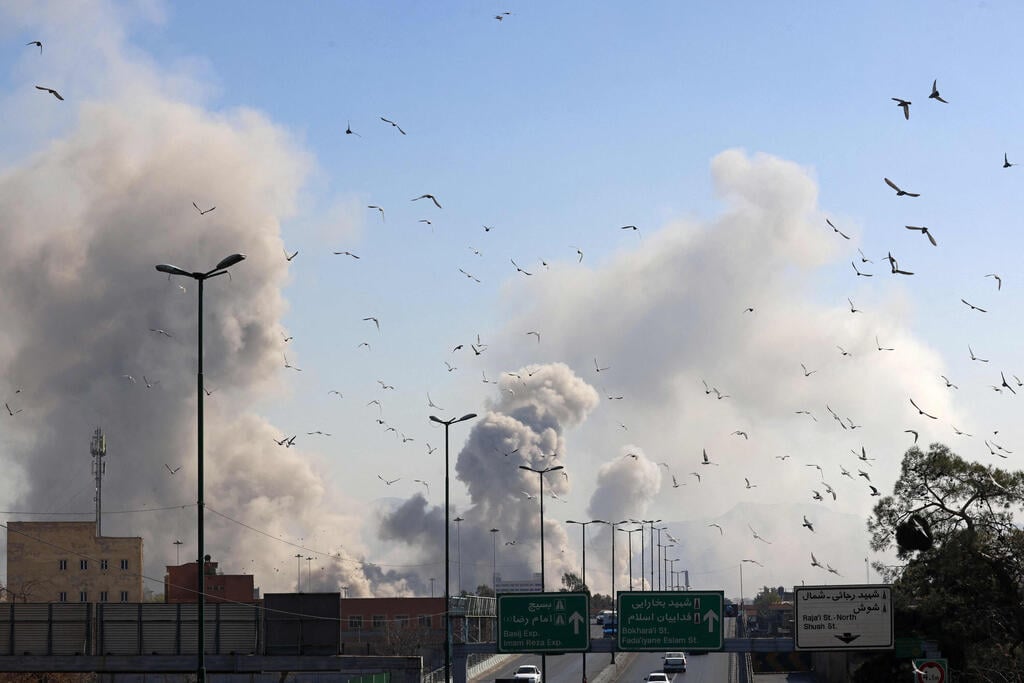
(Photo: ATTA KENARE / AFP)
Israeli officials say preparations are underway for the war to continue for several more weeks. They also say U.S. officials appear committed to maintaining the pace of operations.
One of the main efforts in planning the campaign has been the creation of intelligence-based targets, Israeli security officials said. According to those officials, thousands of targets have been identified across Iran, describing the strategy as a “systematic grinding down of military targets.”
A security official also said U.S. forces are expected within days to complete the destruction of Iran’s naval fleet, a move intended to ensure full maritime freedom of action.
A key question remains whether the military campaign will ultimately lead to political change inside Iran.
Strikes near Iran’s borders have been aimed in part at preparing the ground for Kurdish militias, though the level of coordination and the likelihood of such a move remain unclear.
Israeli military officials have taken a more cautious view, saying regime change may be necessary but could come only after the military campaign concludes.
“For now, the goal is clear,” a senior IDF official said. “There is no intention of stopping until all the targets are struck. One way or another, this campaign will end with a very significant weakening of Iranian capabilities for many years.”
First published: 07:42, 03.05.26