

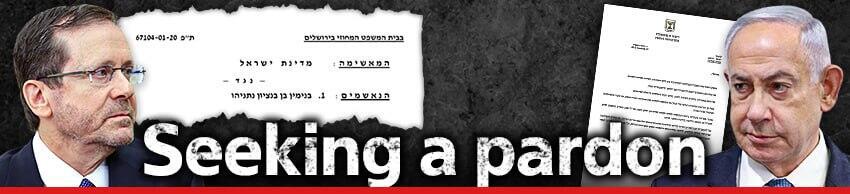

It is already evident that any pardon—should Prime Minister Benjamin Netanyahu’s request be granted—will only come following a form of negotiation with President Isaac Herzog. In addition to both men, three other key figures will likely be involved in the process: first, Justice Minister Yariv Levin, a natural supporter of the pardon; second, Attorney General Gali Baharav-Miara, who heads the prosecution team in Netanyahu’s corruption trial; and third, Israel’s High Court of Justice, which opponents of the pardon are expected to petition if it is approved.
Two major factors are expected to influence the proceedings. The first concerns whether Netanyahu will admit to at least some of the charges he faces—normally a condition for anyone seeking a pardon in Israel. However, the precedent set by the "Bus 300" affair offers room for a creative workaround: In the mid-1980s, President Chaim Herzog—father of the current president—granted a preemptive pardon to senior Shin Bet officials who had killed captured Palestinian terrorists. That pardon was issued before any trial began and without the officials admitting guilt.
Gallery
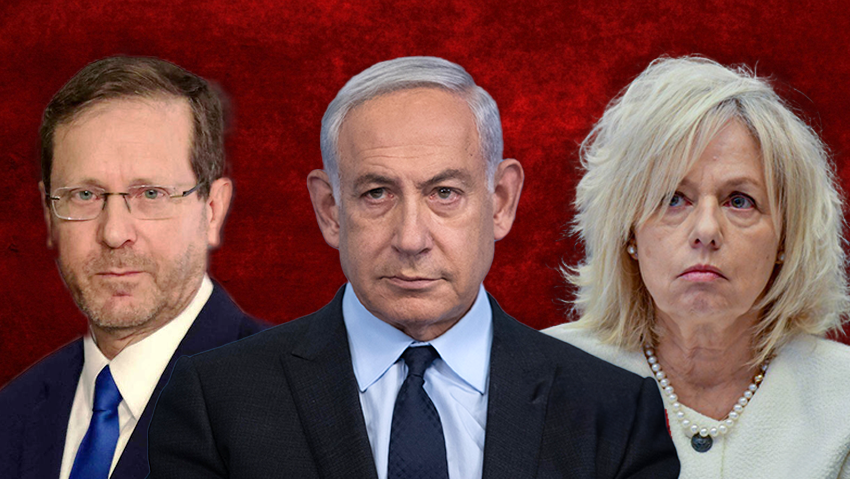
President Isaac Herzog, Prime MInister Benjamin Netanyahu and Attorney General Gali Baharav-Miara
(Photos: Rafi Kutz, Alex Kolomoisky, AFP)
The second critical variable, especially for the legal establishment, is whether Netanyahu’s admission would involve offenses considered to carry “moral turpitude”—a designation that would automatically require him to resign as prime minister, something he staunchly opposes.
A source familiar with recent discussions among Herzog’s close associates suggested the president is inclined to support a pardon, viewing it as a step toward easing Israel’s deepening social unrest. However, Herzog may demand a “comprehensive deal”: an official request from Netanyahu (which has already been submitted), an admission of at least some criminal wrongdoing, a pledge to halt further judicial overhaul legislation (hinted at in Netanyahu’s pardon request), a cessation of attempts to remove the attorney general, and a public commitment to social reconciliation. The same source noted that, just as the High Court upheld the Bus 300 pardons, it is unlikely to strike down a similar decision today.
Herzog, like former Supreme Court President Aharon Barak, views Netanyahu’s trial as a primary trigger for the judicial crisis and political instability of recent years. Senior legal officials also believe there are only two realistic outcomes for Netanyahu’s trial: a presidential pardon or a full legal process leading to a final verdict in several years.
A third option—reaching a verdict through a plea agreement, as proposed by the judges—was rejected by Attorney General Baharav-Miara. She maintains that if Netanyahu truly wishes to end the trial, he must negotiate a plea deal that includes an admission of guilt and acceptance of a ruling of moral turpitude, which would force his exit from public life.
Around three years ago, former Supreme Court President Barak tried to mediate a plea deal between Netanyahu and then-Attorney General Avichai Mandelblit to avoid a political and legal storm. That effort failed after Mandelblit insisted that any admission to fraud or breach of trust would entail a ruling of moral turpitude, and Netanyahu refused. Herzog has also been approached with similar behind-the-scenes initiatives, but like his failed efforts to broker compromise over judicial reforms these too have yielded no results.
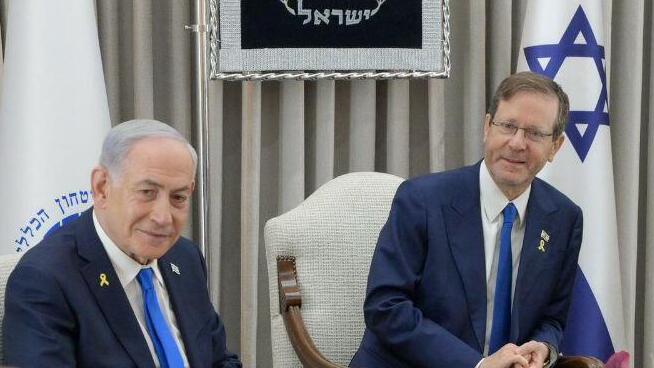
Prime Minister Benjamin Netanyahu and President Isaac Herzog
(Photo: GPO)
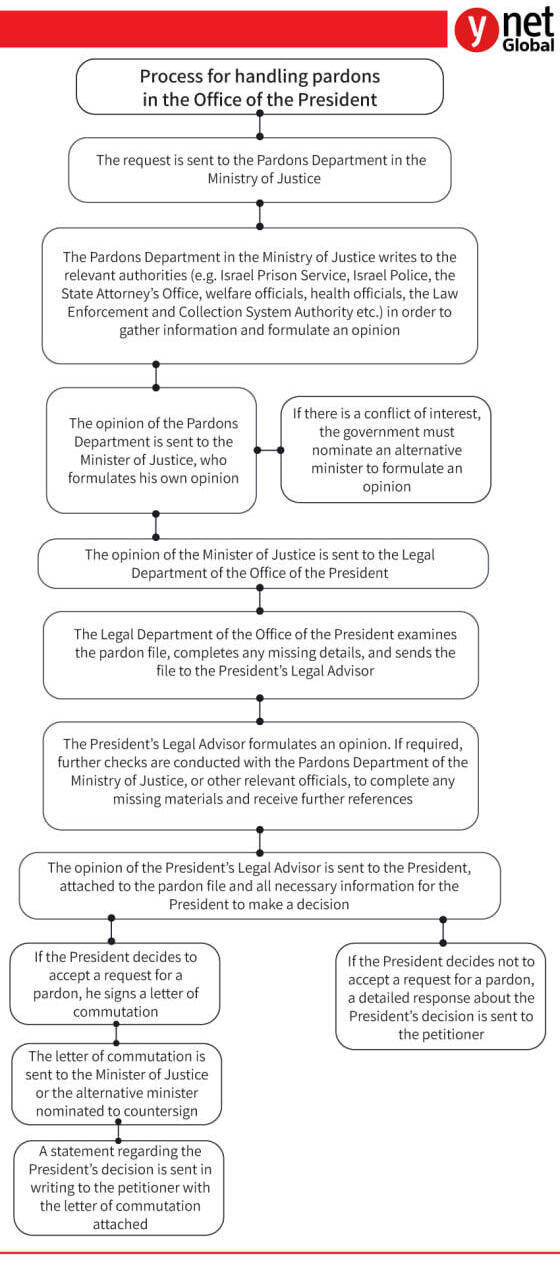
Under Israeli law and procedure, Netanyahu’s request now enters the legal phase. Levin, who must give the pardon his formal endorsement, will refer it to the Pardons Department for professional evaluation. The department will issue an opinion on Netanyahu’s legal status, addressing whether the request meets criteria such as acknowledgment of wrongdoing, expression of remorse, and acceptance of responsibility. Levin will then submit his own recommendation.
Baharav-Miara, after consulting with the prosecution team, will provide her legal opinion to the president and his legal advisers. She is expected to focus on broader legal principles, such as equality before the law, and is likely to insist on both an admission of guilt and a ruling of moral turpitude.
If Netanyahu’s request is approved, Baharav-Miara will also need to respond to petitions likely to be filed with the High Court. She will then decide whether to defend the president’s decision to grant the pardon.