


IDF Chief of Staff Lt. Gen. Eyal Zamir has canceled a planned visit to the United States, scheduled for next month, due to the security situation in Israel, ynet has learned.
The trip was to include meetings with the commander of U.S. Central Command and the chairman of the U.S. Joint Chiefs of Staff, with talks focused on military cooperation over Iran and other threats. Zamir told his hosts that with the IDF on heightened alert across all fronts, he did not believe it was right to leave Israel and oversee events from abroad.
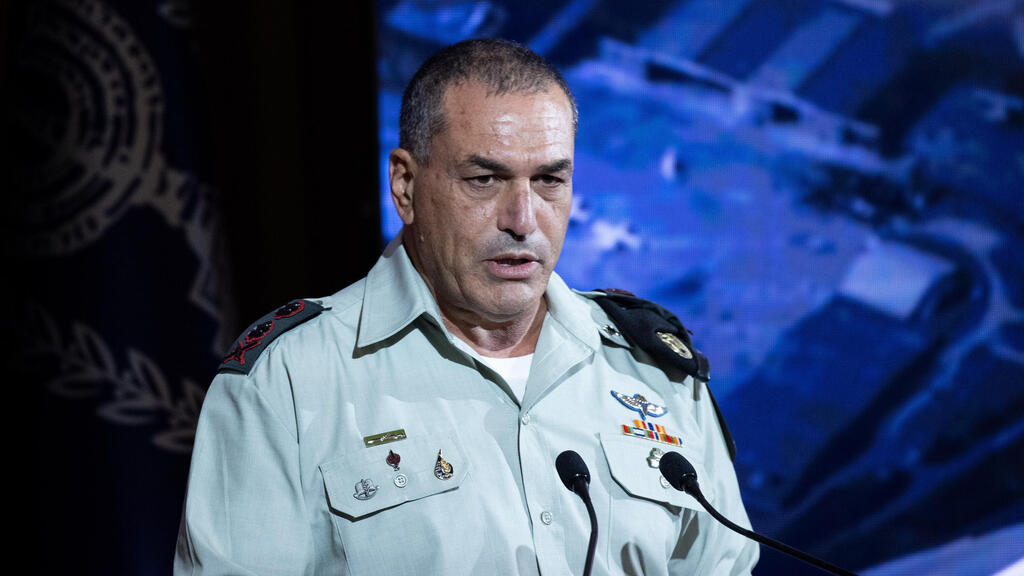
IDF Chief of Staff Lt. Gen. Eyal Zamir
(Photo: Alex Kolomoisky)
“You can’t put the military on alert and then fly abroad,” a senior IDF official said. Zamir has raised the military’s readiness level and ordered commanders to remain in their sectors ahead of the Jewish holiday season, which is considered a particularly sensitive period from a security standpoint.
Two active fronts are commanding particular attention. In Gaza, Israel has received a concrete warning that Hamas may attempt to abduct a soldier. Israeli officials believe Hamas is seeking to deter targeted killings by the IDF and Shin Bet while exploiting the sensitive period ahead of elections in the United States and Israel, calculating that political constraints could limit Israel’s ability to respond forcefully.
The second front is the West Bank, where friction between settlers and Palestinians has risen sharply. That tension was evident again in the Palestinian village of Jalud on the night between Monday and Tuesday and could further inflame the area, following deadly terrorist attacks over the past two weeks at a spring near Neve Tzuf and at the Maccabim checkpoint.
Netanyahu: ‘There are signs that ahead of the elections, our enemies will try to attack us’
For Zamir, the combination of the holiday season, events marking three years since Oct. 7 and the upcoming elections makes the coming period especially sensitive. The IDF is therefore preparing not only for known threats, but also for tactical incidents that could quickly spiral into a broader escalation.
Zamir decided to cancel his trip before Prime Minister Benjamin Netanyahu warned Tuesday of a possible attack ahead of the elections. Netanyahu’s remarks, however, went beyond the security picture itself. A warning delivered by the prime minister at an Air Force base, standing beside an F-15, carries particular weight and would ordinarily suggest concrete intelligence of an imminent attack. At the time of writing, it remains unclear whether such intelligence exists, though the assessment could change rapidly as events unfold across the Middle East.
The security situation remains sensitive, though such tensions are not new. In recent months, Israel has come close to escalation on several occasions without Netanyahu publicly warning of the threat.
At present, there is no known concrete threat of an imminent attack on Israel. Rather, security officials see a sensitive period that Israel’s adversaries may seek to exploit. The alert level regarding Iran remains extremely high but unchanged, and the IDF is prepared to resume fighting on short notice.
Iran could still take unusual action during this period, just as it could have previously. The security situation remains fragile, but the underlying threat level has not fundamentally changed.
The IDF General Staff is also mindful that Israel is entering a politically sensitive period. Senior officers stress, however, that the military will not become a political actor and that its decisions will be based solely on professional and operational considerations.