

Despite Prime Minister Benjamin Netanyahu’s statement that “there are signs that our enemies will try to attack us ahead of the election,” Israel’s defense establishment has not identified an imminent threat. Security officials have long been preparing for scenarios involving escalation and possible Iranian retaliation, which would not necessarily take the form of missile launches. At the same time, Tehran is troubled by the economic pressure it faces and could attack Israel ahead of the U.S. midterm elections in November in an attempt to draw President Donald Trump into negotiations from a position of strength.
Gallery
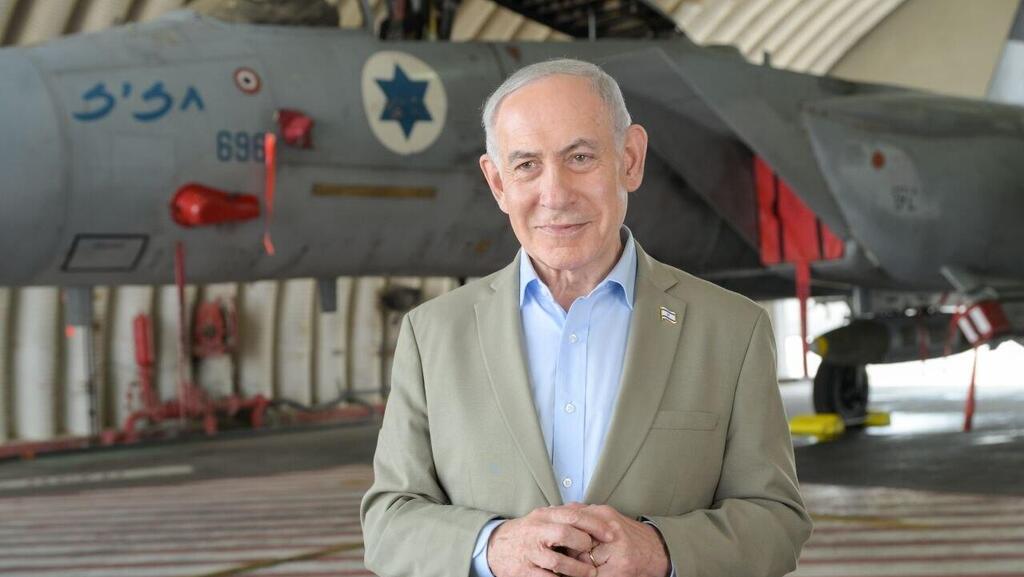
Netanyahu: “There are signs that our enemies will try to attack us ahead of the election”
(Photo: Maayan Toaf/GPO)
According to these assessments, if the Iranians do launch an attack, they could do so shortly before or after Israel’s election. With Tehran seeking to retaliate against Jerusalem, Israel must remain vigilant on all fronts, but there is currently no specific warning or concrete threat.
In an unusual move, a meeting that had been scheduled to take place at the Prime Minister’s Office was moved to another location. Similar steps were taken in the days leading up to and during the war with Iran. However, this was a routine situation assessment attended by members of the inner security Cabinet and senior defense officials, covering several fronts, rather than an emergency meeting. Netanyahu and his military secretary’s security briefing with opposition leader Yair Lapid, meanwhile, was held Tuesday evening at the Prime Minister’s Office.
After the meeting, which lasted about half an hour, Lapid said: “Security threats must be handled professionally and responsibly. Israel’s security and IDF bases are not backdrops for campaign videos. Without going into details, the IDF, Shin Bet and police are prepared for the election, and there is no reason to send the public into a panic. The IDF chief of staff has raised 10 red flags over a shortage of combat troops and attrition in the IDF. If Netanyahu is so concerned about the security situation, he should enlist the 15,000 Haredi men the IDF is lacking.”
Earlier, Lapid and former Prime Minister Naftali Bennett said they had consulted ahead of Lapid’s security briefing with Netanyahu. “Bennett and Lapid stressed the need to discuss the serious and immediate security threat posed by a shortage of 20,000 soldiers and the severe consequences for the reserve forces of the government’s refusal to draft all sectors of Israeli society,” a statement on their behalf said. “They also discussed ways to ensure the integrity of the electoral process and keep political considerations out of security missions.”

Iran is concerned about the state of its economy amid the blockade of the Strait of Hormuz
(Photo: U.S. Central Command/X)
No change in the situation assessment
Against the backdrop of the warnings and political statements, Israel’s defense establishment remains on high alert, both defensively and offensively, because of the holiday period and the tense period ahead of the election. However, security officials stress tht there has been no change in the situation assessment in recent days and that, as of Tuesday evening, Israel has no specific, concrete intelligence indicating that hostile actors intend to launch a particular attack.
The defense establishment has been careful to avoid being drawn into the political arena and the exchanges between the parties and has therefore refrained from officially responding to Netanyahu’s statement. In addition, various security officials are exercising caution and prefer not to make statements that could be interpreted as a confrontation with the political leadership.
The IDF stresses that Netanyahu’s statement does not reflect a change in its assessment and that it is not aware of any special preparations or heightened alert beyond what is routinely in place during holidays. Since the ceasefire with Iran, the Israeli Air Force and Military Intelligence Directorate have compiled an updated target bank. At the same time, Israel has maintained closer, more direct coordination than ever with the U.S. military as part of preparations for various defensive and offensive scenarios. The IDF has also recently made operational changes and conducted a series of exercises along Israel’s various borders to ensure an appropriate response in the event of a ground attack.
Despite the general state of vigilance, IDF forces have been scaled back in various sectors. This has included a reduction in forces along the Lebanese border, while the main focus of operations is currently in Judea and Samaria, also known as the West Bank. At bases where the situation assessment permitted it, service members were released for the holiday.
The Home Front Command, meanwhile, has made no changes to instructions for the public and has issued no notice of any development requiring special preparations. The prime minister’s statement did raise public concerns about an imminent attack, but the defense establishment views the situation in considerably less alarming terms. Officials say situation assessments are conducted continuously and evolve daily, with regular intelligence updates on threats across all fronts.
First published: 23:10, 09.29.26