


A report that Israel planned to strike Iranian civilian infrastructure earlier this month, only to be stopped by U.S. President Donald Trump, has renewed questions about the strategic justification for another war with Tehran, particularly with Israeli elections less than a week away.
The Financial Times reported Wednesday that Israel had planned to attack Iranian infrastructure on Oct. 10, including power plants, nuclear facilities and other targets associated with the Iranian government, before Trump intervened to prevent the operation.
Gallery

US President Donald Trump, Prime Minister Benjamin Netanyahu, Iranian Supreme Leader Mojtaba Khamenei
(Photo: Anna Moneymaker / AFP, CENTCOM, Vantor/Handout via REUTERS, REUTERS/Ronen Zvulun)
The report has raised concerns about why Israel would consider launching another major military campaign against Iran when previous rounds of fighting have failed to topple the Iranian government or permanently eliminate its military capabilities.
Israel has spent much of the past three years engaged in intensive fighting on multiple fronts, while damage from previous confrontations with Iran and fighting along its northern and southern borders has yet to be fully repaired.
Iran, meanwhile, continues to demonstrate its ability to disrupt shipping through the Strait of Hormuz, attacking vessels and affecting the global economy. Gulf states have largely absorbed the consequences without launching direct military responses.
Against that backdrop, questions remain over whether Israel has a clear strategic plan for another confrontation and what objectives a renewed campaign could realistically achieve.
Danny Citrinowicz, a former head of the Iran branch in the Israeli Military Intelligence Directorate's Research Division and now a senior researcher specializing in Iran and the Shiite axis at the Institute for National Security Studies (INSS), told ynet that there was no immediate military justification for launching another war.
"There's absolutely nothing that justifies a war now, either before the elections or afterward," Citrinowicz said.
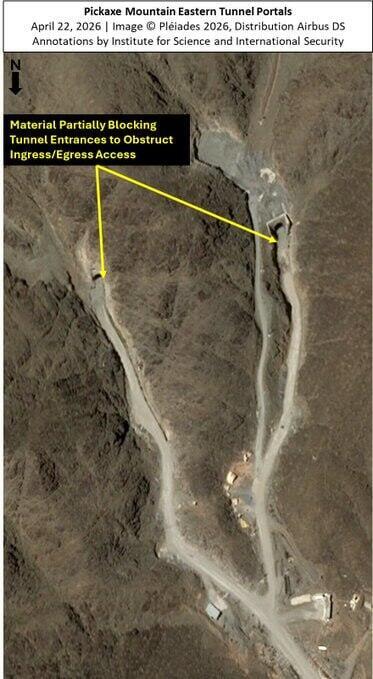
Satellite image of Iran's Pickaxe Mountain
(Photo: from social media)
"Iran is rebuilding its strength and restoring its missile capabilities. On the nuclear front, there are no indications whatsoever that they have resumed enrichment. There are the same indications that they moved certain materials to Pickaxe Mountain, but nothing beyond that."
Pickaxe Mountain, also known as Kuh-e Kolang Gaz La, is a mountainous site near Iran's Natanz nuclear complex that has attracted international scrutiny over suspected underground nuclear-related construction.
Citrinowicz questioned why Iran remained capable of launching substantial missile attacks after two previous wars that Israeli officials had described as major military successes.
"We also need to understand why, after two wars against Iran, we're still seeing them launch dozens of missiles," he said. "Apparently, they're not afraid for their arsenal."
'No justification for another campaign'
Citrinowicz said the reported Israeli interest in attacking Iran's energy infrastructure appeared to rest on two possible strategic assumptions, neither of which he considered convincing.
"What is the strategic objective of another war?" he asked. "According to various reports, Israel wants to attack Iran's energy facilities for one of two reasons: Either they think that will bring down the regime, which it won't, or they want to turn Iran into a failed state. And it's clear that would lead to a very broad Iranian campaign against Israel."
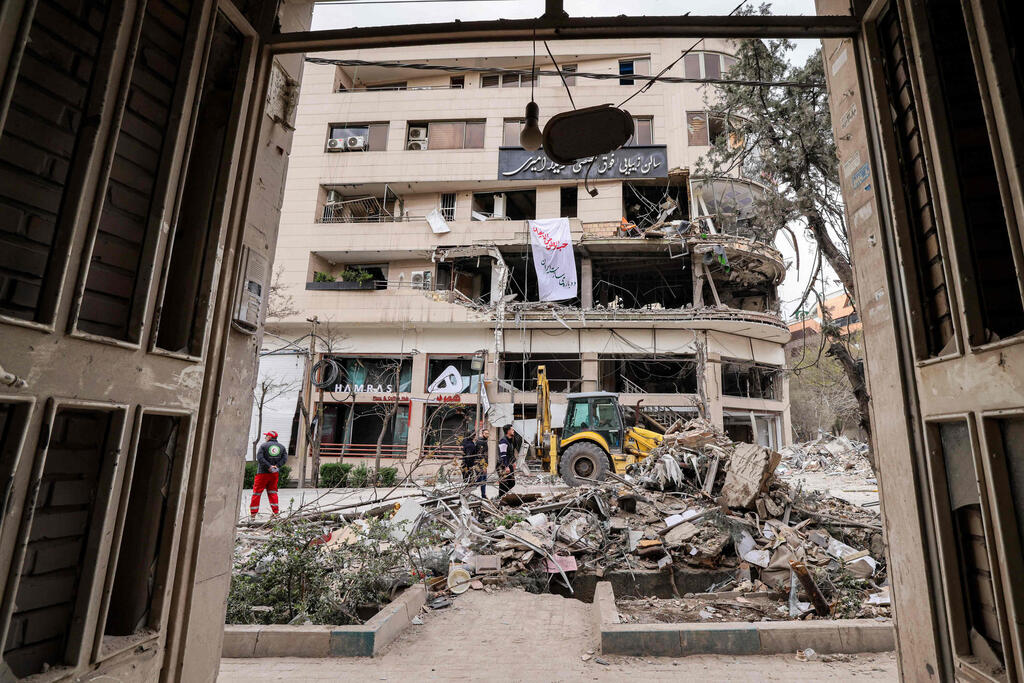
A building in Tehran hit in previous US-Israeli strikes
(Photo: ATTA KENARE / AFP)
He said Iran's continued military buildup did not, by itself, justify an immediate attack.
Iran has continued replacing senior officials killed in previous confrontations, including some whose successors have adopted even more hard-line positions.
Earlier this week, Mehrdad Akhlaghi was appointed Iran's new defense minister. Like his predecessors, he warned that Iranian forces remained ready to respond to threats.
But despite the rhetoric and continued rearmament, Citrinowicz said there had been no dramatic change in Iranian behavior in recent months.
He argued that Iran's efforts to rebuild its capabilities were comparable to those of other Israeli adversaries, including the Houthis in Yemen, Hezbollah in Lebanon and pro-Iranian militias in Iraq.
Another war against Iran, he warned, could reignite fighting across all those fronts.
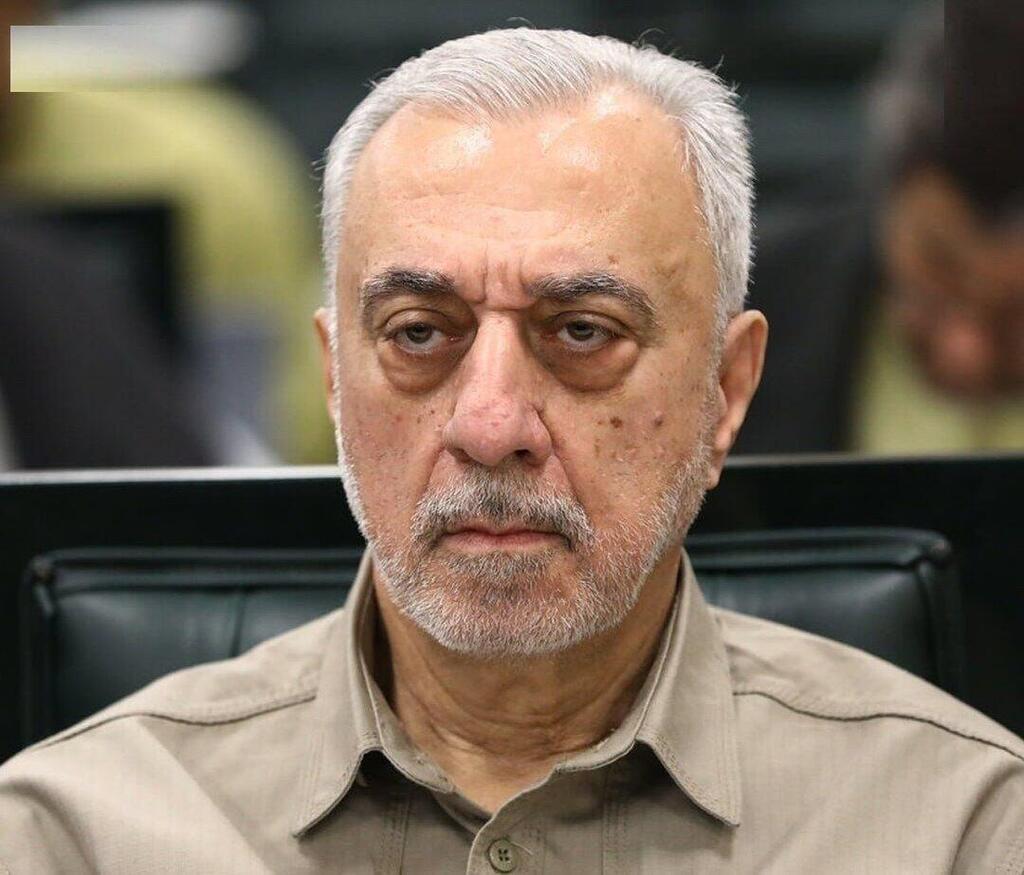
Mehrdad Akhlaghi
"The point is that there is no justification requiring a military campaign at this time," Citrinowicz said. "We need to monitor the situation and see what develops. If Iran makes a breakout toward a nuclear weapon tomorrow, then we need to attack. But right now, nothing is happening."
He described the possibility of an Israeli strike just two weeks before the election as deeply troubling.
"What's happening now is sheer madness — attacking two weeks before elections. For what?" he said.
"Iran is not on the verge of developing a nuclear weapon, and with all due respect to its missile arsenal, it still hasn't returned to where it was before Operation Rising Lion and Operation Roaring Lion," he added, using the Israeli names for the previous bouts of direct fighting against the Islamic Republic.
"There is no operational or strategic need to attack now," Citrinowicz said. "There is an attempt to incorporate political considerations, and that is serious."
The former intelligence official also questioned the lasting achievements of the previous military campaigns, noting that Iran's leadership remained in power and its military continued rebuilding.
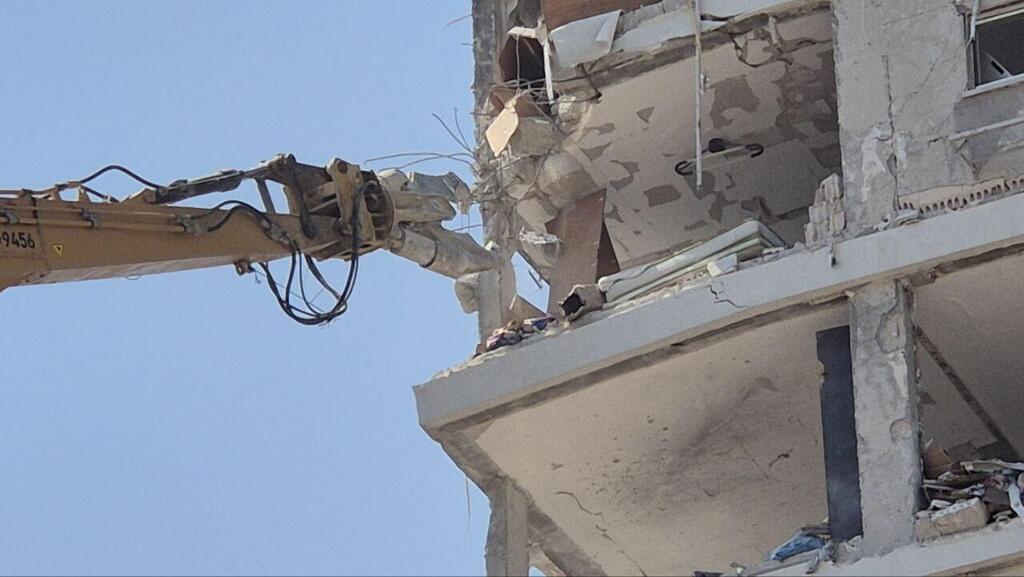
A home in the central Israeli city of Bat Yam struck by an Iranian ballistic missile
(Photo: Yaron Brener)
"Yes, another strike would cause damage, but the consequences for the international system would be insane," he said. "They would set the entire Gulf ablaze."
He criticized what he described as an apparent willingness to launch another campaign without first examining why earlier operations had failed to achieve their declared objectives.
"It's as if we don't care. Just attack again. But for what?" he said.
"And this is after we were promised tremendous, unprecedented achievements in two wars, that we had 'pushed the threat back for generations.' How did we push the threat back for generations if they can attack again?"
He added that Israeli officials had previously emphasized achievements against Iran's missile capabilities, yet Iranian missiles continued to pose a threat.
"The most serious thing is the mixing of political considerations," he said. "Ultimately, there is no justification for launching a campaign two weeks before elections."
US midterm elections complicate diplomatic efforts
The prospect of another confrontation also comes as Washington approaches its midterm elections in early November, a political milestone that Citrinowicz said could influence both Iranian calculations and Trump's willingness to pursue military action.
"The elections in the United States are extremely significant because the Iranians want Trump to lose," he said. "They want to demonstrate the price of confronting them to any American president: Mess with us and you'll lose the elections."
 Danny CitrinowiczPhoto: Yuval Chen
Citrinowicz said Tehran remained open to a negotiated agreement but continued to insist on conditions unacceptable to the Trump administration.
"The Iranians are prepared to return to an agreement, but the conditions they're presenting are conditions Trump will not accept," he said.
He dismissed recent reports in the Qatari newspaper Al-Araby Al-Jadeed suggesting a diplomatic breakthrough was imminent.
"With all due respect to the reports in Al-Araby Al-Jadeed, there is no diplomatic breakthrough whatsoever," he said.
He pointed to remarks made Tuesday by Mohsen Rezaei, secretary of Iran's Supreme National Security Council, during a meeting with Pakistan's army chief, Asim Munir.
According to the account, Rezaei insisted that all enriched nuclear material would remain in Iran.
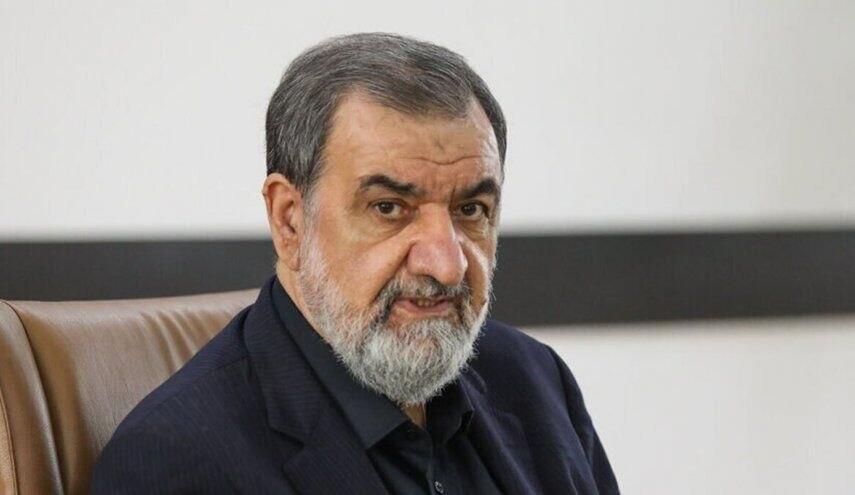
Mohsen Rezaei
"All enriched nuclear materials will remain in Iran," Rezaei said, describing them as "a central asset and national wealth of the Iranian people, intended for use within the country."
Rezaei also said Iranian officials and the public agreed that negotiations should not resume until Washington took steps to rebuild trust.
"The Iranian people and officials agree that there will be no negotiations as long as the United States does not take confidence-building measures," he said, adding that the prerequisite for restoring trust was meeting Iran's stated conditions.
Citrinowicz said the statements underscored the distance between Washington and Tehran despite those reports of diplomatic progress.
He also warned that the period between November's U.S. elections and the seating of the new Congress in January could prove especially volatile.
"I think the period between November and January is very dangerous because it's the transition between Congresses," he said. "During those two months, Trump will want to do something."

US President Donald Trump
(Photo: Anna Moneymaker / GETTY IMAGES NORTH AMERICA / AFP)
However, he suggested Trump's preferred course of action might differ substantially from Israel's reported objectives.
"Perhaps he wants to deliver a single blow, then end the whole affair and declare victory," Citrinowicz said. "I'm not sure he wants to return to the idea of toppling the regime."
He described the possibility of Israel initiating another military campaign under the current circumstances as highly irresponsible.
Israeli fighter jet activity raises escalation fears
Citrinowicz also expressed concern over a Fox News report that Israeli fighter jets had flown over Syria and Iraq toward Iran as part of a military exercise.
He warned that such activity, if accurately reported, could be interpreted by Tehran as preparation for an imminent attack, potentially provoking an Iranian response.
"If that's true, it's an extremely dangerous development," he said. "We're on the brink of war, and we're conducting a simulated strike in Iraq?"

Israeli Air Force F-35 fighter jets
(Photo: Israeli Air Force)
Citrinowicz questioned the logic of staging an exercise resembling an attack on Iran during a period of heightened tensions.
"Do we want to force the Iranians to fire missiles at us?" he asked.
"There's no logic in simulating an attack on Iran at the height of tensions, other than a desire to push the Iranians into attacking us, to have them fire the first shot so we'll have an excuse to respond."
He warned that another Israeli-Iranian confrontation would almost certainly spread beyond the two countries.
"Any war with Iran will once again be a regional war," he said. "Certainly involving the Houthis, certainly the militias in Iraq, and I believe ultimately Hezbollah as well."
Citrinowicz said the regional security environment had changed in ways that could make another confrontation particularly dangerous.
He pointed to the absence of a U.S. military presence in Iraq, which he said would make it easier for pro-Iranian militias to operate, as well as the presence of Houthi elements in the country.
"We'll once again find ourselves stuck in a regional war," he said.
He also highlighted concerns about Israel's and the United States' supplies of missile interceptors, which would be essential to defending against sustained Iranian attacks.
"We know we have a problem with interceptors. That's no secret. And the Americans have a problem with interceptors as well," he said.
Those shortages, he suggested, could become particularly consequential in a prolonged conflict involving multiple fronts and repeated missile barrages.
'We cannot separate Netanyahu's political considerations from Israel's strategic interests'
Citrinowicz said his central concern was the possibility that domestic political calculations were influencing decisions with potentially far-reaching consequences for Israeli national security.
"The most serious aspect of this entire situation is that it's impossible to separate Netanyahu's political considerations from the strategic considerations of the State of Israel," he said.
"That's extremely dangerous. This would be another war with Iran."
He warned that previous confrontations had demonstrated the economic and social costs of fighting Iran, with military operations disrupting daily life and economic activity across Israel.
"We know that every war with Iran paralyzes the Israeli economy and brings activity here to a standstill," he said. "And for what? What strategic objective would this war serve?"
He argued that another campaign would be especially difficult to justify given the limited prospects of removing Iran's leadership through airstrikes alone.
"We understand very clearly that we are not going to topple this regime from the air," he said.
Rather than rushing toward another confrontation, Citrinowicz called for a thorough examination of Israel's previous campaigns, including the objectives they failed to achieve and whether additional military action would serve the country's long-term interests.
"Launching a campaign two weeks before elections is madness," he said.
"Before Israel launches a campaign for which there is currently no immediate need, we must ultimately analyze what we failed to achieve in the previous campaign and why."
He said policymakers should also consider whether military force was the only available option and whether another confrontation would advance Israel's strategic interests.
"Is the kinetic solution the only one, and will it serve the interests of the State of Israel?" he asked.
Citrinowicz emphasized that Israel should preserve close strategic coordination with Washington, describing it as the foundation of Israeli policy toward Iran.
"We certainly need to maintain strategic coordination with the United States," he said. "That's a significant issue because it's the basis of all Israeli policy toward Iran."
But he stressed that coordination with Washington should not replace an independent Israeli assessment of the risks and benefits of military action.
"With all due respect to the Americans, the State of Israel needs to examine what's right for it," he said.
He concluded that Israel should not embark on another potentially more dangerous war without first understanding why previous operations had failed to achieve their stated objectives.
"Right now, it's clear that the war's objectives were not achieved," Citrinowicz said.
"Before we analyze why they weren't achieved, we shouldn't jump into another campaign, one that could potentially be even more dangerous than the previous one, because it would be extremely violent and the Iranians are learning from every confrontation."