


With U.S. President Donald Trump, nothing comes for free. Between U.S. Defense Secretary Pete Hegseth's visit to Israel and Trump's public endorsement of Prime Minister Benjamin Netanyahu a complex picture is emerging that could lead to the kind of miscalculation Israeli officials have been warning about in recent weeks.
Netanyahu claimed he was surprised by Trump's endorsement and, in any case, had promised him nothing in return. But beyond Iran, the American president may expect something in return on other fronts, from Gaza and Lebanon to the composition of Israel's next government.
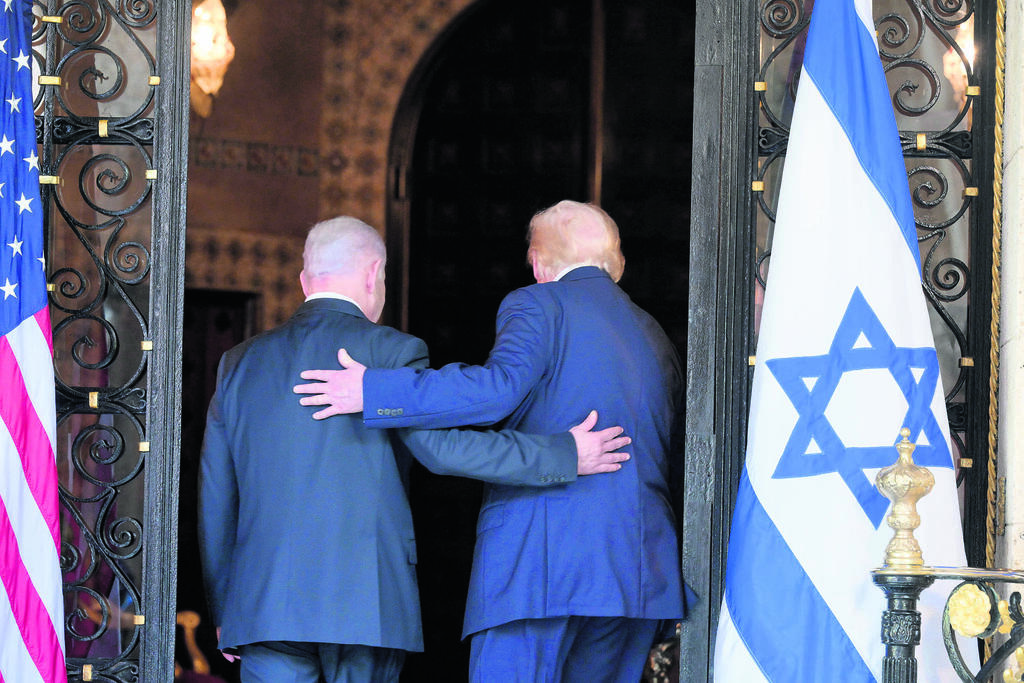
An Arab diplomat posted to a major Middle Eastern country told ynet he believes there is a significant possibility that Israel and the United States will launch a major joint attack against Iran immediately after the U.S. midterm elections, exactly two weeks from Tuesday.
The diplomat also said that, based on his understanding of conversations with American officials, Trump would push for the formation of a unity government involving Netanyahu and former IDF chief of staff Gadi Eisenkot, without figures perceived as extremists. The United States believes such a government could pave the way for expanding the Abraham Accords after the war with Iran.
Pakistan's army chief, Asim Munir, arrived in Iran on Tuesday. Munir has been one of the key intermediaries between the Americans and Iranians since the ceasefire declared at the end of their most recent war. The Qatari outlet Al-Jadeed subsequently reported that the United States and Iran had reached preliminary understandings on resuming negotiations. These reportedly include preventing a renewed escalation and unfreezing $6 billion in Iranian funds held in Qatari banks.
Similar reports have surfaced before, however, without producing any progress. The Iranians understand the implications of the war and tensions in the Strait of Hormuz for the U.S. midterm elections and hope to "punish" Trump.
Iran's regime-affiliated Tasnim news agency quoted a senior security official on Tuesday who disputed the reports, saying a major obstacle to negotiations is uncertainty among mediators over who in the U.S. administration has the authority to make final decisions.
Echoing statements American officials have made about the Iranian regime following the elimination of its leadership during the war, the official said: "It is not at all clear who within the U.S. governing establishment holds effective and final decision-making power: JD Vance, Steve Witkoff, Marco Rubio or Jared Kushner. This ambiguity, coupled with political rivalries and internal divisions in the United States ahead of the elections, has seriously complicated the mediation process and the exchange of messages, contributing to the current situation."
The ambiguity and the absentees
One thing is undisputed: Netanyahu and Hegseth discussed renewing the war against Iran on Monday night. The prime minister departed Ben-Gurion Airport aboard a private plane, with his motorcade driving directly to the aircraft. He flew to Ovda, where he met the American defense secretary.
The meeting also was attended by Defense Minister Israel Katz, National Security Council head Samuel Benezra and Netanyahu's military secretary, Guy Markizano. Emirati representatives also were present.
Who was absent from this seemingly consequential meeting? Mossad director Roman Gofman and IDF Chief of Staff Lt. Gen. Eyal Zamir.
The meeting lasted about two hours, and because it ran longer than expected, Netanyahu did not attend Beitar Jerusalem's soccer match at Teddy Stadium as he had been scheduled to do.
The question is whether and when the war will resume: before Israel's elections or only after the U.S. midterms, meaning after November 3.
For now, most indications suggest there will be no Israeli strike on Iran before Israel's elections. Although the military remains on heightened alert and preparedness levels are high, the concern centers more on the possibility that Iran could launch a surprise, multifront attack against Israel.
Israel has been holding focused discussions on that possibility. Last week, Netanyahu convened late-night meetings with senior defense officials at the Kirya military headquarters in Tel Aviv to discuss various scenarios.
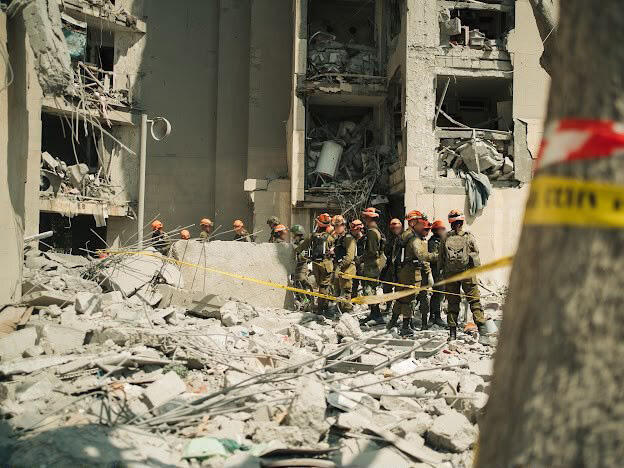
The site of an Iranian missile strike. Israel is preparing for another war before reconstruction is complete
(Photo: IDF Spokesperson)
A senior Israeli official estimated the odds of an attack before Israel's elections at 70-30: a 70% chance there will be no strike and a 30% chance there will be one. A 30% chance is still significant, but the main scenario under consideration is an Israeli preemptive strike in response to the threat of a surprise Iranian attack.
The situation after the elections will be different, however. The estimated odds of an attack after November 3 are the reverse: a 70% chance of a strike and a 30% chance there will be none.
Attention should also be paid to the window between November 3 and January 3, when the the new Congress takes office. If Republicans lose control of the House, the Senate or both, Trump could order a strike against Iran before the new Congress takes office.
Israel must prepare for that possibility, and Hegseth's visit should be viewed in that context.
The main priority: Don't derail Trump's plans
Another senior Israeli official offered a different explanation for Hegseth's surprise visit. The defense secretary had originally been scheduled to visit Israel in July but postponed the trip at the last minute.
According to this explanation, Hegseth came to visit American forces in the region and stopped to meet Netanyahu along the way to make sure the prime minister was not planning any surprises before the U.S. midterm elections.
A senior Israeli official familiar with the details said Netanyahu is very eager to strike Iran but cannot do so at present. The U.S. administration, according to the official, are not interested in such an attack, and Hegseth did not come to plan one. Rather, he came to make sure Netanyahu would not launch an unexpected attack against Iran.
Either way, the timing of the visit, just one week before Israel's elections, is sensitive and could cause considerable alarm in Tehran, potentially increasing the risk of a miscalculation.
The visit should also be considered alongside Trump's public endorsement of Netanyahu. A source close to the American president suggested that Trump's endorsement was motivated by domestic political considerations, particularly a desire to appeal to evangelical Christians who support Israel and Netanyahu.
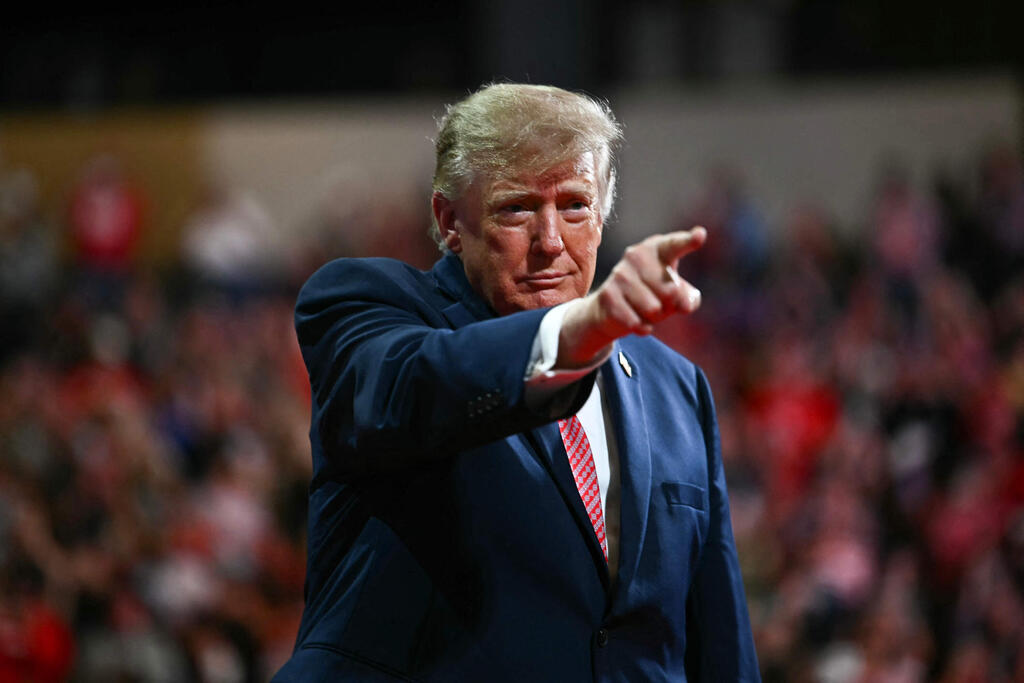
US President Donald Trump will not allow his plans to be derailed
(Photo: Kent Nishimura / AFP)
But Trump, a shrewd businessman, knows that after such an endorsement Netanyahu is beholden to him and will do whatever he asks.
That could mean keeping extremist figures out of the government, agreeing to the reconstruction of Gaza without first disarming Hamas, accepting a peace agreement with Lebanon even without Hezbollah's complete disarmament and withdrawing from Syria.
In other words, Netanyahu would be expected not to interfere with Trump's ambitions to win the Nobel Peace Prize and establish a legacy as a peacemaker.
To achieve his objectives regarding Iran, Netanyahu may be willing to accommodate the American president on other issues important to him, including Trump's 20-point plan for Gaza. Netanyahu has already agreed to an "Emirati bubble" in Gaza, where reconstruction would begin before demilitarization.
For Netanyahu, the ultimate prize is the overthrow of the Islamic Republic's regime. To achieve that goal, he may be willing to compromise elsewhere — sacrificing a rook to protect the queen.
Election tensions rise
The reports and statements about rising tensions around the elections significantly increase the risk of a miscalculation with Iran. Tehran could conclude that Israel is preparing to attack and attempt to strike first in a preemptive operation. From there, the situation could rapidly shift from defense to offense.
The message Israel has repeatedly conveyed in recent days is that if Iran makes a mistake, the Israeli response will be unprecedented.
Previous reports indicated that Israel was preparing to strike Iranian infrastructure and energy facilities in the belief that such attacks could accelerate the regime's collapse. But even now, no one can guarantee that another round of fighting would change the situation.
As one Israeli official put it, no one is promising that the regime in Tehran will fall this time.
War would also carry a heavy price for Israel's civilian population: extensive damage, prolonged reconstruction and a significant risk of casualties, all while much of the damage Israel has already sustained remains unrepaired.
The sensitive timing ahead of Israel's elections has already prompted IDF Chief of Staff Zamir to make clear to the United States that renewing the war before October 27 could very well force a postponement of Election Day.
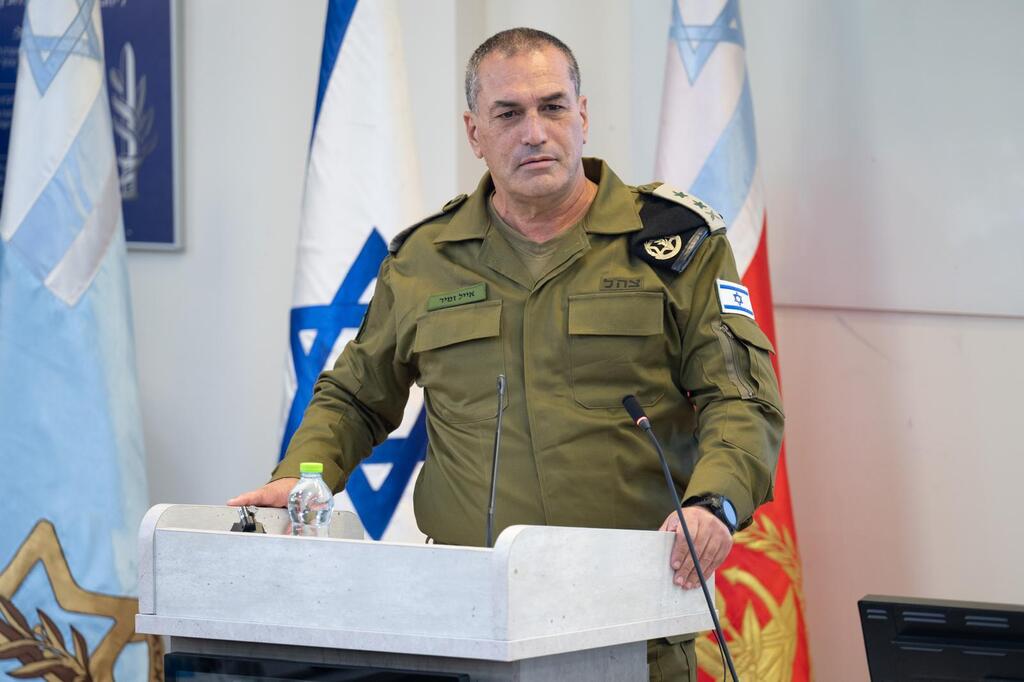
IDF Chief of Staff Eyal Zamir. Military alert levels are being raised
(Photo: IDF Spokesperson)
Opposition figures are suspicious of the discussion surrounding a renewed war with Iran, attributing at least some of it to political motives.
Netanyahu appears to be trying to convey a sense of urgency — and perhaps even provoke the Iranians into attacking first. There have been late-night meetings, briefings suggesting Iran wants to disrupt the elections and the secret visit by Hegseth, undoubtedly one of the most hawkish figures in the U.S. administration.
Apart from Zamir, there appears to be no other senior security official likely to question Netanyahu's motives. The heads of the Mossad, National Security Council and Shin Bet security agency are all his appointees. Netanyahu would need the approval of Israel's security Cabinet to launch a war of choice, but an Iranian attack could change that.
Amid these developments, it is also important to consider how Iran views the situation.
Do the Iranians believe a surprise attack against Israel would hurt Netanyahu's electoral prospects or actually work to his advantage? Would postponing Israel's elections serve Iranian interests?
Basic logic suggests the Iranians want to deepen Israel's internal divisions. They benefit from the chaos, so it is entirely possible that a surprise attack could serve their interests. That is also why Israel is deeply concerned that Iran may try to disrupt the elections.
An escalation could instead come the day after Israel's elections, in an attempt to influence the composition of the next government. An Iranian attack could make it easier for Trump to convince Israel's political parties to form a national emergency unity government, potentially sparing Netanyahu an election defeat.