

The Freedom Flotilla Coalition has once again set sail toward Gaza in an effort to break Israel's naval blockade, reviving one of the most contentious debates in Middle East politics: the legality and legitimacy of the blockade. This year’s mission is unprecedented in scale, involving between 50 and 70 vessels carrying activists, doctors, parliamentarians, artists and human rights defenders from 44 countries. Organizers say the convoy is expected to reach Gaza within two to three weeks.
Since 2010, when the deadly raid on the Mavi Marmara left 10 activists dead, the flotilla has served as a recurring act of maritime protest. Organizers emphasize that the aid they carry is mainly symbolic, pointing out that thousands of trucks laden with supplies remain blocked at border crossings. Instead, they frame their mission as an act of civil resistance.
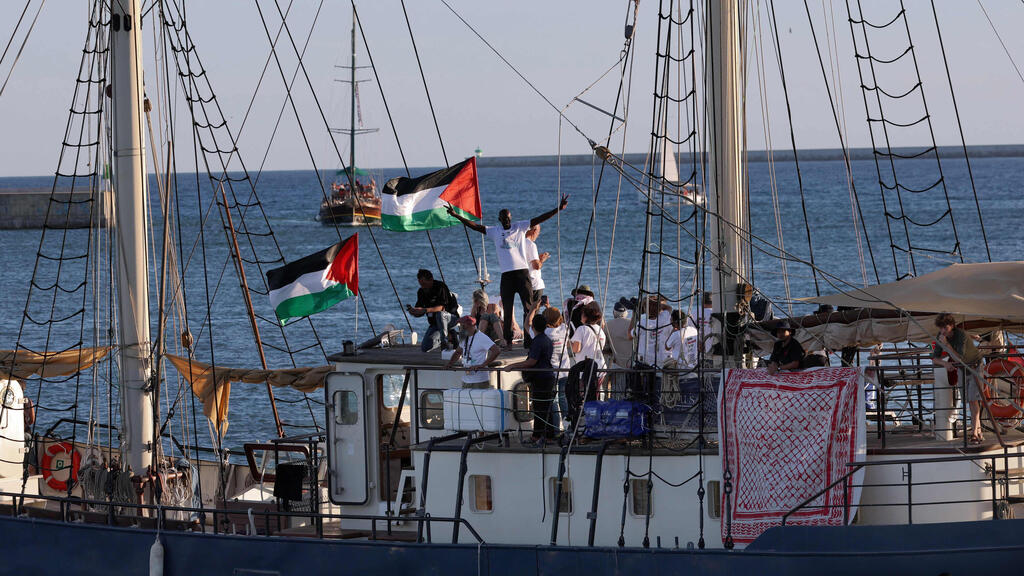
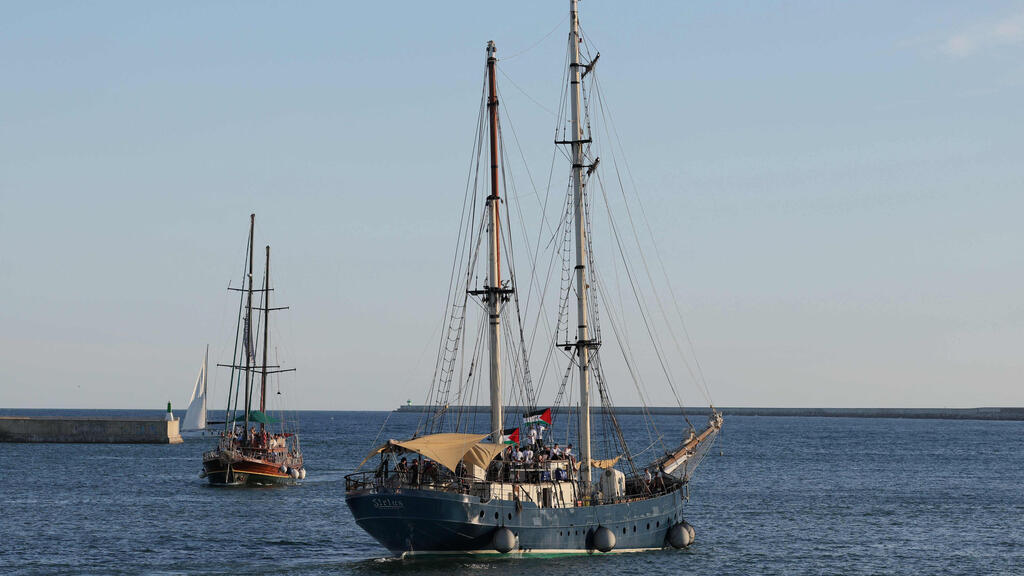
(Photo: Lluis Gene / AFP)
At the heart of the controversy lies the question of whether Israel’s blockade—first imposed in 2007 after Hamas seized power in Gaza—stands on firm legal ground. Supporters of the flotilla argue that the blockade constitutes collective punishment, explicitly prohibited under the Fourth Geneva Convention. They also describe Israeli interceptions of vessels in international waters as acts of piracy under international law.
By contrast, legal scholars maintain that the blockade is consistent with the laws of armed conflict. Professor Eugene Kontorovich, director of international law at George Mason University’s law school, emphasized that “blockade is a legal and legitimate aspect of naval warfare. It’s actually one of the principal purposes of naval warfare, to deny access to goods and material to the enemy,” he explained.
“This year’s convoy—our largest yet—includes dozens of vessels and hundreds of individuals from Europe, Africa, Asia and the Americas—a true global effort to end the blockade,” according to Sandra Barrilaro, spokesperson for “Rumbo a Gaza,” the Spanish branch of the Freedom Flotilla Coalition. “We carry symbolic aid—food, medicine, baby formula—not because aid is absent, but because it is deliberately blocked at Gaza’s crossings. Our act challenges that deprivation and calls out collective punishment,” she added.
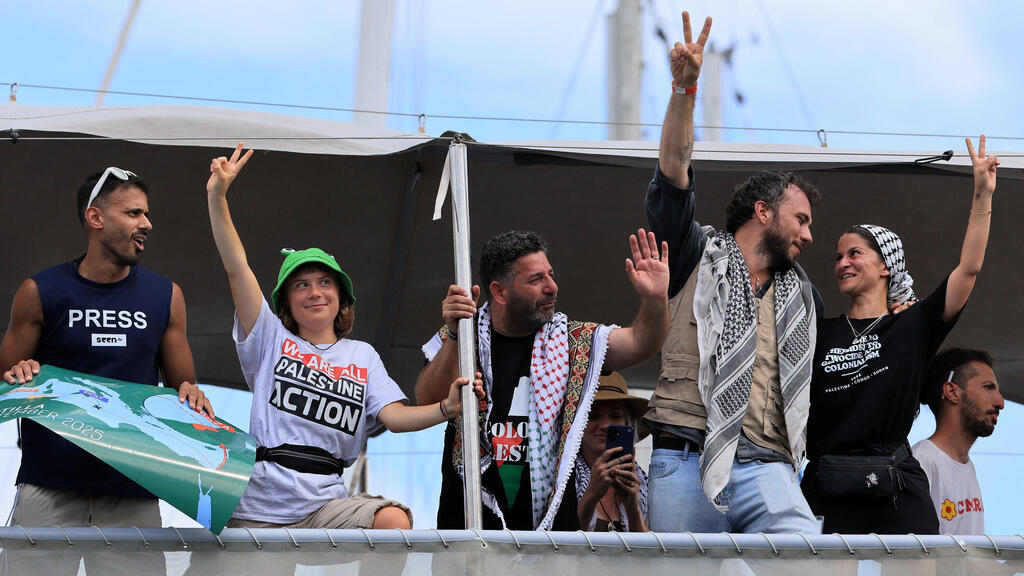
Activists, including Greta Thunberg, on board a flotilla ship
(Photo: Nacho Doce/Reuters)

Ready to sail
(Photo: Nacho Doce/Reuters)
She stressed that the initiative is not a humanitarian mission in the classic sense. “The real scandal is that thousands of trucks with food and medical supplies are waiting at Rafah, blocked from entering. What we do is to expose this injustice and to show that international law prohibits collective punishment, attacks on civilians, schools and hospitals. That is our legal basis,” she noted.
Barrilaro emphasized that all participants are trained in nonviolence. “The Freedom Flotilla Coalition carries out peaceful actions. Every participant—whether crew or activist—receives training in this approach before setting sail. We are aware of the risks we take: assaults, arrests and imprisonment. We saw it in 2010, during the assault on the Mavi Marmara, when 10 of our colleagues were killed and 50 others injured. But we will continue, because silence is complicity,” she added.
However, Kontorovich explained that, once a blockade is declared and properly announced, as Israel has done, third-party vessels that attempt to breach it can be legally stopped, boarded or even seized.
“International law simply allows the stopping of the vessel. By the way, international law also allows the sinking of the vessel. Once they’re doing this, they are essentially engaged in hostile conduct. And they can be treated as a hostile entity,” he said
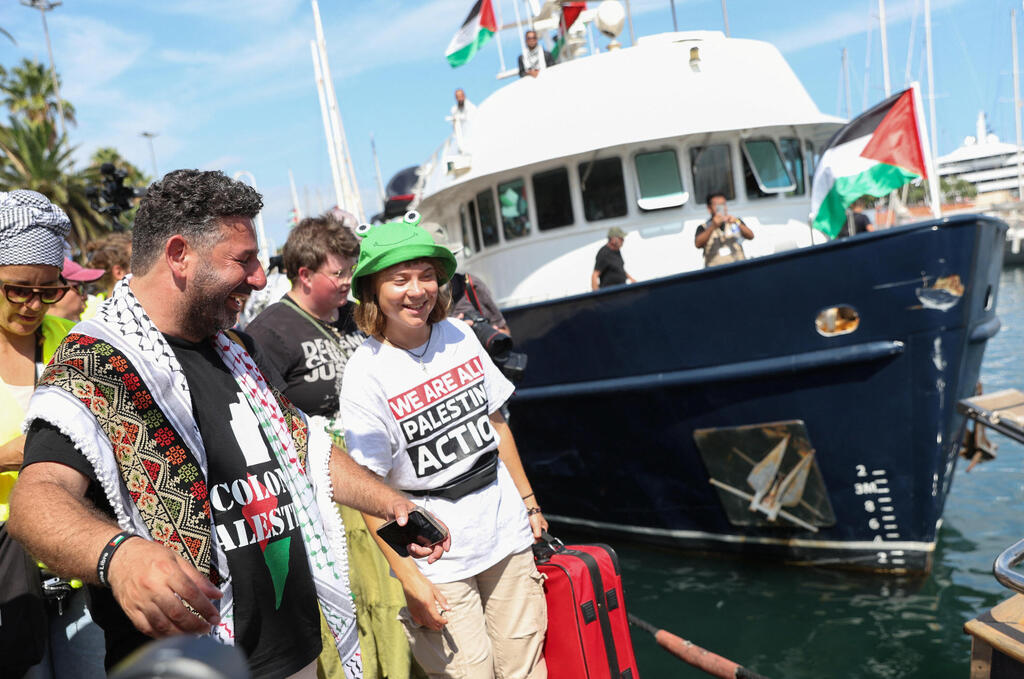
Greta Thunberg prepares to board a flotilla ship
(Photo: Eva Manez/Reuters)
When asked about the humanitarian cargo often cited by flotilla organizers, he dismissed the notion that this alters the legal status of a blockade runner. “There’s no particular exception. A claim of carrying humanitarian aid obviously does not allow running a blockade,” he noted.
While the legal argument may appear straightforward in military manuals, Israel’s actions are also scrutinized through the lens of international diplomacy. Past confrontations have generated global outrage, placing Israel in a difficult position.
“Basically, they’re trying to use exactly the same tactics as Hamas on Israel, which is, namely, to put civilians in harm’s way, engage in hostile actions, get garbed in civil opposition, and then blame Israel for responding,” Kontorovich said.
For flotilla activists, however, it is quite different. Barrilaro described their effort as political rather than humanitarian. “The Freedom Flotilla has always been political. We denounce the blockade, the occupation, the ongoing killings and displacement. Humanitarian aid is not our main goal; it is a symbolic act of protest to expose the complicity and inaction of governments worldwide. They are allowing all of this to take place,” she explained.