

Among the five divisions currently operating in southern Lebanon — even during the fragile ceasefire — women are also serving: combat soldiers, doctors, paramedics and combat documentarians. At a time when voices are again being raised in Israel arguing that women should not serve in the military, and certainly not in combat roles, they refuse to accept those claims. Throughout the war, they have taken part in fighting across all fronts, and for some, this is not even their first time in Lebanon.
The latest wave of criticism of women’s service gained momentum after Channel 14 aired a film questioning the contribution of female combat soldiers. The film, titled “Equality or Burden — the struggle over the character of the IDF,” drew criticism, including from the military spokesperson. The backlash did not stop there: dozens of rabbis spoke out against integrating women into armored vehicles, arguing it contradicts both religious law and military orders. They described men and women serving together in armored vehicles as a “moral weakness,” even as the number of female combat soldiers in the IDF continues to rise to record levels. In 2025, about 8,500 women served in combat roles — more than double the number in 2020 and nearly ten times the figure in 2013. About 5,000 women enlisted over the past year, reflecting a tenfold increase compared to a decade ago.
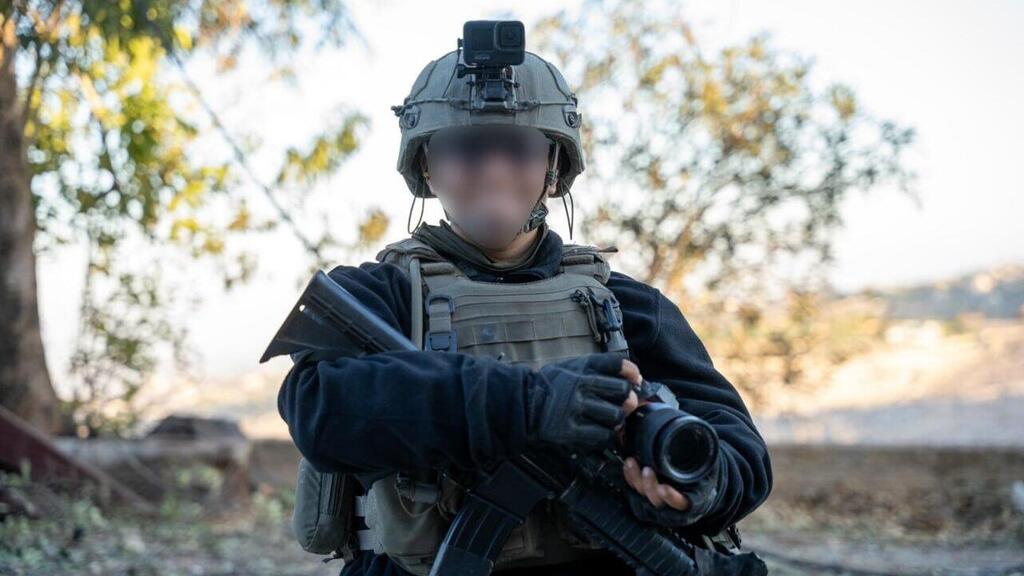
Staff Sgt. S. enlisted in November 2023 as a combat documentarian. She began basic training just a month after the outbreak of the October 7 war. It was full combat training, including additional specialized courses: border infantry training, advanced training that included counterterrorism and close-quarters combat, and finally instruction in photography, communications and media.
The 22-year-old serves as both a combat soldier and documentarian, attached to various units, including those that are not mixed-gender. She often finds herself the only woman in the unit. “In Givati, Kfir, Golani, Nahal, the commando units — I knew throughout training that this is what it would be like. It doesn’t deter me,” she said. But in the field, she added, it feels different: “There is dismissiveness on the part of the commanders. Being a woman among men in enemy territory, and also toward the role itself. I don’t let it affect me, and I know the importance of what I do. If they don’t understand — that’s their problem. I do my part.”
She has learned how to respond to skepticism: “I explain that I went through the same training as they did. They’re surprised that I’m also a rifleman level 07,” she said, referring to an advanced infantry qualification. “They need to understand that I’m one of them. I know how to operate in situations, and if that means being more with the weapon and less with the camera, I’ll do that too — to prove it. That’s what matters.”
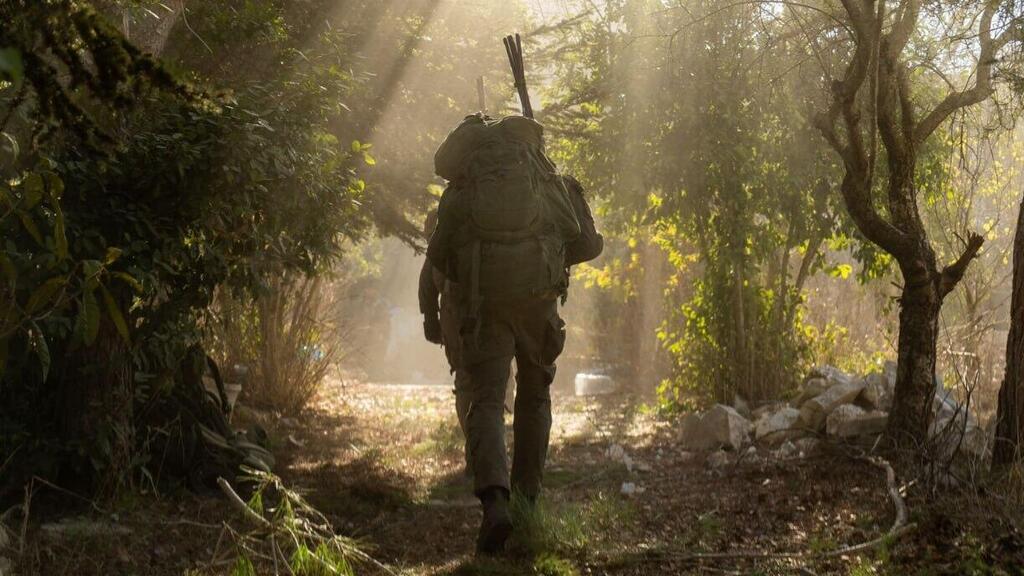
Among the striking images taken by Staff Sgt. S. inside Lebanon
(Photo: Staff Sgt. S.)
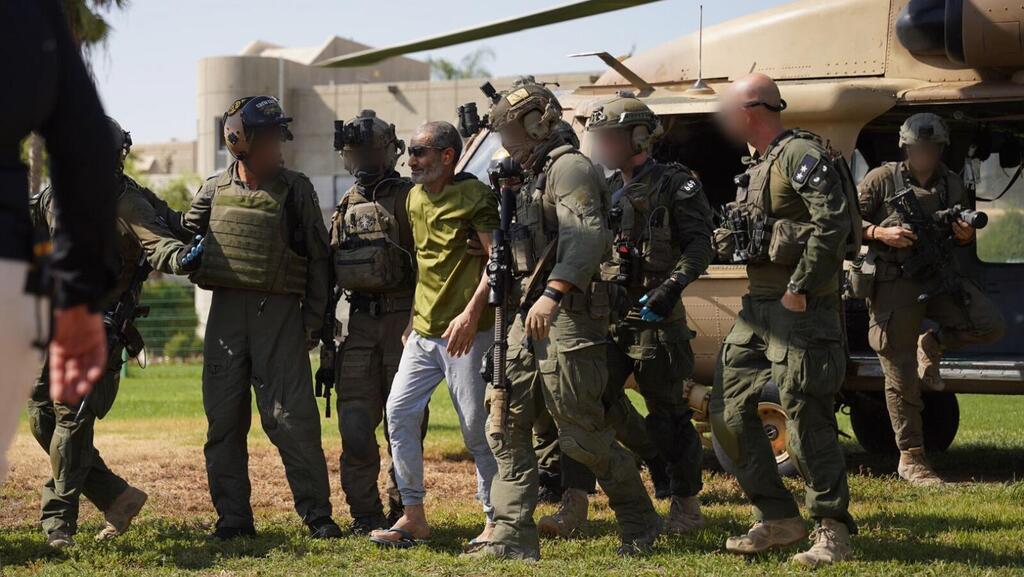
Farhan al-Qadi on his way to the hospital, in a photo taken by Staff Sgt. S.
(Photo: IDF Spokesperson’s Unit)
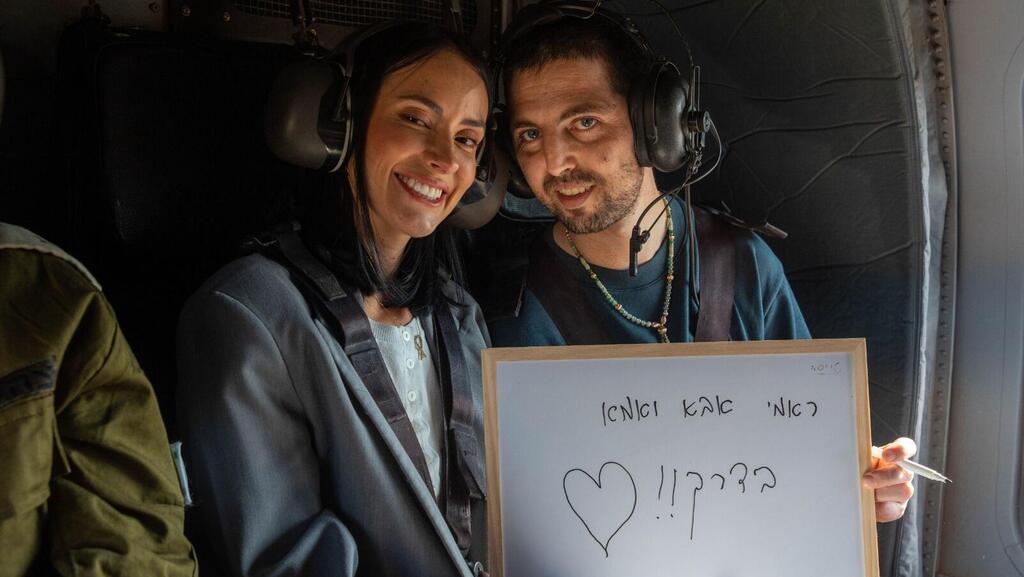
The photo of Elkana and Rivka Bohbot, taken by Staff Sgt. S.
(Photo: IDF Spokesperson’s Unit)
‘I don’t see you as women, you are part of the fighters’
The combat documentarian is not alone. Another Staff Sgt. S., who serves as a paramedic in the Shaked Battalion of the Givati Brigade, received the President’s Award for Excellence this week. She completed a demanding year-long training program and joined maneuvering forces in Gaza. She said she did not experience dismissiveness from her commanders, but encountered criticism when she returned home.
“I know the value of my role and what my presence means for the fighters,” she said. “I try to let such statements pass by me. I know I’m doing a good job, like anyone else. These things have not made me question the value of what I do.”
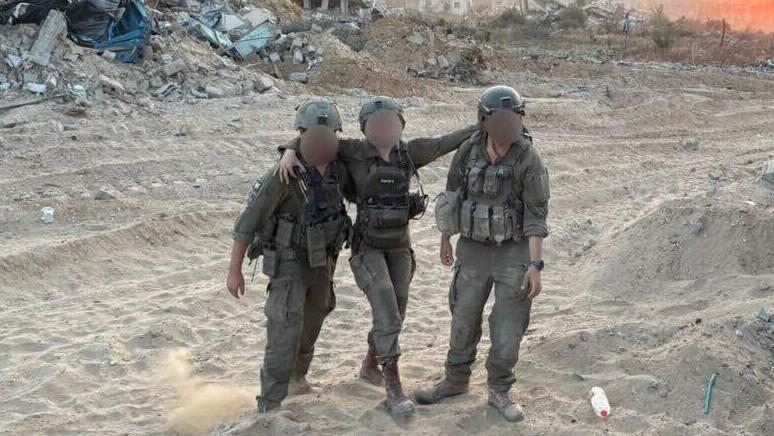
Capt. Dr. L. (center) inside Gaza
(Photo: IDF Spokesperson’s Unit)
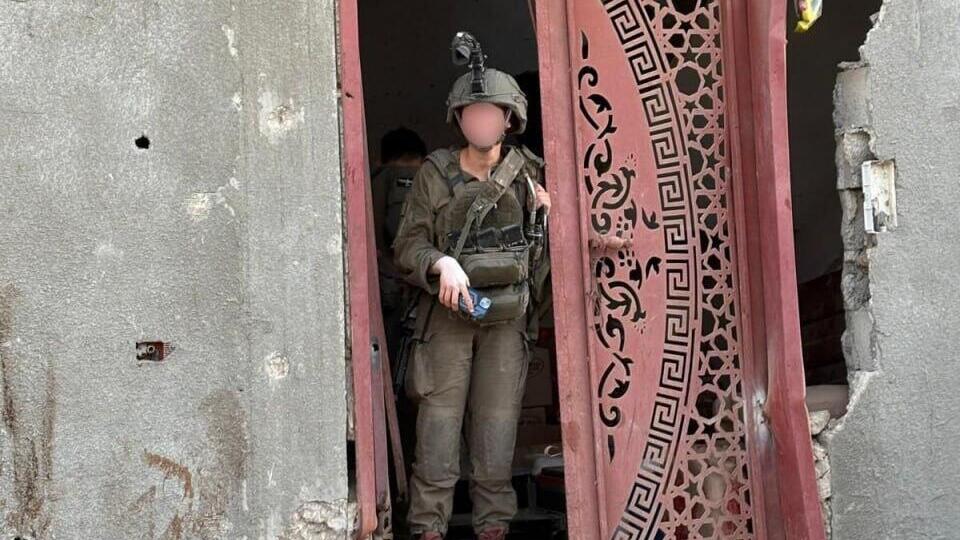
(Photo: IDF Spokesperson’s Unit)
Capt. Dr. L., a physician in the Paratroopers Brigade’s 890th Battalion, said she always wanted to be a doctor in a combat role. “The war strengthened my desire to serve in infantry,” said the 27-year-old from Tel Aviv. She has served in Gaza, Syria, the West Bank and now Lebanon — “a kind of closure,” as she described it. “We usually operate in vehicles, but now it’s on foot. It depends on the mission. Unlike the sand in Gaza, here there is rain and cold. These conditions affect treatment, as wounded soldiers can be exposed to hypothermia.”
Dr. L. described a different experience regarding her service alongside male soldiers. “In my battalion, I have never felt different because I am a woman. When the battalion commander holds briefings for paramedics joining the unit, he tells them: ‘I don’t see you as women, you are part of the fighters.’ That applies to everything — there is no mission we don’t go on. If you want it, you can do it. Anyone can achieve what they want.”
Showing what is really happening
Lt. R., 21, from Ein Vered, enlisted shortly before the war as a combat soldier in the Artillery Corps. “One of the best decisions I’ve made. Exactly the challenge I was looking for, and the amazing people I met,” she said. After completing officers’ training, she now serves as a fire coordination officer in an armored unit. “It’s a big responsibility — to bring the power of artillery, the Air Force and other capabilities to the front line of maneuvering forces,” she said. Before entering operations in Lebanon, she added: “We went in with our heads held high, knowing we would accomplish what we were sent to do. It’s a source of pride to know we are making history.”
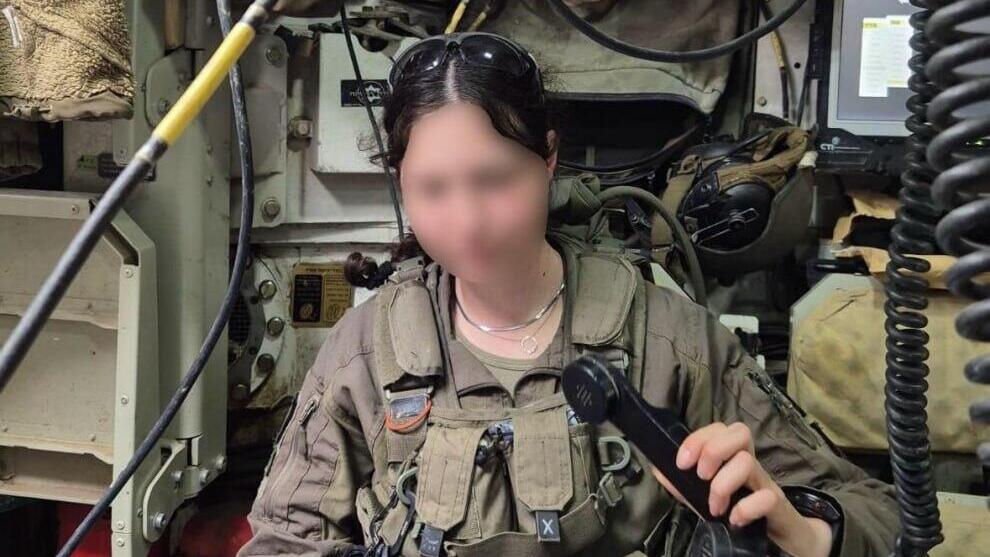
Lt. R.
(Photo: IDF Spokesperson’s Unit)
The combat documentarian has already made history. “The most meaningful images I captured were in Israel — of the hostages returning home,” she said. Another photo she remembers vividly shows a soldier moving through dense terrain in Lebanon, perfectly framed by sunlight — one of the first images released from the ground operation there. “The mission hasn’t faded — it’s stronger now. I feel the significance of what we do, knowing IDF forces are here so residents of the north can have quiet. I’m glad to see the impact of the visuals documenting this,” she said.
A defining moment: ‘I treated many people I knew’
The paramedic said she chose her role because of a long-standing interest in medicine. “I read about the role and it sounded incredible. I wanted to see if I was suited for it — and here I am today,” she said. “Throughout training we learned about acts of heroism by paramedics who did incredible work — women I admired and wanted to be like.”
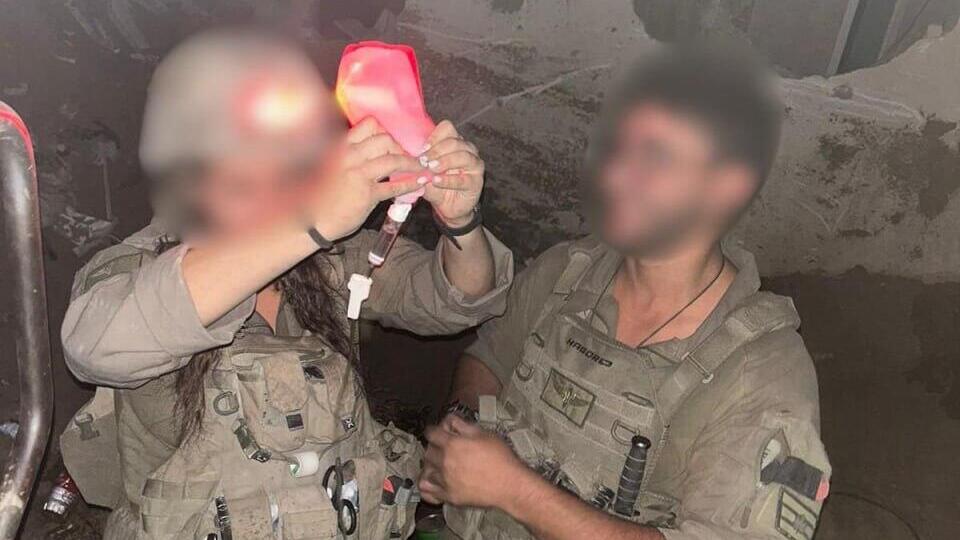
Paramedic Staff Sgt. S.
(Photo: IDF Spokesperson’s Unit)
One event shaped her service. On Dec. 9, 2024, the unit she was with came under attack. Three soldiers — Ido, Barak and Omri — were killed, 12 were wounded and three were evacuated in serious condition. “I treated many people I knew, along with another paramedic,” she recalled. “We left Gaza after the funerals. I went straight to the hospital, surrounded by grief, not knowing how I would continue. At Sheba, I saw five beds — the commander and the wounded soldiers — sitting together, laughing. When I saw them, it gave me a lot of motivation to keep going.”
“We are a line of defense for the State of Israel. If we are not here, the enemy will meet civilians,” she said as she prepared to enter Lebanon. “The light in their eyes when they see us, the gratitude — it shows how meaningful our presence is.”