


Board of Peace High Representative Nickolay Mladenov presented the UN Security Council on Thursday with an overview of the situation in the Gaza Strip and a roadmap for implementing U.S. President Donald Trump’s Gaza peace plan, warning that Israel and Hamas now face only two paths.
The choice, Mladenov said, is between “a deteriorating status quo” and a new beginning for Palestinians living in desperate conditions. “There is no third option. There never was, and the people of Gaza should not be made to wait while some pretend that there is,” he said.
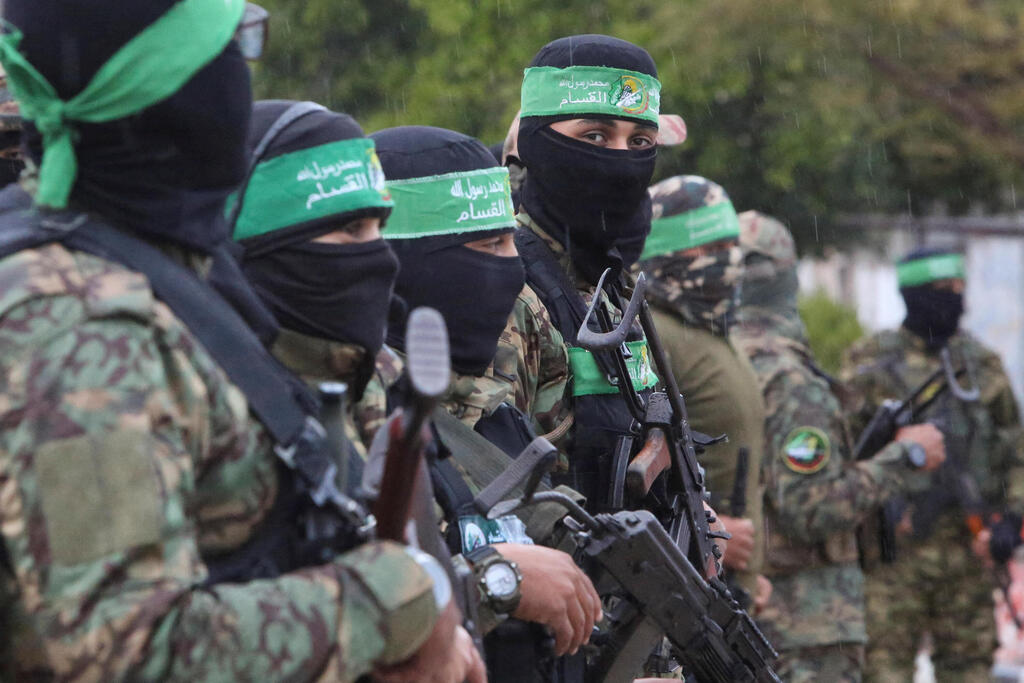
In his briefing, Mladenov said that while fighting in Gaza had largely subsided, the humanitarian and civilian situation in the enclave remained catastrophic. He said the ceasefire was still far from stable, with violations continuing on a near-daily basis.
According to Mladenov, about 1% of humanitarian aid entering Gaza is still reaching terrorist organizations and helping strengthen them. At the same time, he said, the number of Gazans benefiting from aid has risen from roughly 400,000 to about 2 million.
The scale of destruction remains immense. Mladenov said some 80% of buildings in Gaza have been damaged or destroyed, while around 70 million tons of rubble are still scattered across the Strip.
More than one million people are living without permanent shelter, either in tents or in partially destroyed buildings, he said. About 80% of working-age Palestinians in Gaza are unemployed.
At the center of his briefing was a new roadmap drawn up, he said, in coordination with Egypt, Turkey, Qatar and the United States, and based on feedback from Palestinian factions. Mladenov said the plan rests on reciprocity: each step by one side would trigger a corresponding step by the other, with an independent verification committee approving each phase before the process moves forward.
Mladenov said the plan is built around the principle that Gaza must ultimately be governed by a single authority, under a single legal framework, without competing terror groups.
But in an effort to avoid the appearance of a public surrender by Hamas, he stressed that weapons from Hamas and other Palestinian terror groups would not be handed over to Israel, but to a transitional administration in Gaza.
Under the plan, an international stabilization force would serve as a buffer between IDF troops and areas transferred to the control of the Palestinian committee. The force would also assist in dismantling terror groups and protecting humanitarian operations.
At the same time, Israel would commit to a gradual withdrawal of its forces to the Gaza border according to an agreed timetable, linked to verified progress in the disarmament of Hamas and other terror factions.
Mladenov said the decommissioning of weapons “will be gradual, sequenced and time-bound against an agreed timetable.” He also said the roadmap deserves the Security Council’s “clear, consistent and unequivocal support.”
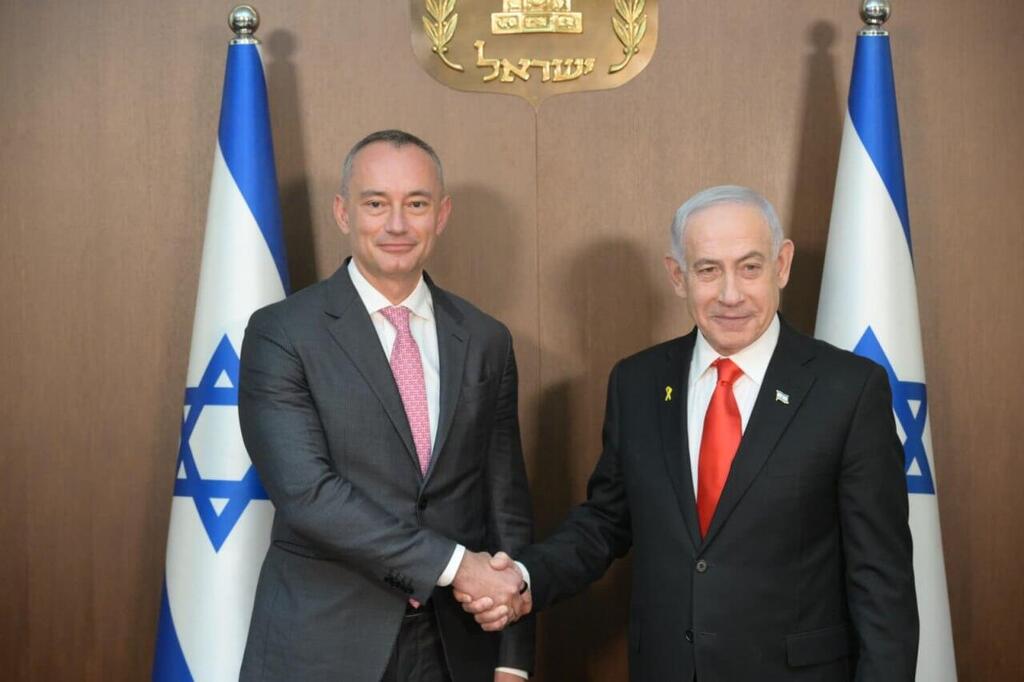
(Photo: GPO)
“I ask the council to use every means at its disposal to urge Hamas to accept the roadmap without further delay, and Israel to uphold its obligations under the ceasefire,” Mladenov said. “Diplomacy must continue, cannot be used as an excuse for delay while 2 million people wait in desperate conditions.”
The Board of Peace report said the central obstacle to full implementation of the ceasefire remains “Hamas’ refusal to accept verified decommissioning, relinquish coercive control, and permit a genuine civilian transition in Gaza.”
The report also warned that “Reconstruction cannot commence where weapons have not been laid down,” and said agreement on a roadmap for full implementation of the plan, including the decommissioning of Hamas and all terror groups in Gaza, was the key step needed to unlock the rest of the process.
Mladenov warned that if the transition and disarmament process fails, Gaza could remain divided, with Hamas retaining administrative and military control over about 2 million Palestinians confined to less than half of the Strip and trapped in rubble, aid dependency and despair.
“This is a version of the future that Israelis, Palestinians and the region should all fear and all mobilize to avoid,” he said.
‘Reconstruction cannot depend on Hamas disarmament’
UN humanitarian coordinator Dr. Ramiz Alakbarov sharply criticized Israel during the debate, saying Israeli strikes were continuing, while also condemning terrorist activity by Hamas and other Palestinian groups.
French Ambassador to the UN Jérôme Bonnafont said 850 Palestinians have been killed in Gaza since the ceasefire took effect.
According to Alakbarov, Israel now controls about 60% of Gaza, compared with about 52% after the ceasefire. He said humanitarian conditions in the Strip remain severe and the population continues to depend on daily aid deliveries.
He said the humanitarian response plan for the occupied Palestinian territory, estimated at about $12.06 billion, has so far received only $540 million. Alakbarov said Gaza’s children deserve basic rights and a future free of violence and deprivation.
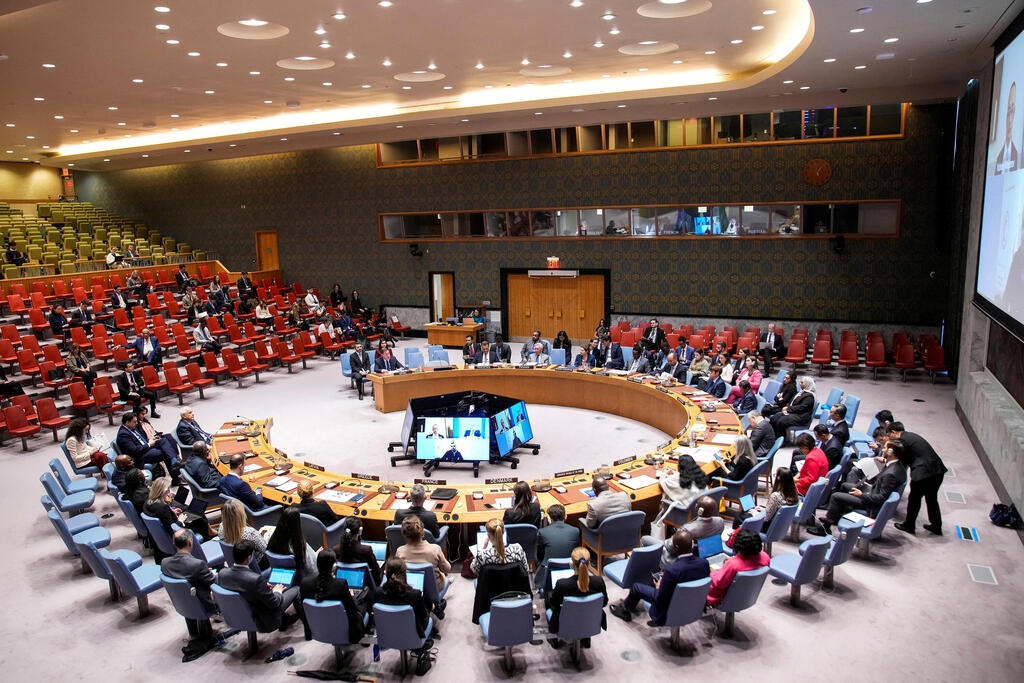
(Photo: REUTERS/Eduardo Munoz)
Alakbarov said recovery efforts, including in Gaza, must ultimately serve long-standing political goals: reunifying the Gaza Strip and the West Bank under a single sovereign and legitimate Palestinian government, and renewing a political process that would end the prolonged occupation and realize a two-state solution.
He also criticized Israeli construction in settlements and East Jerusalem, violence attributed to settlers in the West Bank and continued Israeli military activity across the territory.
U.S. Ambassador to the UN Mike Waltz said significant challenges remain in Gaza’s recovery and reconstruction, but argued they can be overcome through joint action. He said the United States would continue working with Israel, regional states and partners in the Board of Peace to advance the plan.
Waltz said Hamas must disarm and described that as the critical next step toward a sustainable peace under Trump’s plan, which the Security Council endorsed in Resolution 2803. He said the process must include the irreversible destruction of Hamas’ military, terrorist and offensive infrastructure, including tunnels and weapons production facilities.
Waltz praised the increase in humanitarian aid entering Gaza and said the diversion of aid to terrorist organizations had almost completely disappeared.
The French ambassador pushed back, saying restrictions on aid deliveries and crossings remain in place and that the target of 4,200 trucks per week has not been met. He said many essential goods were still being blocked.
Bonnafont also criticized Hamas for refusing to disarm, but added that the IDF continues to occupy a large part of Gaza.
He said the restoration of peace and basic living conditions in Gaza should not be made dependent on the success of Hamas’ disarmament, arguing that doing so would give Hamas effective veto power over the future of Palestinians and force civilians to bear the cost of a political deadlock.
He said reconstruction and rebuilding efforts should begin without delay across Gaza.