

The Israeli military said Thursday evening that rocket fire from Lebanon could expand to additional areas in the coming hours. “In accordance with the situational assessment and following the launches from Lebanese territory since this morning, additional areas across the State of Israel may come under fire in the coming hours,” the IDF said, urging the public to remain alert and follow Home Front Command instructions. “The IDF is prepared to operate both defensively and offensively.”
Prime Minister Benjamin Netanyahu’s announcement of direct negotiations with Lebanon, after a prolonged refusal, surprised many. It followed a phone call with President Donald Trump, who urged him to scale back Israeli strikes in Lebanon and open talks aimed at disarming Hezbollah.
IDF chief: Lebanon has become main front
(Video: IDF Spokesperson’s Unit)


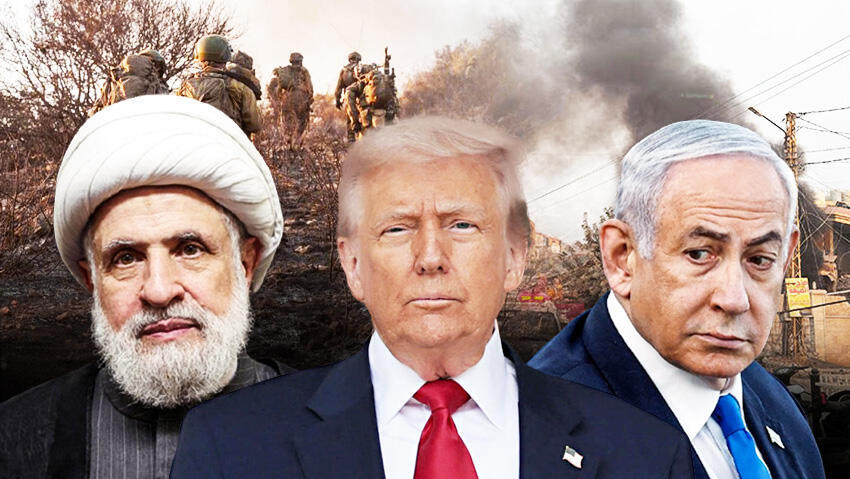
Israeli officials said negotiations would take place under fire, but acknowledged that Israel has already reduced the scope of its strikes, despite continued Hezbollah barrages. Trump said he had spoken with Netanyahu and indicated the Israeli leader would act with restraint, adding that a more measured approach was needed.
“The intensity of the war in Lebanon will match the nature of diplomatic talks,” Israeli officials said, as sirens sounded across northern Israel while Israeli strikes in Lebanon declined.
Officials added that Israel is giving negotiations a chance and that strikes are expected to be less intense, but stressed that Israel will not compromise on the security of northern residents. They said Israel still expects full adherence to U.N. Security Council Resolution 1701, which bars Hezbollah activity south of the Litani River. “Israel is not retreating, but it is giving an opportunity,” one official said.
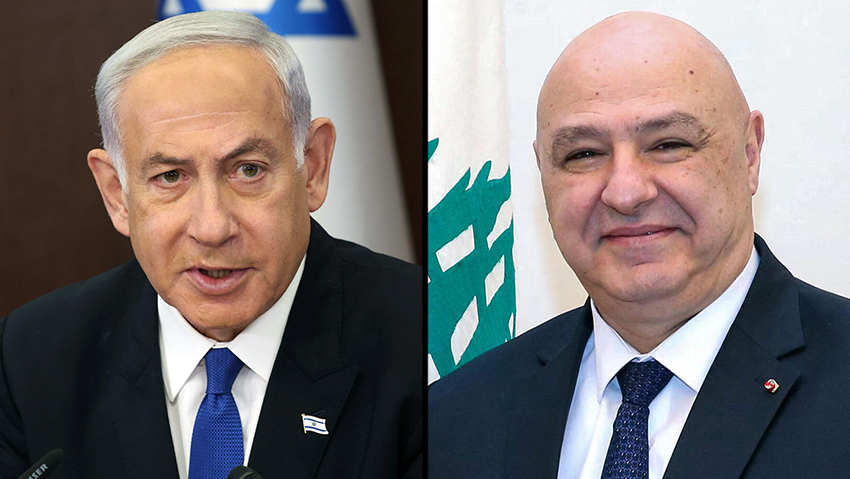
Joseph Aoun and Netanyahu
(Photo: LEBANESE PRESIDENCY / AFP, Amit Shabi)
The talks will be led by Israel’s ambassador to Washington, Yechiel Leiter. Netanyahu said the decision followed “repeated requests from Lebanon to open direct negotiations with Israel,” and that the talks would focus on disarming Hezbollah and establishing peaceful relations.
Some Israeli ministers voiced more hawkish positions. National Security Minister Itamar Ben-Gvir called for cutting electricity to Lebanon and striking infrastructure, while Energy Minister Eli Cohen urged targeting energy facilities and refineries. Finance Minister Bezalel Smotrich said Hezbollah would only be deterred through territorial gains. Foreign Minister Gideon Sa’ar, however, supported negotiations, saying the focus should remain on Hezbollah rather than Lebanon.
IDF Chief of Staff Lt. Gen. Eyal Zamir said Lebanon has become the military’s primary front following the ceasefire with Iran. “We continue to fight Hezbollah with great force,” he said, adding that Israel is prepared to resume full-scale operations if required.