


The Knesset is expected to give final approval Tuesday to legislation freezing arrests and criminal proceedings against Haredi men who evade military service, despite a direct warning from IDF Chief of Staff Lt. Gen. Eyal Zamir that the measure would encourage draft avoidance and damage trust among soldiers and reservists.
The bill is part of a package of legislation agreed between Prime Minister Benjamin Netanyahu’s Likud party and its ultra-Orthodox coalition partners. It is advancing alongside a law extending compulsory military service to 32 months and follows the final passage of a Basic Law recognizing Torah study.
Gallery

Prime Minister Benjamin Netanyahu and United Torah Judaism chairman Moshe Gafni before a Knesset plenary vote
The measures have drawn fierce opposition from opposition parties, reservists’ families and several coalition lawmakers, but are still expected to pass. Likud lawmaker Tally Gotliv went as far as calling for Zamir’s dismissal over his opposition to the arrest freeze, telling him to “know your place.”
Under Israel’s current system, most Jewish men are required to serve in the military, but the status of exemptions for full-time Haredi yeshiva students has become one of the country’s most divisive political issues. The dispute has intensified during the war, as the IDF faces serious manpower shortages and reservists have served repeated and extended tours.
In practice, police already provide little assistance to the military in arresting Haredi draft evaders, while the Military Police lacks the capacity to enforce the law alone. Attempts to arrest individual evaders at their homes have repeatedly drawn large crowds of protesters who confront and sometimes attack soldiers. Even when Haredi evaders are arrested, they are often released from military prison within days.
“The standing army has reached the limit of its capacity, and so has the reserve system,” Brig. Gen. Shay Tayeb, head of the IDF Personnel Directorate’s planning division, told the Knesset Foreign Affairs and Defense Committee overnight.
He warned that parts of the reserve system could collapse, particularly if compulsory service were shortened further and the military were forced to call up more reservists. Returning to 30 months of service, he said, would immediately remove thousands of combat soldiers from the army.
Since the Hamas-led October 7 attack and the outbreak of war nearly three years ago, the IDF has demanded that the government broaden recruitment and enlist thousands of Haredi men. About 90,000 draft orders have been issued, but only dozens have reported to induction centers, according to the report.
At the same time, the government and police have largely declined to arrest those who ignored their orders, while sanctions were imposed only after court intervention. This has occurred as tens of thousands of reservists have spent hundreds of days serving on multiple fronts, leaving their families and jobs behind.
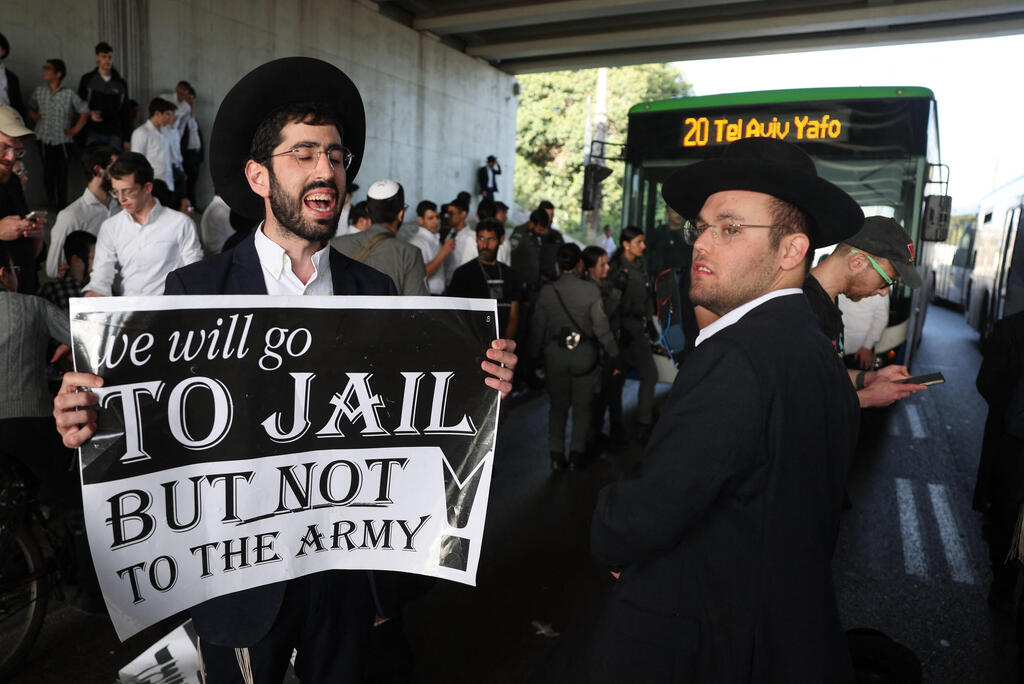
(Photo: Jack Guez/AFP)
The Knesset is also advancing legislation delaying a planned reduction in compulsory service from 32 months to 30 months. The shorter term, originally intended to apply to soldiers drafted in July 2024, would instead begin only with the June 2029 enlistment cohort.
Soldiers serving the additional months would receive increased compensation, with larger payments for those closer to their discharge dates. Military officials have warned that even by 2029, the IDF may still be unable to release soldiers after 30 months, and could struggle even with a 32-month term.
Zamir warns bill will reward draft dodging
Zamir sent an unusual letter Monday to Netanyahu, Defense Minister Israel Katz and Foreign Affairs and Defense Committee Chairman Boaz Bismuth, asking them to remove a provision requiring the IDF to determine which men qualify as full-time yeshiva students and would therefore be protected from enforcement.
The IDF chief cited three main objections: damage to the legitimacy of the military and the trust of serving soldiers, the army’s lack of professional expertise in deciding who qualifies for the exemption and the diversion of military resources during wartime.
“The bill was introduced in the middle of a multi-front campaign, while the IDF is dealing with a severe manpower shortage that directly affects its ability to carry out its operational missions,” Zamir wrote.
He warned that suspending arrests, investigations and criminal proceedings would send a message that those who refuse to report for service will face no consequences.
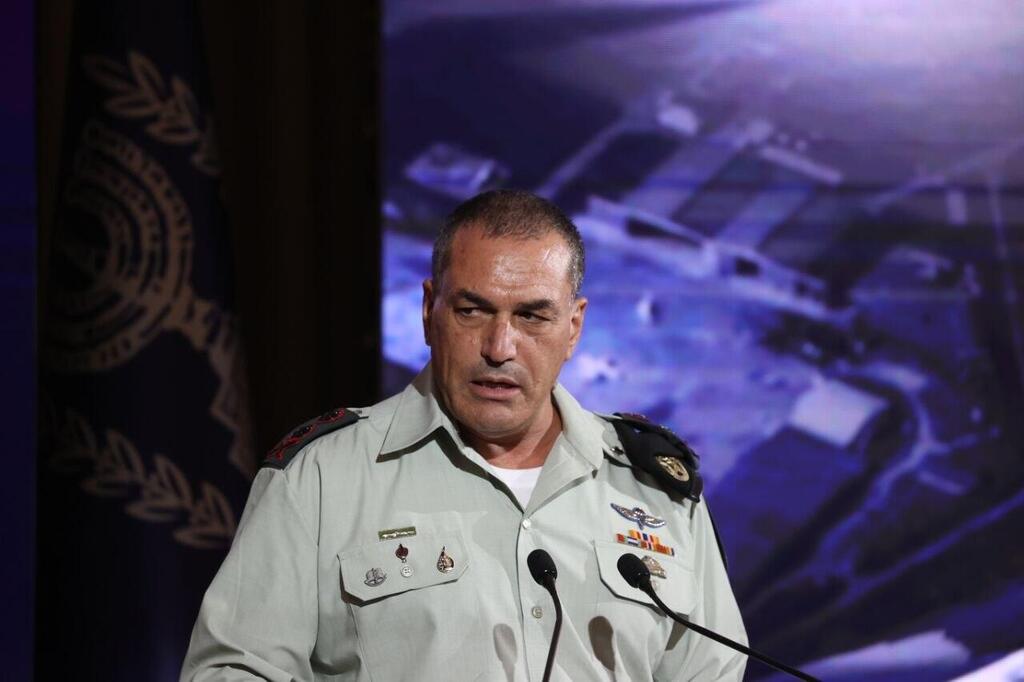
IDF Chief of Staff Lt. Gen. Eyal Zamir
(Photo: Alex Kolomoisky)
“It creates an incentive not to report for military service, since it comes with protection from prosecution and criminal proceedings,” Zamir wrote. “The proposal is clearly and unequivocally inconsistent with the needs of the IDF.”
His strongest objection concerned a proposed military committee made up of three senior officers that would be empowered to examine the status of yeshiva students and determine who should receive official recognition shielding them from enforcement.
Zamir said he “strongly opposed” making the IDF responsible for deciding which draft evaders would be protected from prosecution, arguing that such a mechanism would erode the army’s legitimacy and the trust of soldiers and reservists carrying the burden of the war.
Bismuth’s office responded by accusing Zamir of raising his objections only after the committee had completed its deliberations and approved the bill for its final votes.
“If the goal was to amend the wording, the IDF had about three weeks to do so,” the office said. “It is difficult to view the timing as a coincidence.”
Opposition and reservist families condemn legislation
The passage of the Basic Law on Torah study triggered angry responses from opposition leaders and organizations representing reservist families.
“The Knesset has decided that reservist families will continue carrying the burden alone,” the Reservists’ Wives Forum said. “Instead of increasing the number of people serving and reducing the pressure on soldiers and their families, it approved a law that will make it easier to grant draft exemptions and deepen inequality.”
Former prime minister Naftali Bennett, chairman of the Beyachad party, called the legislation a deliberate attack on the IDF during wartime and pledged to repeal it if the opposition returns to power.
Former IDF chief of staff Gadi Eisenkot also attacked Netanyahu, noting that the coalition approved the law while the prime minister was absent from the vote.
Democrats leader Yair Golan directed a personal warning at Shas chairman Aryeh Deri, saying that after the election, draft orders would be sent to his grandchildren.
Despite the political uproar and the IDF chief’s objections, the coalition is pressing ahead with the final vote on the arrest freeze, making the legislation the latest flashpoint in Israel’s long-running struggle over military service, religious exemptions and who bears the burden of national defense.