


Under pressure from Qatar and Turkey, Israel continues to provide economic assistance to Hamas — in clear opposition to the professional recommendations of IDF leadership. According to the military, the approximately 4,200 weekly deliveries of food and fuel into the Gaza Strip are far higher than the Gaza population’s actual needs, ynet and Yedioth Ahronoth have learned. Although IDF officials privately recommended reducing the number of aid trucks entering Gaza to limit Hamas’ financial inflows, the political echelon has not implemented these recommendations.
Last week, the IDF acknowledged — in an official announcement about a strike in Gaza — that tens of millions of dollars flowed into Hamas in 2025, the year in which the war ended without the defeat of the terror organization that still controls the enclave. Although this figure may seem illogical given the prolonged ground operation of IDF troops since October 7, intelligence data suggests the figure may still be too low.
Gallery
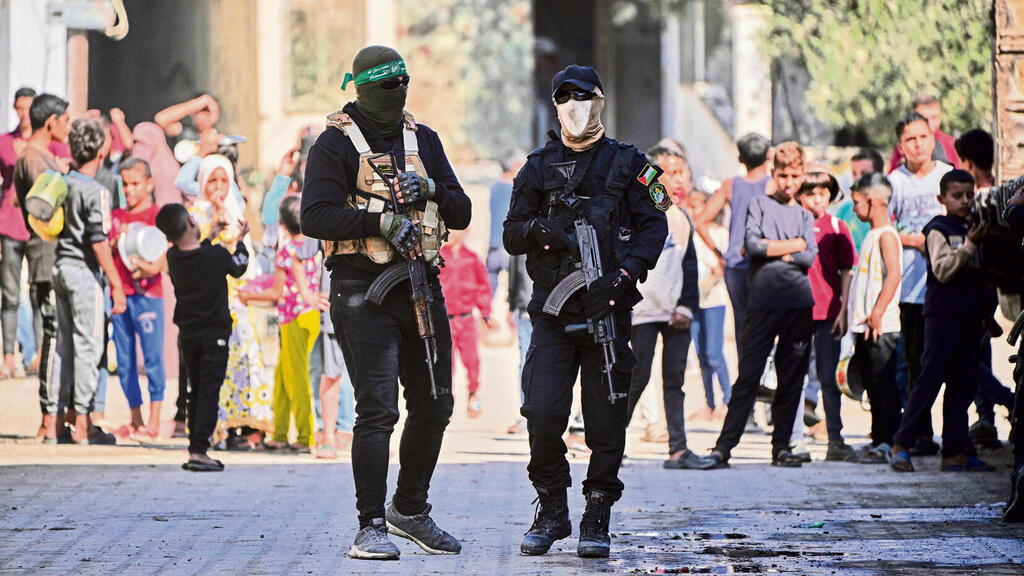
Hamas military wing Izz ad-Din al-Qassam Brigades terrorists in Nuseirat
(Photo: Abdel Kareem Hana/ AP)
In closed discussions over recent weeks, intelligence officials presented more severe estimates of Hamas’ strong financial standing, noting the group holds, according to some estimates, as much as 1 billion shekels in cash inside Gaza. “We know with high confidence that Hamas has at least 400 million shekels in cash inside the Strip, but Israel decided not to hit Hamas’ central bank in Gaza City and did not task forces with locating those cash stores, some of which are hidden in the many tunnels that remain in Hamas’ possession,” an IDF officer explained.
"Hamas has accumulated these huge sums over years of preparation for a rainy day, for a long siege, and this is one of the reasons why the Gazan public is not rebelling against it," an IDF officer told ynet. "Hamas continued to pay salaries to tens of thousands of its officials and activists throughout the war, and in the past two months has returned to paying higher amounts, around 800 shekels to 1,500 shekels per month, a considerable sum by current Gazan standards. It has financial reserves for years to come, the greater part of which comes from the $30 million dollars Qatar poured into it every month, with Israeli support, in the years leading up to the war."
Money trails and smuggled cigarettes
Hamas reportedly “looted” Bank of Palestine in Gaza City early in the war and moved large sums from the bank’s vaults to its underground emergency assets that have not yet been found. But the gap in Israeli intelligence estimates regarding Hamas’ finances — from 400 million shekels to roughly 1 billion shekels — largely reflects the two and a half months of the current ceasefire.
Security officials have identified dual tax systems that boost Hamas’ revenue by millions of shekels daily: of the 600 daily truckloads entering Gaza, about 400 from the private sector — including Israeli companies — and the rest from international aid organizations. Hamas reportedly collects 15 %–25 % tax on the value of private sector aid cargo, and then levies another tax once the goods are sold in Gaza markets.
“Throughout the war, Hamas operated in emergency mode, paying minimum salaries and functioning with a war economy focused on its emergency systems, the ministry of health and civil defense,” according to a security source. “But since the ceasefire began, Hamas has revived its tax collection system and strengthened its ability not just to recover, but to expand.”
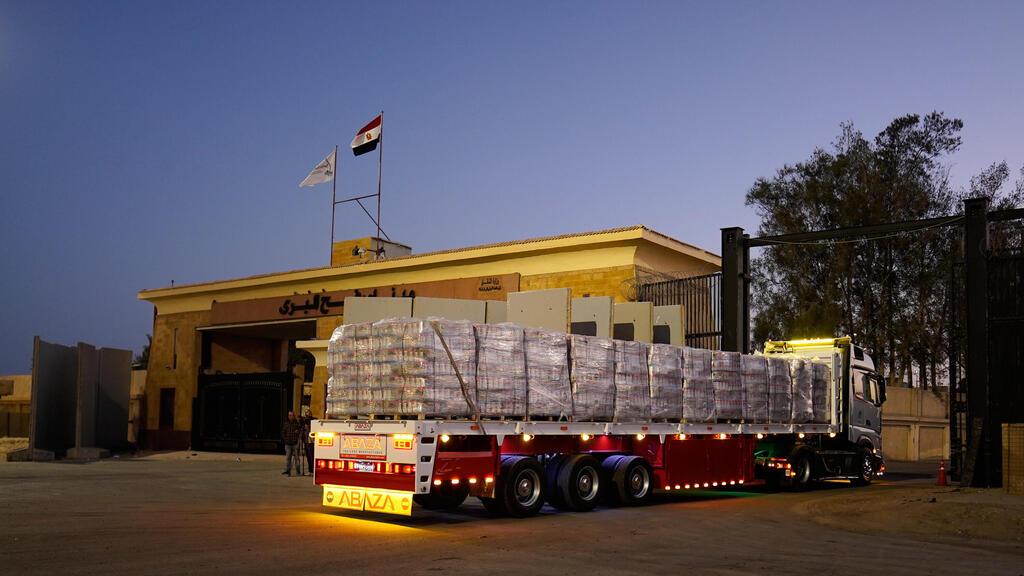
Aid trucks entering Gaza
(Photo: Mohamed Arafat/ AP)
As a result, Hamas has been able to maintain basic services — municipal functions, its economy ministry and even its propaganda arm — supporting minimal functional continuity despite two years of war.
Officials also estimate with high probability that any “technocratic government” set up in Gaza under a future Stage II agreement between Israel and Hamas — under an international peace council — would still include Hamas figures. “There will be plenty of superficial presentations suggesting Hamas has agreed, but in the end such a government will be local Palestinian leadership that gives orders to department heads within the existing Hamas‑controlled administration,” the source says.
It is not only Hamas’ hidden cash stores and robust tax system that sustain it; indirect aid and ongoing smuggling through aid routes also help rebuild the terror organization, which remains far from defeated. Despite the complete closure imposed on Gaza, smuggling persists, with dual‑use materials and other goods still entering — some of which can serve terror purposes. Over the past year, large quantities of tobacco and cigarettes have been brought into Gaza despite official bans, becoming a sought‑after and expensive commodity for Gazans and another source of income for Hamas.
Today, there are four entry routes for goods into Gaza: From Sinai via the Rafah Crossing and inspection at Kerem Shalom; From Sinai via the Nitzana Crossing, then along the Route 10 border road to Kerem Shalom; From Ashdod Port via Highways 4 and 232 and the Allenby Crossing for goods from Jordan.
Exchange fees and cash markets
Hamas also profits from currency exchange, especially from the large amounts of dollars accumulated from “Qatari money.” Many money changers in Gaza are linked to Hamas and impose taxes or fees of up to 40 % on each transaction, which is a significant revenue stream. “There are no legal printing presses for shekels in Gaza, but low‑quality counterfeit bills are sometimes circulated and even reach Israel,” an Israeli source says. Additionally, large sums from abroad enter Gaza through unofficial money transfer apps due to sanctions and pressure, and these transactions are also heavily taxed by Hamas. A Gazan today can buy vegetables in the market using an app for transfers of aid funds received from abroad.
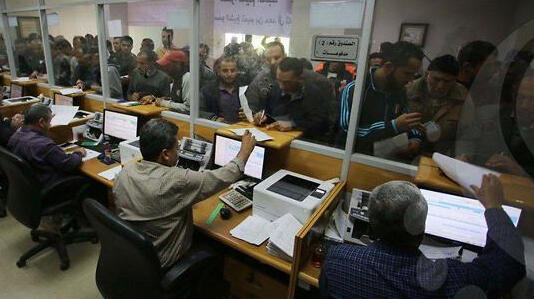
Gazans line up to receive money from Qatar
Security analysts say that Hamas has no economic opposition in Gaza since it prepared to support its population both in wartime and in the postwar period. “We are trying to minimize cash inflows to Gaza and severely limit the amount of money that foreign aid workers can bring into the Strip,” one official said, “but it’s a drop in the ocean.”
Throughout the war, Hamas also instructed wealthy Gazans to funnel tens of millions of dollars from outside the Strip to inside using informal money transfer networks known as “hawala,” bypassing official trade channels even under intense military pressure.
Israeli security discussions now use terms like strengthening Hamas’ economic independence, even now. As a result, many Gazans “benefit” from these financial mechanisms despite severe hardship and widespread destruction. Israeli officials have observed how Hamas redirects significant financial resources to military rebuilding, including the reconstruction of tunnel networks that the IDF believed it had largely destroyed during the conflict.