


A senior Israeli official said Saturday evening that the memorandum of understanding expected to be signed Sunday between the United States and Iran is “not a good deal,” warning that Israel has little ability to influence the process despite the direct impact it could have on its security.
“No one is happy with this,” the official said. “We understand that it is not good for us and that it harms Israeli interests. What is troubling is that Israel cannot influence it. Its voice is not being heard.”
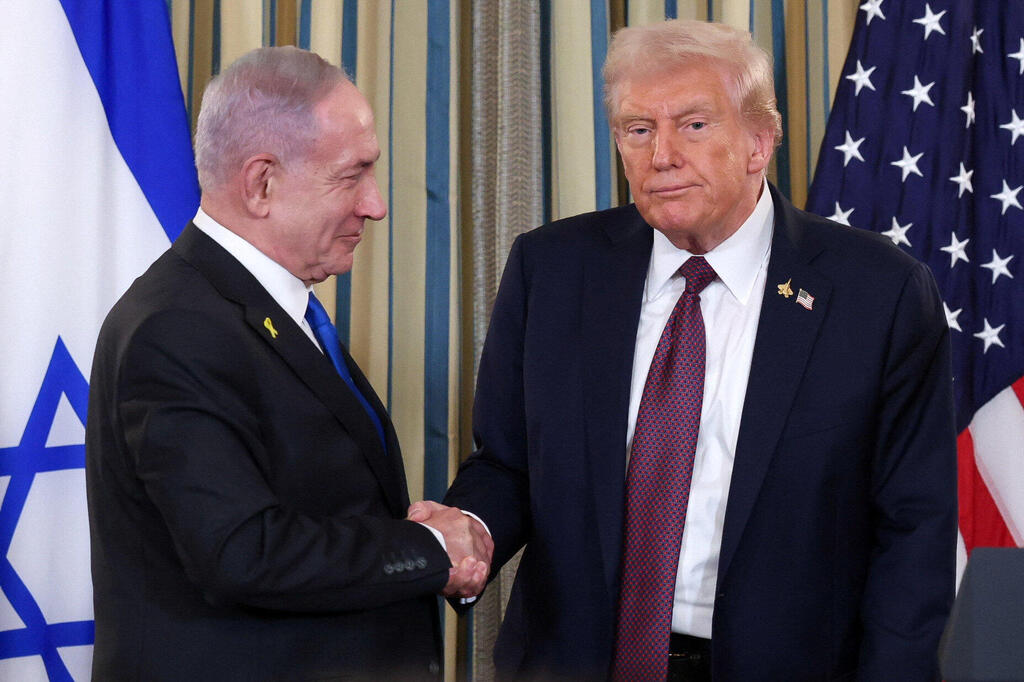
The emerging deal is expected to serve as a framework for 60 days of talks, with an option to extend the negotiations for another 60 days. While the White House is presenting it as a diplomatic achievement that could prevent a wider regional war, distance Iran from military nuclear capability and stabilize global energy markets, Israeli officials say it falls short of Israel’s core demands.
According to details known so far, the agreement does not significantly address Iran’s missile program, does not require the dismantling of its network of proxy forces across the Middle East and does not deal with the future of the Iranian regime. Israeli officials see it as a missed strategic opportunity after months of military and economic pressure on Tehran.
For years, U.S. President Donald Trump was viewed in Jerusalem as a leader who largely adopted Israel’s threat assessment on Iran and supported “maximum pressure” to weaken the regime economically. But officials now believe Washington’s priorities have shifted and that Trump wants a deal quickly.
From Washington’s perspective, the central goals are preventing Iran from obtaining a nuclear weapon and restoring stability to global energy markets. From Israel’s perspective, the Iranian threat is broader: precision missiles, armed groups such as Hezbollah in Lebanon and the Houthis in Yemen, and Iran’s long-term effort to erode Israeli deterrence.
One of the biggest Israeli concerns is the economic effect of the deal. Even if frozen Iranian funds are released only in limited amounts at first and earmarked for food and medicine through Qatar, any easing of restrictions on Iranian oil exports could send billions of dollars into Tehran’s coffers. Israeli officials fear some of that money could eventually be used to rebuild military capabilities, develop missile systems and strengthen Iran-backed groups across the region.
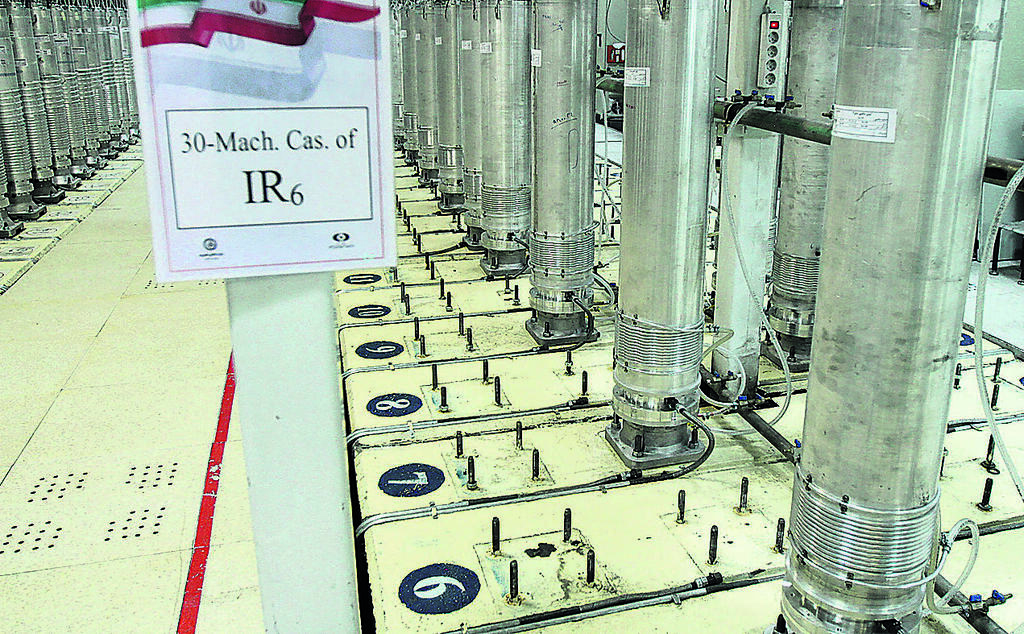
The nuclear issue remains the most sensitive point. Senior U.S. officials say understandings have been reached on removing enriched material from Iran and destroying it, with the United States taking part of the material under the agreement. Iranian officials, however, continue to speak about diluting uranium, not necessarily removing it from Iranian territory.
(Photo: AP)
If fissile material remains in Iran, even under supervision, Israel fears the regime could one day resume its nuclear race quickly, particularly after Trump leaves office. Israeli skepticism is also rooted in Iran’s history of hiding nuclear facilities and activity from international inspectors.
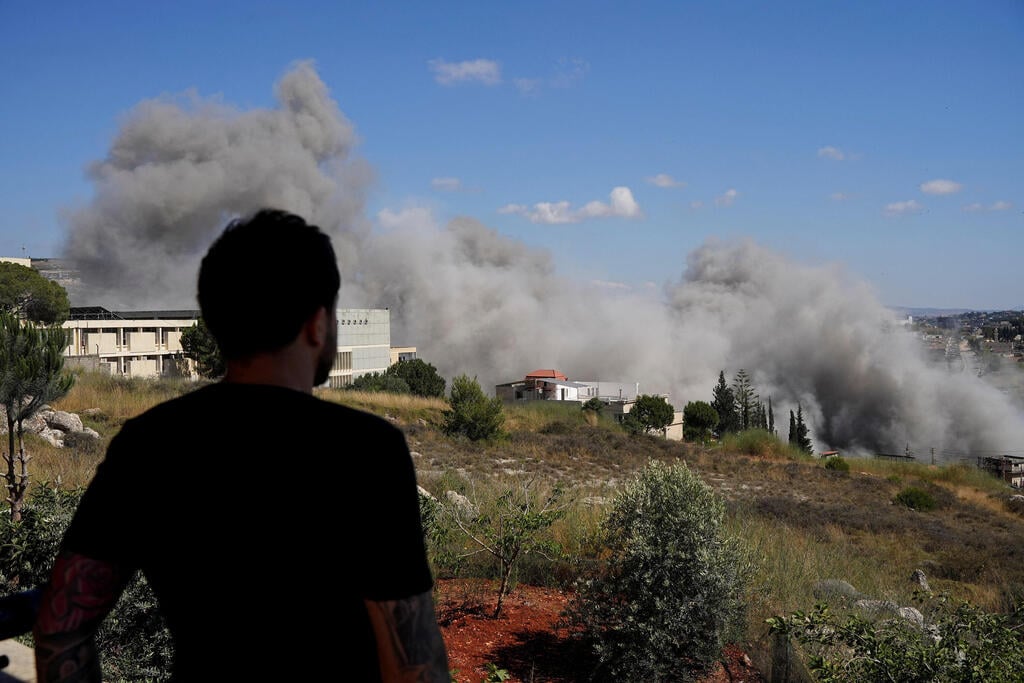
Another concern is whether the agreement will affect Lebanon. Iran wants the understandings to include an end to regional confrontations, including the fighting involving Hezbollah, the Iran-backed terrorist organization in Lebanon. Israeli officials say they will not accept any situation in which the IDF’s freedom of action is limited by a U.S.-Iran agreement.
Jerusalem fears Washington could later pressure Israel to show restraint against Hezbollah to avoid endangering the deal with Tehran. There is also an opposite scenario: Iran could encourage Hezbollah to accept an arrangement in Lebanon so Tehran can focus on economic recovery and consolidate diplomatic gains. Israeli officials say both options are problematic.
A call for restraint, or Hezbollah’s willingness to move north of the Litani River under an agreement, would create a major dilemma for Israel because the group could still rebuild while northern residents remain without real security. Trump could also try to draw Netanyahu into signing a deal with Lebanon at the White House, something that could be presented as a political achievement ahead of elections, even though Lebanon’s weak government is not seen as capable of disarming Hezbollah.
Israeli officials stress that the IDF “is not moving anywhere in Lebanon,” and that if fire is directed at Israel, the military will strike Hezbollah targets in Beirut’s Dahieh district, the group’s stronghold.
Iranian Foreign Minister Abbas Araqchi has said Israel must withdraw from areas it captured in Lebanon. Israeli officials said in response that withdrawal “is not on the agenda.” They said that if there is an agreement with Lebanon and the Lebanese army takes control of areas to clear them of terrorist infrastructure, Israel would consider withdrawal, but only gradually and under conditions, “not now.”
(Photo: REUTERS/Stringer)
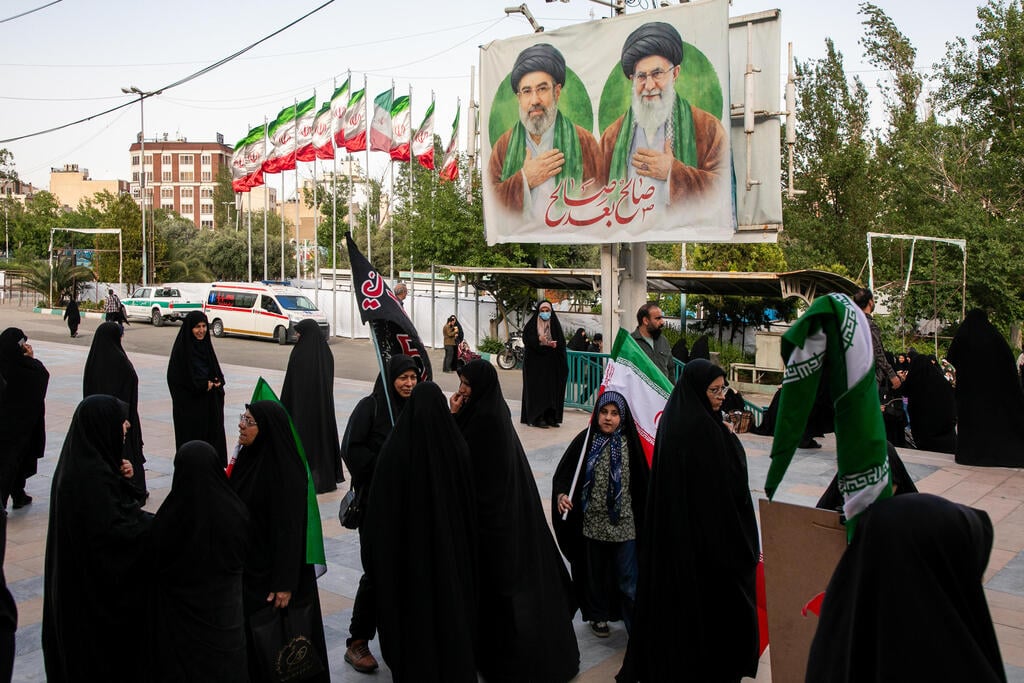
Perhaps the most worrying issue for Israel is not military but psychological and regional. After months of direct confrontation with Israel and the United States, Iran is seen by some countries in the region as having withstood pressure without surrendering. Tehran is expected to present any agreement as proof that the West was forced to take its demands into account.
From Israel’s perspective, that could erode deterrence built over years. Regional states may conclude that even extensive use of force was not enough to force Iran into major concessions, and that the regime managed to preserve its status and even improve its position.
One Israeli official warned that any agreement must avoid creating the impression that it was signed under Iranian pressure and American retreat, “and not the opposite.”
Prime Minister Benjamin Netanyahu continues to say that as long as he remains in office, Iran will not have a nuclear weapon. But his response has reflected frustration and disappointment. If the agreement is signed in a version close to current reports, it could raise difficult questions in Israel about what the recent campaign achieved.
The full details of the agreement are still unknown, and much of the information is based on leaks, conflicting statements and drafts that have not been approved. Still, from Israel’s perspective, the emerging agreement is far from the ambitious goals presented at the start of the campaign. Even if it delays Iran’s nuclear program and stabilizes the region in the short term, Jerusalem fears that in the long term it could strengthen Tehran and leave Israel facing an even more complex strategic challenge.
One Israeli official put it bluntly: “Trump screwed us. We’re in trouble. We’re no longer in the loop and can’t really influence anything.”
(Photo: Majid Saeedi/Getty Images)
“We are in shock,” the official added. “They flooded the Iranians with money. They are getting everything they want. They will build a missile force, and we will have to invest a lot of money in interceptors. Trump is in dialogue with others, but not with Israel. He wants to put this behind him and move on. He’s had enough, and there is no reason for the talks to collapse.”
Another Israeli official said there is still a reasonable chance that even after the memorandum, the sides will fail to reach a final agreement.
“Trump is not Obama,” the official said. “He thinks he can remove the nuclear material, and his commitment remains in place. Let’s hope the transfer of money to Iran from Qatar will be limited, but as long as Trump does not open his hand on economic sanctions, he will have more power and Iran will find it harder to evade. The more money he gives them, the more Iran will try to cheat.”
A third official said he remains skeptical about both a final agreement and its durability.
“In my opinion, Iran has smelled that it can gain things by force, and it will use that in the near future against its neighbors and against us,” the official said. “The real test of the agreement, or at least the minimum needed to save the West’s honor, is the removal and destruction of the uranium. If that does not happen, the feeling of a bad agreement will become much more concrete.”