

An extraordinary rift over Israel has erupted within the Democratic Party just days before the U.S. midterm elections, after Rep. Haley Stevens, one of the party's most prominent supporters of Israel, announced Sunday that she would vote for Republican Mike Rogers in Michigan's Senate race rather than her own party's nominee, Abdul El-Sayed.
Stevens, who lost to El-Sayed in the August Democratic primary, appeared alongside Rogers at a church service in Detroit as she announced her endorsement, delivering a dramatic blow to Democratic unity two days before the election.
The decision triggered a wave of condemnation from leading Democrats, including New York City Mayor Zohran Mamdani, former House Speaker Nancy Pelosi and Senate Democratic leader Chuck Schumer. President Donald Trump, meanwhile, celebrated the endorsement and invited Stevens to join the Republican Party.
"Working class people’s lives are on the ballot on Tuesday—their healthcare, their rent, their bills," Mamdani wrote. "Haley Stevens just betrayed them by endorsing the very Republican she said she wanted to run against."
Schumer, who had backed Stevens in the Democratic primary, called her decision a "despicable betrayal."
Pelosi accused Stevens of a dangerous betrayal of Michigan families' health, freedoms and futures, declaring that El-Sayed must win.

Pelosi's response was particularly notable because just days earlier, on Thursday, she had criticized the positions of both Mamdani and El-Sayed on Israel.
Speaking on a podcast, Pelosi said opposition to defining Israel as a Jewish state was "wrong" and did not reflect the views of congressional Democrats. Despite those disagreements, she has now thrown her support behind El-Sayed and against the congresswoman she backed in the primary.
A bitter primary fight over Israel
The confrontation between Stevens and El-Sayed has been building for months.
El-Sayed, a physician and former public health director of Wayne County, is among the Democratic Party's most outspoken critics of Israel. He supports ending U.S. military assistance to the country, a position that has put him at odds with the party's pro-Israel establishment.
During the Democratic primary, the American Israel Public Affairs Committee, or AIPAC, spent nearly $30 million promoting Stevens and opposing El-Sayed, its largest investment in a single election campaign.
Despite that spending, El-Sayed defeated Stevens by less than 1 percentage point.
After her defeat, Stevens pledged to support the Democratic nominee. But the two barely cooperated during the general election campaign, and their relationship deteriorated further in the final days before the vote.
Last week, Stevens demanded that El-Sayed condemn an advertisement produced by an outside political group that accused Israel of genocide and linked U.S. military aid to Israel with rising food prices in the United States.
Stevens called the advertisement antisemitic. She also demanded that El-Sayed remove a campaign advertisement featuring conservative commentator Tucker Carlson and apologize for his statements about Israel.
El-Sayed said the outside group's advertisement had not been produced by his campaign and that he opposed its content. He accused Stevens, however, of attempting to reopen a primary contest that had ended three months earlier.
He also asked her not to participate in his campaign events during the remaining days before the election.
A church appearance that stunned Democrats
Stevens had been scheduled to appear Sunday alongside El-Sayed and longtime Democratic Rep. Jim Clyburn at a church service in Detroit, an event intended to demonstrate party unity and encourage turnout among black voters.
Instead, she attended a different church with Rogers, sat beside the Republican candidate and released a video during the service announcing that she would vote for him.
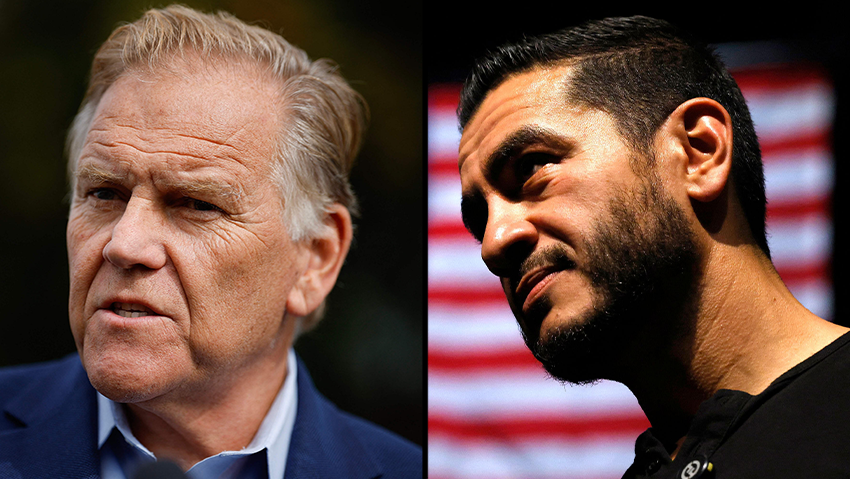
Mike Rogers, Abdul El-Sayed
(Photo: JEFF KOWALSKY / AFP ,CHIP SOMODEVILLA / GETTY IMAGES NORTH AMERICA / AFP)
"Hey Michigan, as you may have seen, our Democratic nominee for U.S. Senate, Abdul, said I was no longer welcome in his campaign and that I should stay away. And he's right, and that's why I am endorsing Mike Rogers for the United States Senate today," Stevens said.
"We can't stand for hate. We can't stand with Hassan Piker," she added, referring to the anti-Israel online commentator who previously appeared alongside El-Sayed and has faced criticism over remarks about Jews.
Stevens' Jewish fiancé, Jason Turkish, had already announced that he would vote for Rogers.
Despite endorsing a Republican, Stevens insisted that she remained a "proud Democrat."
The announcement reportedly surprised even members of her own staff. Her chief of staff and several other employees resigned, while the Michigan Democratic Party chair declared that Stevens was no longer a member of the party and would not be one in the future.
In a tense CNN interview, Stevens struggled to explain why she had decided to support Rogers, whom she had previously described as a "rubber stamp" for Trump.
Asked whether she still wanted Democrats to win control of the Senate, she said yes, stressing that her decision concerned only one race.
Trump celebrates an unexpected endorsement
Trump welcomed Stevens' announcement on his Truth Social platform.
"Wow, this is BIG!" he wrote.
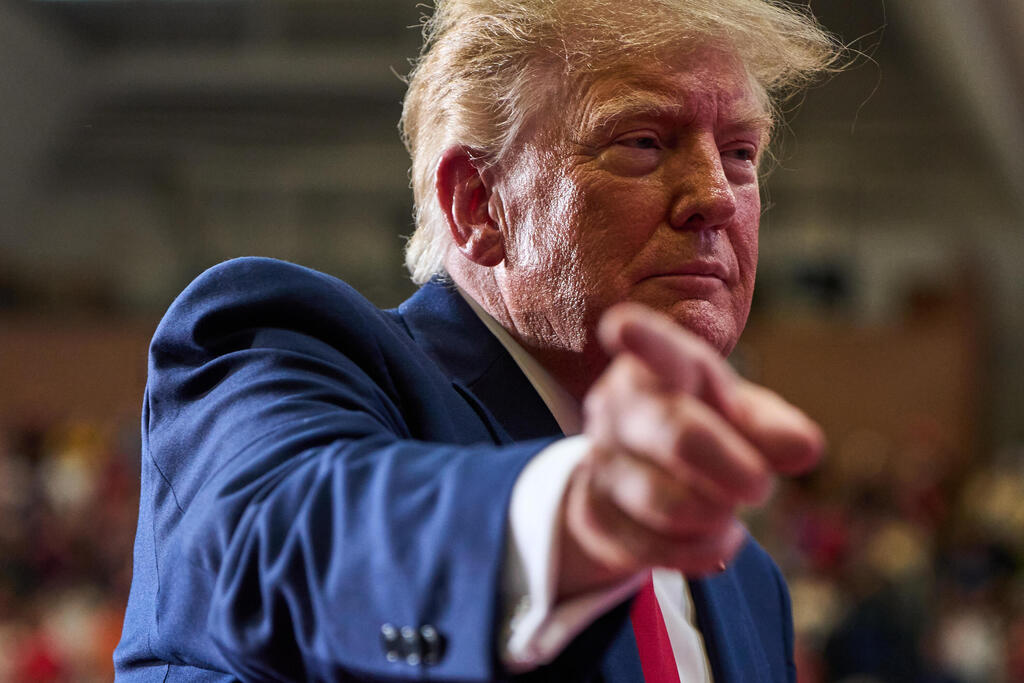
US President Donald Trump
(Photo: AP Photo/Julia Demaree Nikhinson)
Speaking at a rally in Iowa, Trump praised the congresswoman's courage.
"I don’t know Haley, I’ve never met Haley, but Haley said what few people are willing to say," he told supporters.
Trump said he would welcome Stevens into the Republican Party, adding that Rogers had spoken with her about the possibility.
El-Sayed, for his part, sought to dismiss the significance of the endorsement.
"I actually don’t think about Haley Stevens," he told reporters. "Because you know what? I’m just less interested in the politics of it all than I am in the policy of it all."
Michigan's Jewish voters face a difficult choice
The dispute has also exposed divisions within Michigan's Jewish community, where attitudes toward El-Sayed and the Democratic Party have become increasingly complicated.
Many Jewish voters and community figures who previously criticized El-Sayed have nevertheless rallied behind the Democratic nominee, arguing that Rogers is not the answer to the community's concerns.
Former Democratic Rep. Andy Levin, who is Jewish and supports El-Sayed, participated in a campaign event for the nominee. A group called Jews for Abdul has attracted thousands of members.
Other Jewish activists, uncomfortable with both major-party candidates, have proposed a symbolic protest vote: writing in the name of Emma Lazarus, the Jewish American poet whose words are inscribed on the Statue of Liberty.
The Jewish vote could prove significant in a state where Jewish residents account for approximately 1.4% of eligible voters.
In Michigan's 2024 Senate election, Democrat Elissa Slotkin defeated Rogers by fewer than 20,000 votes, illustrating how even a modest shift among voters could influence a close contest.
Ahead of this election, the Republican Jewish Coalition invested $2 million in an effort to reach approximately 50,000 Jewish voters.
Meanwhile, a political organization affiliated with AIPAC sent campaign materials to roughly 130,000 Jewish voters.
A Senate race with national consequences
Michigan's open Senate seat is considered one of the most important contests in the battle for control of the chamber.
Recent polling has shown El-Sayed ahead, although the size of his lead varies considerably.
A New York Times/Siena College poll gave the Democrat an 11-point advantage, while a YouGov survey showed him leading Rogers by 4 points.
If elected, El-Sayed would become the first Muslim to serve in the U.S. Senate.