


Against the backdrop of the ceasefire with Iran and the fighting in southern Lebanon, the IDF’s attention is also focused on the West Bank and the Gaza Strip. During Operation Roaring Lion, IDF forces operated in the West Bank at heightened intensity to to prevent terrorist elements from exploiting the situation and becoming another front requiring diverting additional forces to the area.
During the operation, the division was reinforced with a large number of battalions that rotated in and out of deployment. They focused on offensive missions, alongside battalions in routine deployment that continued defensive operations. Over the course of the operation, IDF forces carried out more than 6,600 offensive activities, during which they arrested more than 550 wanted suspects — including more than 50 arrests for incitement — and seized more than 170 weapons, 10 weapons manufacturing machines, 280 drones and more than 1 million shekels intended for use in terrorism.
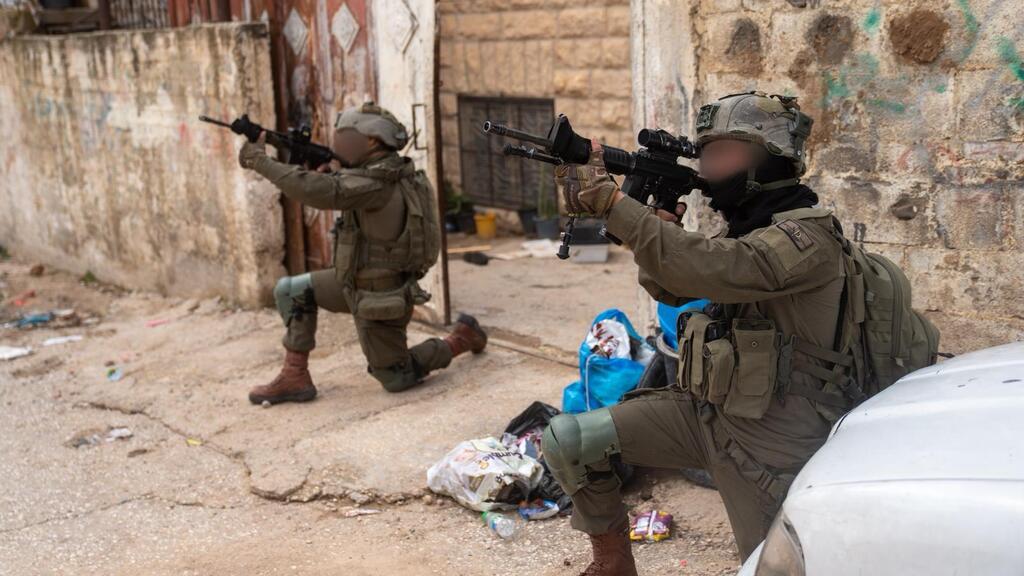
IDF soldiers operate in the West Bank
(Photo: IDF Spokesperson's Unit)
During the operation, forces also thwarted four potential attacks, all targeting IDF or security forces and all without casualties, with the assailants killed or stopped. In the Ephraim Brigade, forces located in a laboratory a range of weapons and materials used to manufacture explosive devices, including improvised explosive devices, about 200 pipe bombs, fire extinguishers intended for attaching explosives to vehicles, large gas cylinders with the potential to be used as underbelly charges against armored vehicles and more than 50 kilograms of improvised explosive material. Central Command emphasized that the cache of weapons had been in the area before forces entered it several months ago and was only now discovered.
At the same time, the Judea and Samaria Division is deeply concerned by the rise in nationalist crime, along with the daily friction between Jewish shepherds and Palestinians. During the war, so-called hilltop youth continued to establish farms and illegal outposts in Areas A and B, further stretching division forces. Security officials fear escalation and a deterioration in the security situation as a result of nationalist crime.
Security officials have criticized elements within the settlement movement who call on young people to blur the boundaries between Areas A, B and C, arguing that this creates a sense among those youths that they have backing. The establishment of outposts deep inside Areas A and B creates high levels of friction between Palestinians and Jews, which in most cases ends with casualties.