

President Donald Trump’s decision to put longtime loyalist Stephen Miller in charge of the White House signals that the administration plans to respond to its bruising midterm defeat not with moderation, but with a more confrontational approach during Trump’s final two years in office, according to administration officials, Republicans and strategists who spoke to Reuters.
Voters delivered Republicans a historic rebuke in Tuesday’s midterm elections, handing Democrats control of Congress. But officials expect Miller, one of the most influential architects of Trump’s immigration agenda, to push the administration toward continued crackdowns, sharper cultural battles and greater reliance on presidential authority rather than compromise with lawmakers. “This signals the administration is going to have a fighting-from-a-bunker approach the last two years,” Trump donor and energy executive Dan Eberhart said.
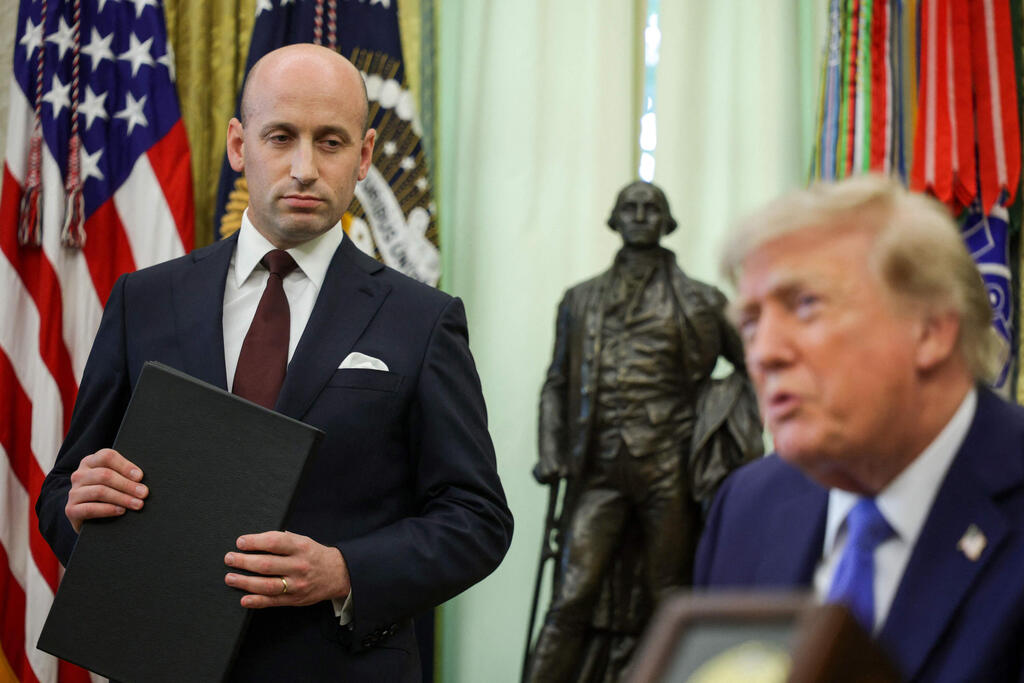
White House Chief of Staff Stephen Miller alongside President Donald Trump
(Photo: ALEX WONG / GETTY IMAGES NORTH AMERICA / AFP)
Trump has publicly said he can work with Democrats, but his conduct since the election has suggested little appetite for retreat. On Saturday, he ordered the Justice Department to “look into” Democrats whom he accused of sending “threatening letters” to Republican donors and other allies. He also offered the White House press secretary position to combat sports promoter Dana White.
Miller, 41, represents a markedly different style from outgoing chief of staff Susie Wiles. Wiles, a former lobbyist who managed Trump’s 2024 presidential campaign, was widely viewed as a pragmatic operator able to balance competing factions around the president. Miller is regarded by supporters and critics alike as an ideological fighter with detailed knowledge of how executive power can be used and an unusually close political bond with Trump.
“If it wasn’t for President Trump, the United States of America would not exist right now. This man saved America,” Miller said Friday at an event at Trump’s Florida estate. He joined Trump’s first presidential campaign in 2016 and went on to serve throughout his two terms, becoming best known for shaping the administration’s aggressive immigration policies.
Those policies have also become a political liability. An October Reuters/Ipsos poll found that 37% of Americans approved of Trump’s handling of immigration, down from 50% when he took office. Four U.S. immigration officials told Reuters they had seen no indication that enforcement would ease under Miller. “Nothing is changing, same quotas,” one official said on condition of anonymity.
Representative Don Bacon of Nebraska, an occasional Trump critic who is retiring from Congress, said Miller dismissed warnings before the election that immigration and tariff policies were driving voters away. “We said, ‘You’re going to give us a bad midterm election,’ and he rejected it,” Bacon said. The White House said Miller would continue to deliver “historic successes,” but Bacon described the appointment as “doubling down on a failed strategy,” adding that it was “going over like a lead balloon in most of Congress.”
Miller’s influence is expected to extend well beyond immigration. He has overseen Trump’s executive orders, giving him a detailed understanding of the administrative tools available to the president. Several people interviewed by Reuters said they expect the White House to rely more heavily on executive action rather than bargaining with the new Democratic-controlled Congress, while Republican lawmakers who distance themselves from Trump could face increased pressure from the administration.
“Those on Capitol Hill looking to break away from the Trump administration will know that Stephen Miller is not going to sit idly by and watch that happen,” Republican strategist Ron Bonjean said.
A bigger role on Iran and Israel
The promotion will also give Miller greater influence over foreign policy, an area that has not traditionally been his main focus. Three sources familiar with his thinking told Reuters that Miller opposes prolonging the war with Iran, while remaining strongly supportive of Israel.
That position could create tension inside an administration in which Trump has threatened renewed strikes against Iran while also announcing plans to end U.S. aid to Israel. Miller’s views on the conflict could therefore become more consequential as he moves from a powerful policy adviser to the official responsible for managing the White House.
His rise has also unsettled some corporate lobbyists, who fear they will have less access than they did under Wiles. “This will be a big change,” a senior lobbyist at a Trump-aligned firm said. “Miller is there to focus on political priorities, like immigration and tariffs, stuff Trump cares about, and won’t have the same approach as Susie, who understood policies have unintended consequences.”
For Trump’s closest allies, however, that combative instinct is precisely the point. Senior administration figures and political supporters have praised Miller as the kind of loyal enforcer the president needs as he faces Democratic investigations, internal Republican dissent and the political consequences of the midterm defeat.
“I think Donald Trump has found his wartime consigliere,” longtime Trump ally Roger Stone told Reuters.