


Master Sgt. (res.) Brian Corpas, 28, a Colombian-born IDF reservist, has completed over 200 days of reserve duty since the war in Gaza began—marking a deeply personal journey that bridges his South American roots and his Israeli identity.
Corpas immigrated to Israel alone at age 18 in 2016, after a weeklong visit with his Jewish school inspired him to join the IDF. “I decided I wanted to be a soldier in the IDF and live here,” he said. “Now my sister is also serving, and our mother joined us in Israel a few months ago.”
Colombian-born IDF soldier challenges President Gustavo Petro over anti-Israel stance


He enlisted in December 2018, serving in the Navy’s Flotilla 3 for three years. After briefly extending his service, he was discharged and had not been called up for reserve duty—until the October 7 attacks.
Seeking to return to active duty, Corpas requested a release from the Navy so he could volunteer with the newly established Be’eri Battalion in Tze’elim, created to bolster the IDF’s reserves amid the Gaza war. “I’m adapting my skills to infantry; it’s totally different, but I’m doing it with a smile,” he said. Corpas lives in Haifa and is currently studying archaeology and Israel studies.
His military service has placed him in sharp contrast with the stance of Colombian President Gustavo Petro, who severed ties with Israel in February and recently called for an international army to “liberate Palestine.” Petro also joined a pro-Palestinian rally outside the UN headquarters in New York, urging the creation of a force “bigger than the U.S. military.”
Gallery
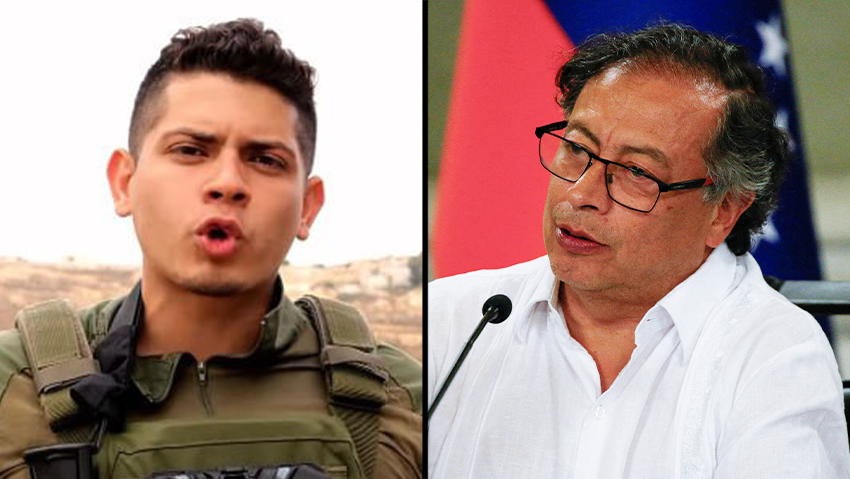
Master Sgt. (res.) Brian Corpas, Colombian President Gustavo Petro
(Photo: REUTERS / Leonardo Fernandez Viloria)
“He said he’d recruit Colombians to fight in Gaza against Israeli soldiers,” Corpas said. “As an IDF soldier, I was shocked. The last thing I want is to fight Colombians. It’s very troubling.”
In response, Corpas posted a video in uniform, addressing Petro directly. “I told him to focus on the problems in Colombia, that the country needs solutions. That he shouldn’t interfere in a war that has no direct connection to Colombia. If his comments don’t help his own country, he should just be quiet and start doing his job.”
Petro replied on social media, accusing Corpas of asking him “to stop killing children in the name of Colombia,” and asserting that Colombia is a place of “peace and beauty.”
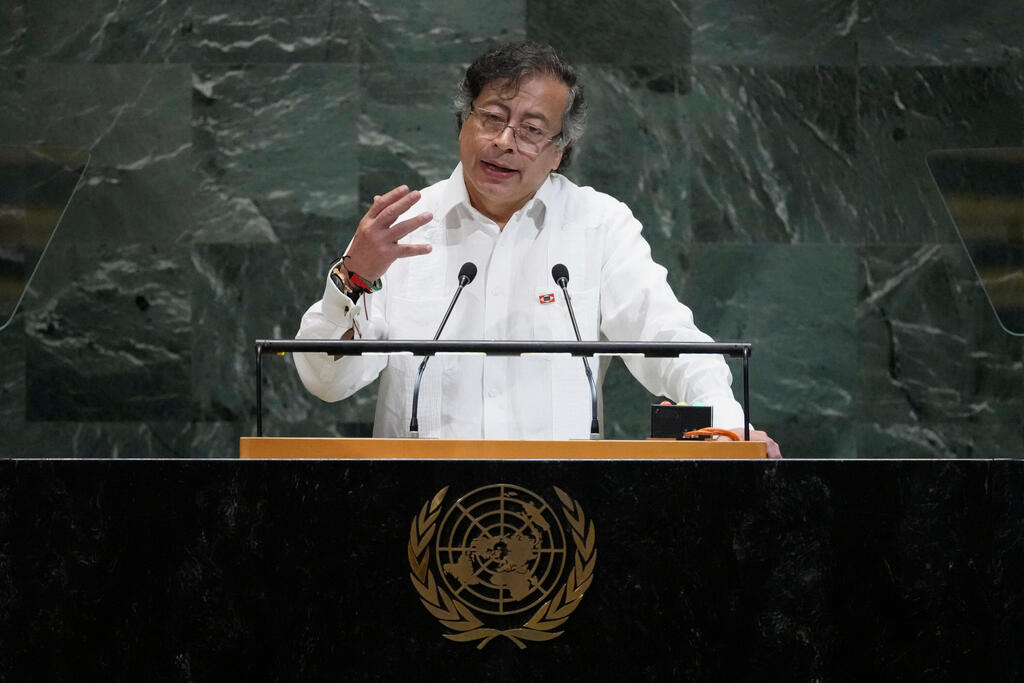
Colombian President Gustavo Petro
(Photo: AP Photo/Pamela Smith)
Corpas responded with another video, again in uniform, thanking the president for replying but rejecting his claims. “I said Colombia is a beautiful place, but not a peaceful one. Maybe it could be if he actually did his job. And his claim about ‘killing children’ reflects an antisemitic narrative where every IDF soldier is labeled a child killer. He doesn’t know me, but already decided who I am.”
The videos went viral, receiving positive reactions from Colombians and international audiences. “Even the Israeli embassy in Colombia commented,” Corpas said. “Many Colombians wrote to thank me, saying they finally feel heard. They don’t agree with the president but are afraid to speak. Now they say I’m their voice.”