

For nearly two years of war, the IDF and Israel’s security establishment have carried out complex and dangerous efforts to rescue hostages held by Hamas terrorists in the Gaza Strip. Facing fierce resistance from a ruthless organization, the military has launched numerous operations — some that ended in remarkable success, others that were called off at the last moment, and a few that ended in tragedy.
Among the most well-known rescues were those of Ori Magidish, an Israeli soldier freed in the early stages of the war, and the dramatic Operation Arnon, during which Noa Argamani, Almog Meir Jan, Andrey Kozlov and Shlomi Ziv were saved.
Operation Arnon
(Video: IDF)


Other missions were aborted in the final moments due to fears that the hostages or the rescuing forces might be killed. Still others were carried out but ended with the deaths of the hostages before they could be brought home.
Operations under fire
Footage released from soldiers’ helmet cameras during Operation Arnon showed the intensity of the firefights. In some videos, counterterrorism officers from the elite Yamam unit can be seen shielding the hostages amid gunfire and offering them water moments after the rescue.
Several rescue missions were met with opposition from hostage families, who feared for the soldiers’ safety or believed that upcoming deals might free their relatives without further risk. Before Operation Golden Hand, which successfully rescued Luis Har and Fernando Marman, some relatives urged caution.
“Some family members asked that we not endanger the soldiers, believing the two would likely be released in a deal anyway, because of their age,” said a senior defense official involved in the planning.
Operation Golden Hand
(Video: Israel Police)
“In the end, it was a truly dangerous mission,” the official said. “But the soldiers’ heroic response, along with the incredible composure of Luis and Fernando, led to their rescue. They hid on a balcony for eight minutes while heavy gunfire was exchanged between the terrorists and the Yamam unit in the building across from them. The gunfire continued, and the IDF sent an Air Force combat helicopter that struck the terrorists with precision — only about 10 to 15 meters from Luis and Fernando, who escaped unharmed.”
Aboveground rescues, underground risks
While most hostages later found dead were retrieved from tunnels — usually without contact with the terrorists, who had fled before Israeli forces arrived — those rescued alive were generally held in aboveground structures.
This was not due to technological limitations. The IDF possessed advanced tools to see, hear, and move within Gaza’s tunnels. But commanders feared that Hamas terrorists would detonate explosives underground, making any attempt to free hostages there far too risky.
One previously undisclosed rescue mission, reported here for the first time, was planned weeks before the major operations in Rafah. In the first month after the October 7, 2023, Hamas assault — even before the first hostage-release deal in November 2023 — the IDF prepared a mission to free several children and a woman held captive in Gaza.
The operation was put together on very short notice, during the earliest stage of Israel’s ground maneuver, then limited to northern Gaza. The special forces involved reached advanced readiness, but the plan was ultimately canceled by the IDF’s General Staff. The hostages in question were believed likely to be released in an exchange deal, since they were not considered “men of fighting age,” as defined by Hamas terrorists.
Command decisions and intelligence
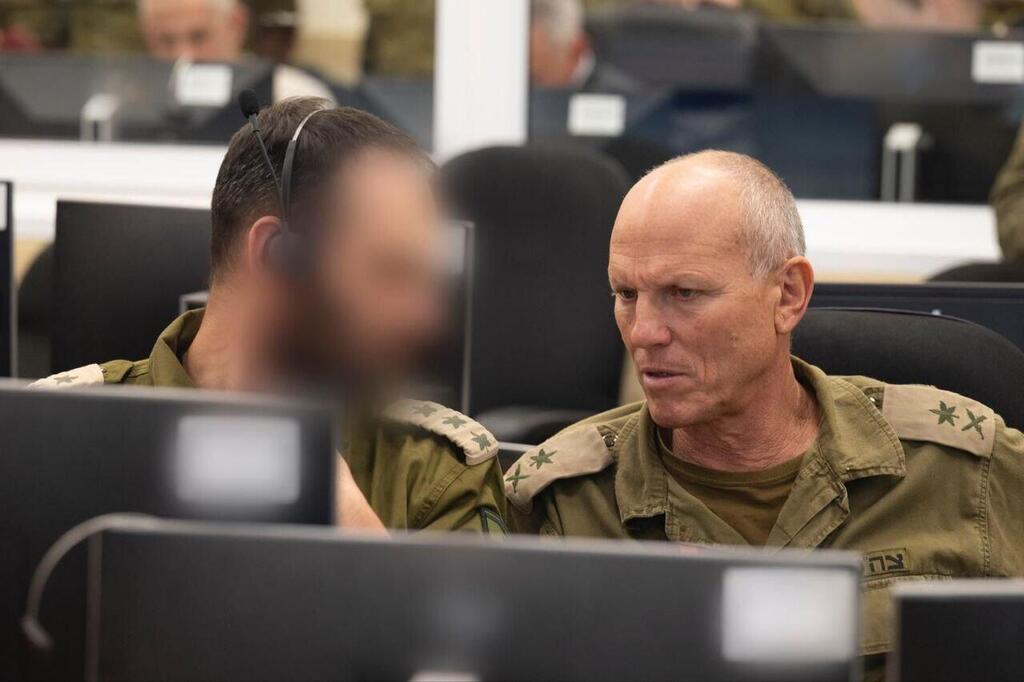
The planning and coordination of these operations were led by a special General Staff headquarters established immediately after October 7, under Maj. Gen. (res.) Nitzan Alon, a former commander of the elite Sayeret Matkal unit.
From offices in a tower on the Bnei Brak–Ramat Gan border, Alon’s team gathered and analyzed intelligence, assembled fragmented information into actionable recommendations, and made rapid decisions on whether to proceed with rescue operations.
“Intelligence pieces would come together within hours,” one security official said. “Decisions had to be made quickly — and some of those decisions ended with hostages killed.”
Failed attempts and costly lessons
One such failure was the attempt to rescue Sahar Baruch, a hostage held in Khan Younis in December 2023. According to defense sources, several intelligence mistakes led to the mission’s failure.
A Sayeret Matkal unit quietly reached the building where Baruch was believed to be held and detonated a small explosive at the entrance, as planned. But Hamas terrorists responded immediately, hurling multiple grenades that exploded one after another, wounding several Israeli soldiers — some seriously — and halting the advance. Baruch was killed in the ensuing firefight, and the terrorists escaped with his body.

Sahar Baruch
“There were operations we ultimately decided not to carry out — and in hindsight, it was good that we didn’t,” a senior defense official said. “At first, we didn’t realize that Hamas terrorists would murder hostages if they detected Israeli forces approaching.”
Strikes and difficult choices
As part of its broader responsibilities, Alon’s command also took part in approving key Israeli Air Force strikes during the war to ensure that hostages were not located near target sites.
But the effort was not always successful. Staff Sgt. Tamir Nimrodi, who was kidnapped alive from the Erez base on October 7, was apparently killed in an Israeli airstrike targeting tunnels in northern Gaza, where senior Hamas terrorists were hiding.
Other hostages were also killed in such incidents — unintentionally and without prior knowledge of their presence.

Tamir Nimrodi
“There was heavy pressure, mainly from the political echelon, to act fast and with maximum force, especially in the early months of the war,” another senior official recalled. “To deliver results and eliminate as many senior Hamas terrorists as possible. But senior officers like Nitzan Alon sometimes urged patience. He would say, ‘Nothing will happen if we wait a few days to refine the intelligence, to slightly adjust the bomb or the weapon used, to reduce the risks to the hostages.’”
The official added that intelligence about hostages’ locations and conditions “was never 100 percent accurate and could change against them just 10 minutes before a strike.”
“Some hostages were killed because of those bombings,” the official said. “But in many other cases, enormous efforts were made to achieve military objectives while avoiding risks to other hostages — and that’s how it was.”