


The United States has urged several Arab Gulf countries to prepare for a short but intense military campaign against Iran following next week's U.S. midterm elections, The Wall Street Journal reported Wednesday, citing people briefed on discussions between Washington and regional governments.
According to the report, the messages, delivered through diplomatic and military channels, are among a growing number of indications that the United States and Israel are preparing for another round of large-scale military operations against Iran.
Gallery
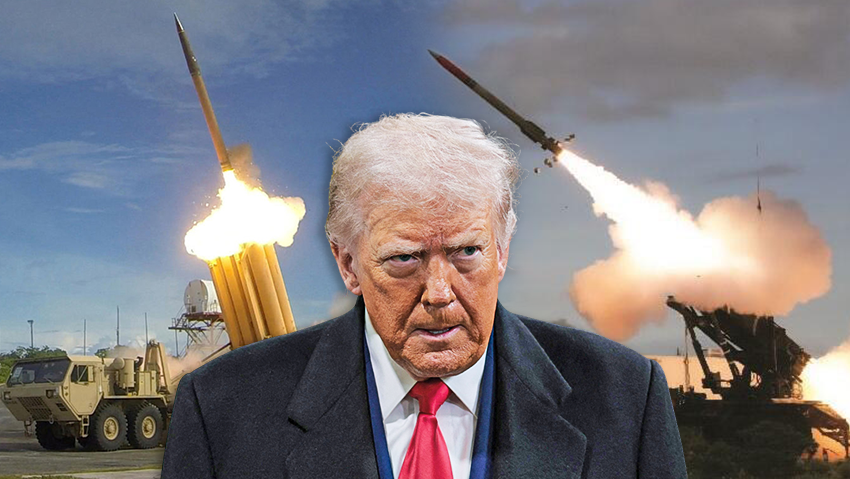
US President Donald Trump
(Photo: AP/Carlos Osorio, US Armed Forces, Reuters, Anna Moneymaker/AFP, AP)
U.S. President Donald Trump has not made a final decision on whether to launch an attack but is leaning toward a broad military operation after the midterms, the newspaper reported. Potential targets include Iranian critical infrastructure and nuclear facilities.
The alternative remains a negotiated agreement with Tehran. Regional mediators continue diplomatic efforts to avert another confrontation, but those talks have yet to produce a breakthrough.
The reported preparations include significant changes to the U.S. military posture in the Middle East.
Officials familiar with the matter told the Journal that the U.S. military is moving a Patriot air defense system from Texas to the region to strengthen its defenses against potential Iranian missile attacks.
American forces have also been relocated from bases considered vulnerable to attack as part of preparations for a possible escalation.
According to several officials cited in the report, U.S. troops stationed in the region have replenished their ammunition supplies, while American bombers and fighter jets are being readied for potential strikes.
An additional aircraft carrier strike group and a Marine Corps expeditionary force are expected to join the U.S. military buildup next month, the newspaper reported.
They would augment an armada of roughly 20 warships already operating in the Middle East, although some of the incoming vessels could replace ships currently deployed in the region rather than increase the overall number.
Netanyahu: 'This is not over'
The Journal's report emerged around the same time that Prime Minister Benjamin Netanyahu addressed supporters early Wednesday following Israel's parliamentary election.
Netanyahu's Likud party remained the largest in the Knesset, according to exit polls, although his right-wing political bloc appeared to have lost significant ground, leaving his ability to form a governing coalition uncertain.
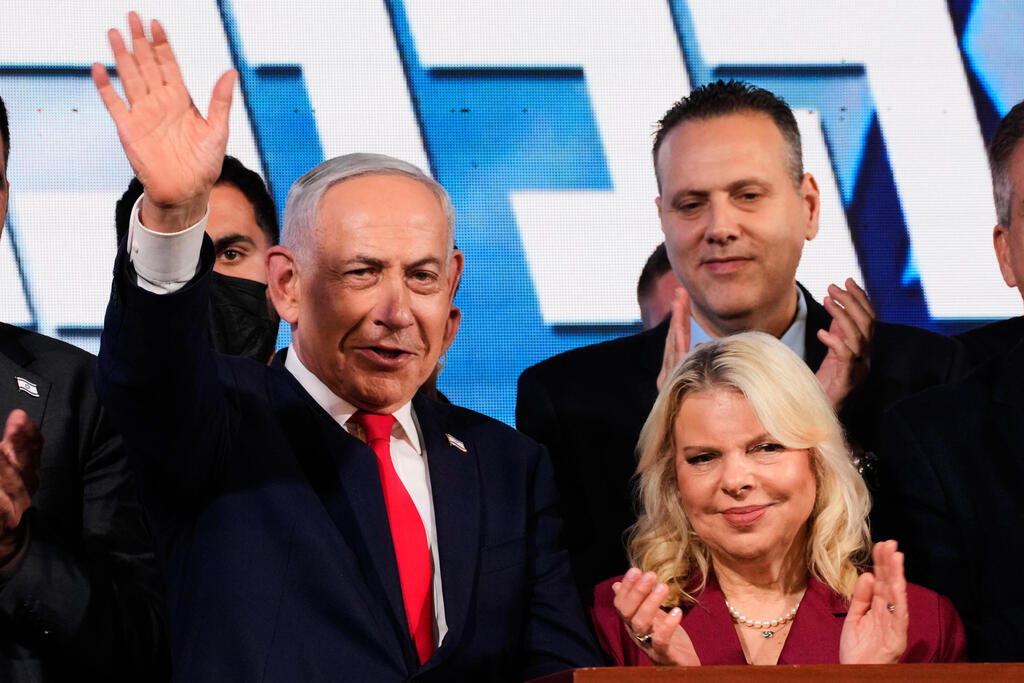
Prime Minister Benjamin Netanyahu addresses supporters early Wednesday following Israel's parliamentary election
(Photo: AP Photo/Ohad Zwigenberg)
Netanyahu opened his election-night address by focusing on Iran, declaring that Israel's confrontation with the Islamic Republic was far from over.
"We have brought the Iranian regime to the brink of collapse," Netanyahu said. "And yet I tell you, this is still not over. Because as long as this fanatical regime exists, a regime that has defined its very purpose as destroying our existence, it will try again to destroy us."
"We have the power, together with our wonderful friend President Trump, to remove this threat once and for all," he added.
Netanyahu's remarks came shortly after his main rival Gadi Eisenkot, chairman of the Yashar party, called on him to resign, describing him as "a caretaker prime minister without a mandate or public trust."
Eisenkot made the comments Tuesday night, before dramatic overnight revisions to the election exit polls altered the projected balance between the political blocs.
His warning reflected concerns among opposition figures that Netanyahu could seek to escalate security tensions to complicate efforts to replace him or pressure rival parties into joining an emergency government.
Addressing senior defense and security officials, Eisenkot urged them to resist any attempt to involve the security establishment in political maneuvering.
"Stand firm against any attempt to challenge you," he said.
He then directed a warning at Netanyahu: "Do not dare use Israel's security for your political purposes."