

A US Air Force officer whose fighter jet was shot down over Iran has spoken publicly for the first time about surviving a near-free fall, climbing a 7,000-foot ridgeline with a broken back and hiding for two days as Iranian forces searched for him before one of the largest combat rescue operations in recent US military history brought him home.
The officer, identified only by his mission call sign “Bravo” because of security concerns, was the weapons systems officer aboard an F-15E Strike Eagle shot down by an Iranian shoulder-fired missile on April 2. In an interview with CBS’ 60 Minutes, he described his survival as a “modern-day miracle.” Bravo was flying with the aircraft’s pilot, known as “Alpha,” under the mission call sign Dude 44. Adm. Brad Cooper, commander of US Central Command, told CBS that the aircraft had been sent to strike industrial facilities connected to Iran’s missile and drone programs in a mountainous region south of Isfahan. The area was near facilities where Iran had stored highly enriched nuclear material, but Cooper said Dude 44 was not targeting the nuclear site itself.
By then, US forces had flown roughly 13,000 missions during the war, Cooper said. American aircraft had established air superiority, but Iranian forces still posed a substantial threat. “We had air superiority, but clearly we weren’t flying over Kansas,” Cooper said.
Hit by a $100,000 missile
The F-15E, a two-seat fighter worth about $30 million, was brought down by a shoulder-fired missile that can cost roughly $100,000. Bravo said the impact felt like “getting hit by a freight train.” The crew initially tried to save the aircraft, but quickly realized it could not remain airborne. Alpha ejected both men. “I will be thankful, to my dying day, for my pilot and crewmate, Alpha, for saving our lives and ejecting us,” Bravo told 60 Minutes.
The two officers came down about five miles apart. Alpha’s descent went as planned. Bravo’s did not. His parachute had been damaged in the missile strike. “At one point when I looked up and saw no parachute, that was the most terrifying thing I’ve ever seen,” he said. As he fell, Bravo said he prayed: “Lord, your will be done. But if I’m getting through this, I need help.”
Military specialists later estimated from his injuries that he struck the ground at between 70 and 100 mph. The impact broke his back, arm and shoulder. He also suffered a sprained ankle and cuts to his head and face. Despite the injuries, he remained conscious and began moving away from his landing site before Iranian forces could reach him.
As daylight came, Bravo realized he was in a high desert valley surrounded by steep cliffs. He decided that the safest place to hide was above him. With multiple broken bones, he began climbing toward a 7,000-foot ridgeline. Asked by CBS how he found the strength to continue, Bravo replied: “Never let a lack of motivation put you on Iranian TV.”
Iranian forces close in
That prospect was very real. Iranian media circulated images of the wreckage, while an Iranian television presenter announced a bounty for the Americans’ capture. Videos also emerged online showing armed groups searching for the downed crew. US military sources told CBS that Iranian forces at one point came within several hundred meters of Bravo.
“There was clear intent out of the Iranian ground force to come find those two guys,” Gen. Dan Caine, chairman of the Joint Chiefs of Staff, said. Cooper said US forces were tracking about 1,500 Iranians within a 10-mile radius of the area.
The Americans located Alpha first. Six hours after the F-15E went down, a rescue force launched a risky daytime mission involving two helicopters from a 21-aircraft package. The helicopters came under fire. “It was a gun fight all the way in and all the way out,” Defense Secretary Pete Hegseth told 60 Minutes. “But they got Alpha back.”
The rescuers also searched for Bravo but were unable to locate him and withdrew. As darkness fell, however, Bravo managed to establish communications. He told US forces he was injured but moving and sent another short message: “God is good.” American commanders considered launching another rescue that night, but Hegseth said the circumstances did not come together. “That was a really tough decision,” he said. It meant Bravo would have to spend another day alone in the Iranian mountains with almost no food or water.
CIA joins the hunt
According to CBS, the CIA became pivotal in the effort to locate and recover him. The agency launched what was described as a multipronged deception operation intended to confuse Iranian forces hunting for Bravo, while using classified technology to pinpoint his position. Before the rescue force moved in, American bombers and drones struck Revolutionary Guard forces near the area where Bravo was hiding, according to newly declassified footage shown by CBS.
The scale of the operation was extraordinary. Cooper said about 92 US service members went onto the ground inside Iran, the first American troops to do so in 46 years. Several hundred personnel were involved in the air, while another 3,000 to 5,000 supported the operation. Asked about risking nearly 100 troops to rescue one airman, Caine said: “We would have sent more to go get the back-seater.”
Two large search-and-rescue aircraft landed on a makeshift airstrip in the Iranian desert. From there, smaller Little Bird helicopters were launched toward Bravo’s position on the ridge. Pentagon footage later declassified showed Air Force pararescue specialists reaching him. “The moment a PJ showed up to me on that ridgeline was one of the greatest moments of my life,” Bravo said. He declined to disclose the details of what the rescuers told him. His own first words were simpler: “Let’s go.”
Rescue force becomes stranded
But getting Bravo into American hands did not end the operation. Back at the makeshift desert airstrip, the landing gear of the large rescue aircraft became stuck in the sand. More than 90 elite US personnel were now stranded inside Iran alongside the officer they had come to save.
A clandestine Air Force unit was brought in to extract them. The United States then destroyed the two stranded aircraft, each worth roughly $100 million, along with the Little Bird helicopters, to prevent sensitive technology from falling into Iranian hands.
About 50 hours after Dude 44 was shot down, Bravo was finally safe. He was rescued as the sun rose on Easter Sunday. Not long afterward, he called his wife in the United States. “I was really proud of her and grateful for the strength that she showed,” he said.
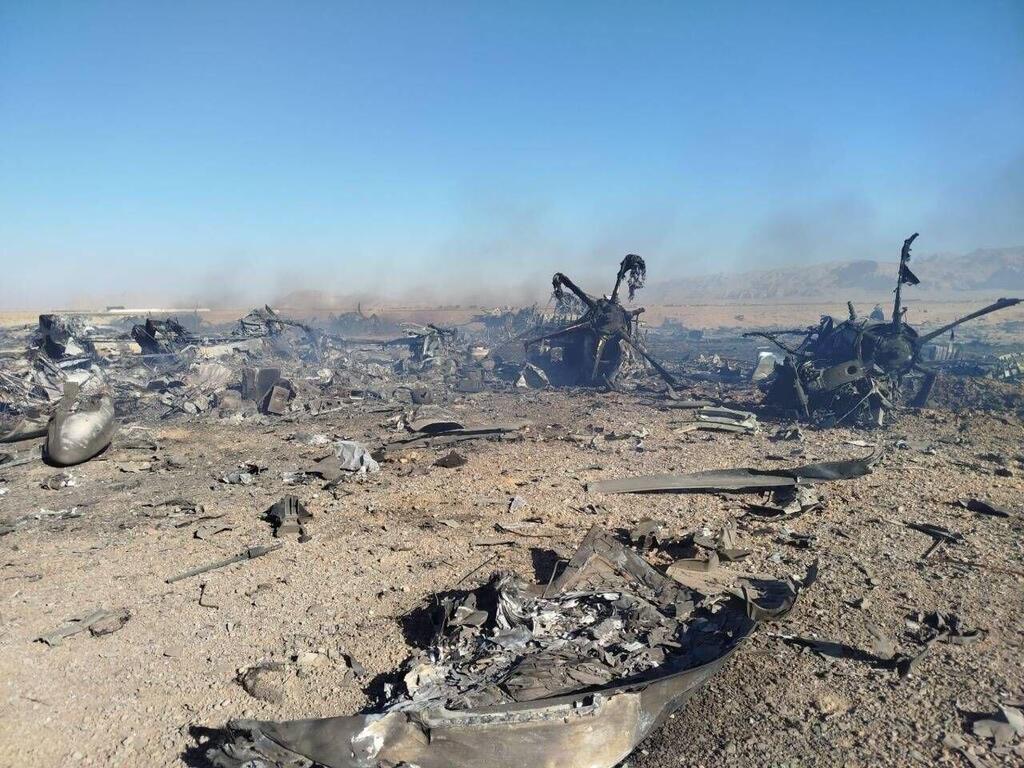
Wreckage of a US aircraft in Iran
Alpha has since returned to flying with the Air Force but declined an interview with 60 Minutes for security reasons. In a statement, he praised the personnel involved in rescuing both men. “I am still in awe of the professionalism and tactical prowess of the Combat Search and Rescue specialists and the Joint Force who executed the rescue missions of me and DUDE 44 Bravo, both those in theater and behind the scenes,” he said.
Bravo, meanwhile, said he does not want the episode remembered simply as a story about one wounded airman surviving behind enemy lines. “This is not a story about what I went through,” he said. “Instead, it’s a story of the teamwork, the training, of the faith, of the decisions and the leadership to do something that will live in history as an example of what America’s willing to do in order to uphold our promise and leave no man behind.”