


The world is waiting anxiously for President Donald Trump’s decision on whether to strike Iran. Israeli officials assess that the likelihood of a U.S. attack remains high, despite talks scheduled for Thursday in Geneva between Washington and Tehran, which are viewed as a last-ditch effort to reach a compromise before Trump could order a strike.
A senior Israeli official said Tuesday evening that “at the moment, a U.S. strike in Iran appears certain. The question is not if, but when and how.” According to the official, the debate centers on whether the move would come before or after the State of the Union address, the president’s annual speech before a joint session of Congress, scheduled for 9 p.m. U.S. time Tuesday (early Wednesday in Israel), or toward the end of the week or early next week.
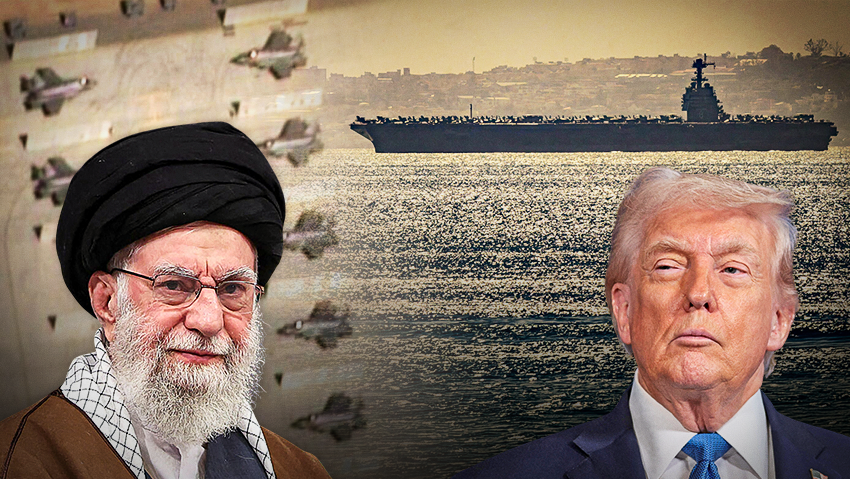
“The question is whether Trump will order a limited action to send a signal to Tehran, or skip that stage and move to topple the regime,” the official added. “The assessment is that he will opt for a limited action. Israel continues heightened preparations.”
According to a report in The Washington Post, Chairman of the Joint Chiefs of Staff Gen. Dan Caine warned during a White House meeting last week attended by Trump that any large-scale operation in Iran could pose challenges, given that U.S. munitions stockpiles have been significantly depleted due to the ongoing defense of Israel and support for Ukraine. Also attending the meeting were Vice President JD Vance, Secretary of State Marco Rubio, CIA Director John Ratcliffe, Defense Secretary Pete Hegseth and Trump adviser Stephen Miller. The warning by Caine was first reported by Axios.
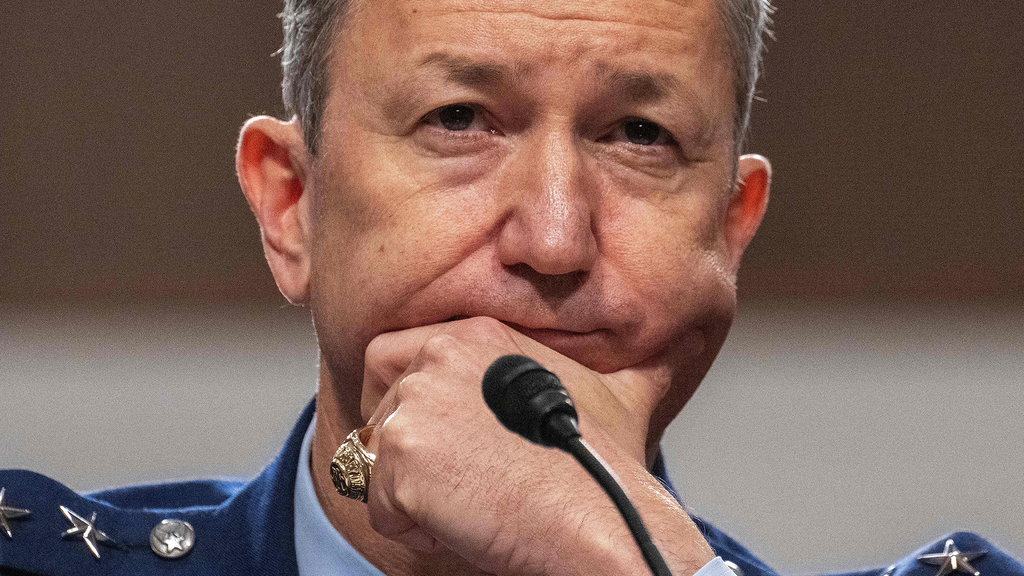
Dan Caine
(Photo: Jim WATSON / AFP)
The Post noted that U.S. systems used to defend against Iran’s ballistic missiles include the THAAD and Patriot air defense systems. According to an expert cited by the newspaper, the United States can produce only a few hundred interceptors for the two systems combined — far fewer than would be required in a war with Iran.
Meanwhile, The Wall Street Journal reported Tuesday evening that the Pentagon has presented the White House with a range of military scenarios, from a limited pinpoint strike on nuclear facilities to an air campaign lasting days or longer, aimed at significantly damaging the Iranian regime’s capabilities.
Like The Post, the Journal reported that during internal discussions at the National Security Council in Washington, Caine warned of the risks of a prolonged campaign. Among the concerns raised were potential U.S. and allied casualties, the depletion of munitions stockpiles — particularly air defense systems — and operational strain on the U.S. military. U.S. officials said extensive use of air defense systems and precision-guided munitions could undermine American readiness for other scenarios, including a possible future confrontation with China.
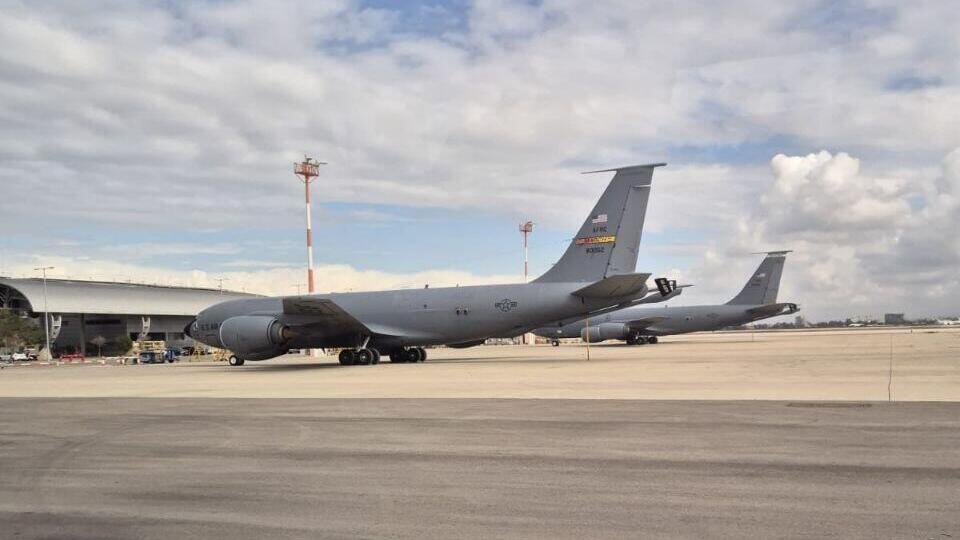
US military transport and refueling aircraft at Ben Gurion Airport on Tuesday
(Photo: Social media)
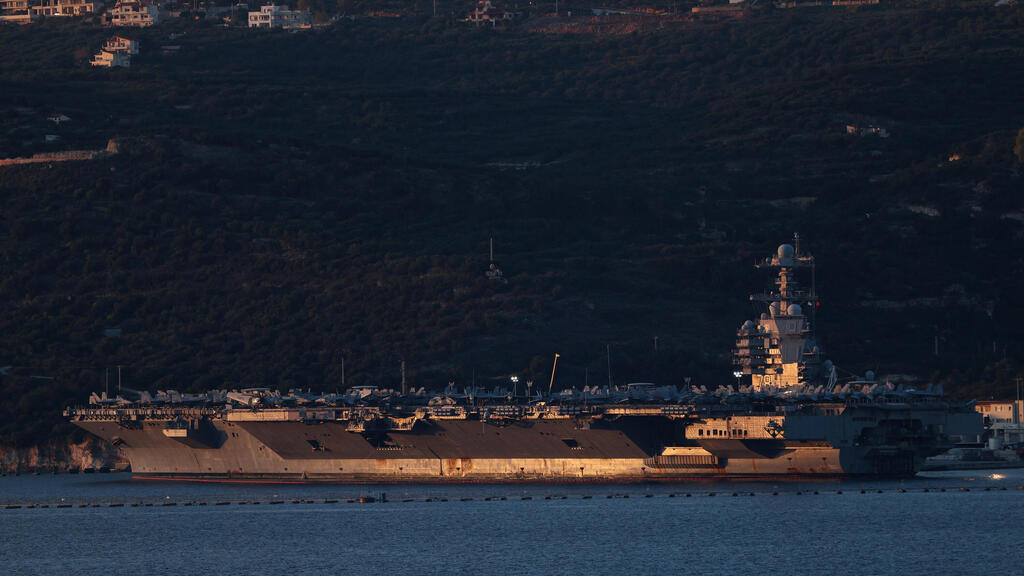
The USS Gerald R. Ford aircraft carrier off the coast of Crete
(Photo: REUTERS/Stelios Misinas)
At the White House, however, officials emphasized that Trump has not made a final decision. A White House spokeswoman said Tuesday evening that “the president listens to a range of views and makes decisions based on what is best for U.S. national security.”
Awaiting the Ford
After massing significant forces in the Middle East in recent weeks, the USS Gerald R. Ford aircraft carrier continues to make its way in the region and is expected to join the extensive air and naval forces already deployed. The carrier was photographed Tuesday near Crete.
According to the Institute for National Security Studies, more than 200 U.S. fighter jets are already in the Middle East, and more than 300 including those in Europe. These include 36 F-15s and at least 48 F-35 stealth fighters. Twelve F-22 stealth fighters are stationed in Britain, along with 36 F-16s in the region. U.S. officials described the buildup as the largest concentration of American air power in the region since the 2003 Iraq war.
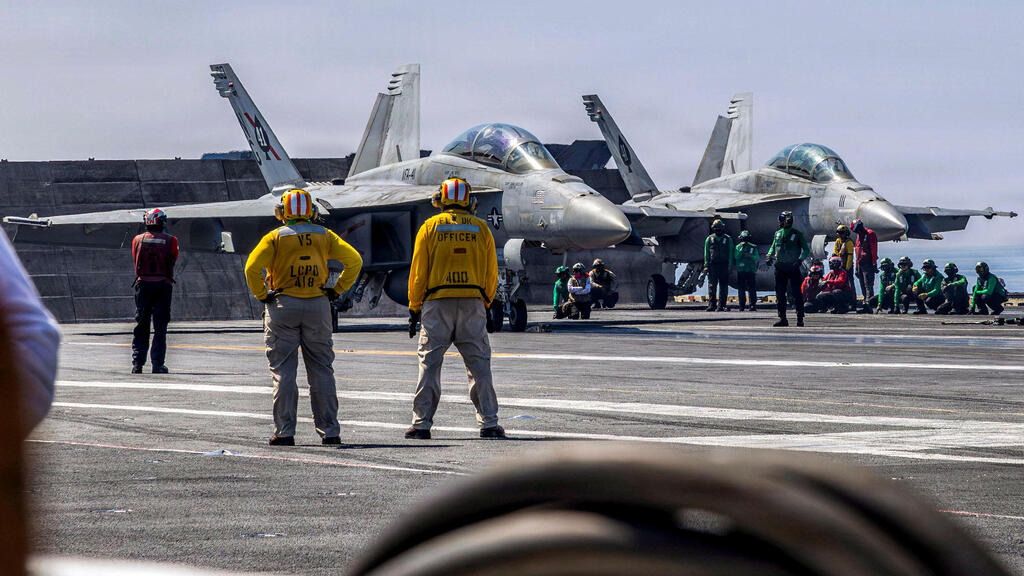
Two F/A-18F fighter jets prepare for takeoff from the deck of the USS Abraham Lincoln in the Arabian Sea
(Photo: Daniel KIMMELMAN / US NAVY / AFP)
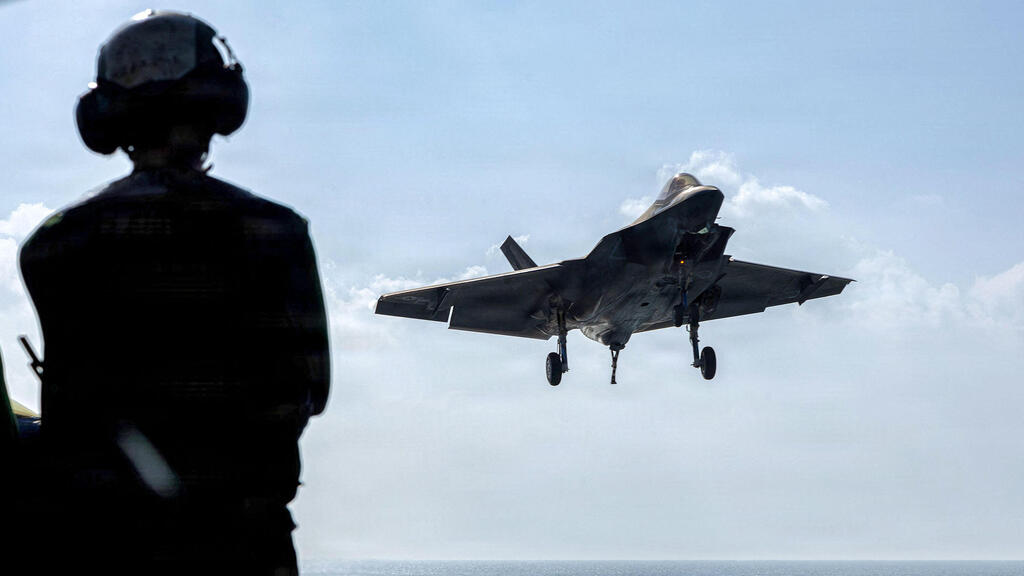
(Photo: Sonny Escalante / US NAVY / AFP)
In addition to fighter jets, U.S. forces in the region include more than 100 refueling, command and control, intelligence and transport aircraft. U.S. transport and refueling planes were photographed Tuesday at Ben Gurion Airport.
U.S. strike groups in the region include two aircraft carriers: the USS Abraham Lincoln, which arrived weeks ago, and the Ford, which is in the Mediterranean and continuing eastward near Crete. They are accompanied by 12 destroyers, with additional destroyers possibly en route.
Against the backdrop of the developments, Prime Minister Benjamin Netanyahu asked to shorten a court hearing in his trial scheduled for Tuesday. The session will run from 9:30 a.m. to 12:30 p.m. only. Wednesday’s hearing was canceled at his request. The request stated that Netanyahu is required to attend a conference of senior Shin Bet officials and that Wednesday’s cancellation is due to the visit to Israel by Indian Prime Minister Narendra Modi.
Addressing the Knesset plenum, Israel’s parliament, on Tuesday, Netanyahu referred to tensions with Iran and said, “We are in very challenging and complex days. No one knows what tomorrow will bring. The public understands this. We are vigilant and prepared for any scenario.” He issued another warning to Tehran: “I have made clear to the ayatollah regime that if they make perhaps the gravest mistake in their history and attack the State of Israel, we will respond with a force they cannot even imagine.”
Meanwhile, Russian Deputy Foreign Minister Dmitry Lyubinsky was quoted by the RIA news agency as calling on the United States to abandon plans to strike Iran’s nuclear sites, which he described as established “for peaceful purposes.” “We strongly urge Washington to provide solid guarantees to prevent further military escalation,” he said. Russia has also offered to help renew diplomatic contacts surrounding the nuclear program.