

Hamas in the Gaza Strip is undergoing profound changes in its leadership structure following the killing of most of its senior figures during the war with Israel. After the killing of Yahya Sinwar in 2024, the terrorist organization is preparing to elect a new head of its political bureau, with Khalil al-Hayya and Khaled Mashaal emerging as the leading candidates. Beyond the title itself, whoever wins will effectively assume Hamas’ leadership, a development that could significantly affect regional power dynamics and Gaza’s fate after the war.
According to a report in the Saudi newspaper Asharq Al-Awsat, the period ahead of the vote has seen a clear strengthening of the camp aligned with Sinwar, a shift that has sparked internal tensions and anger among senior figures inside and outside Gaza. At the center of these developments is Ali al-Aamoudi, who was released in the 2011 Gilad Shalit prisoner exchange.
Gallery
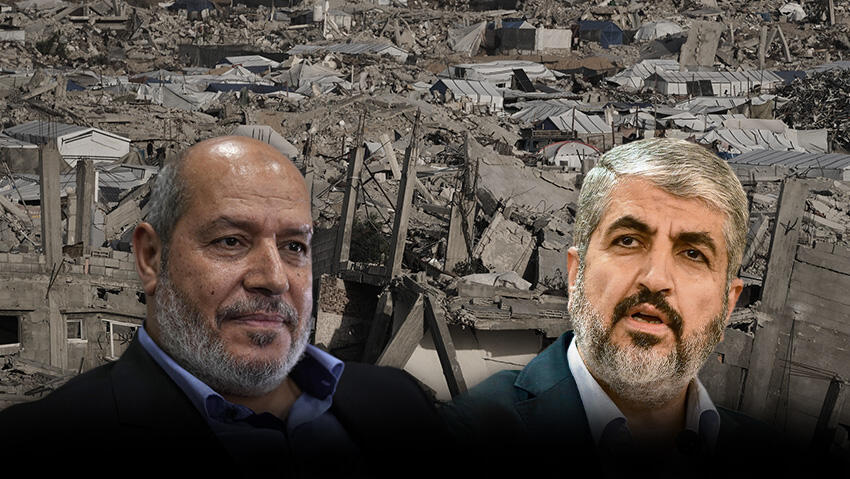
Khaled Mashaal and Khalil al-Hayya. Who will be the next leader of the terrorist organization?
(Photo: Jehad Alshrafi/AP, Osama Faisal, AP, Khalil Hamra/AP)
Al-Aamoudi is a member of Hamas’ political bureau and previously headed its media apparatus. Sources within Hamas say he has effectively taken over management of the political bureau’s work in Gaza, after he and several figures close to Sinwar were tasked with stabilizing the Strip’s leadership, most of which is operating out of Khan Younis.
Alongside al-Aamoudi, the sources also point to Tawfiq Abu Naim, a senior figure in Hamas’ internal security services in Gaza and one of Sinwar’s closest associates in recent years. Abu Naim is considered a key figure in maintaining organizational and security order in the Strip and is part of the group of senior officials given a mandate to operate during the interim period created after the previous leadership was killed.
The report also mentions Salah Abu Sharah, another Sinwar confidant, who is part of the small circle currently leading political and organizational affairs in Gaza. According to the sources, the three – al-Aamoudi, Abu Naim and Abu Sharah – form a central axis shaping the new leadership in the Strip.
According to the report, no formal internal elections were held for Hamas’ political bureau in Gaza, and the process was carried out through appointments and understandings rather than established organizational procedures. Hamas figures outside Gaza described this as a “circumvention of the internal constitution” and demanded that permanent appointments be postponed until the election of the organization’s new chairman in the coming days.
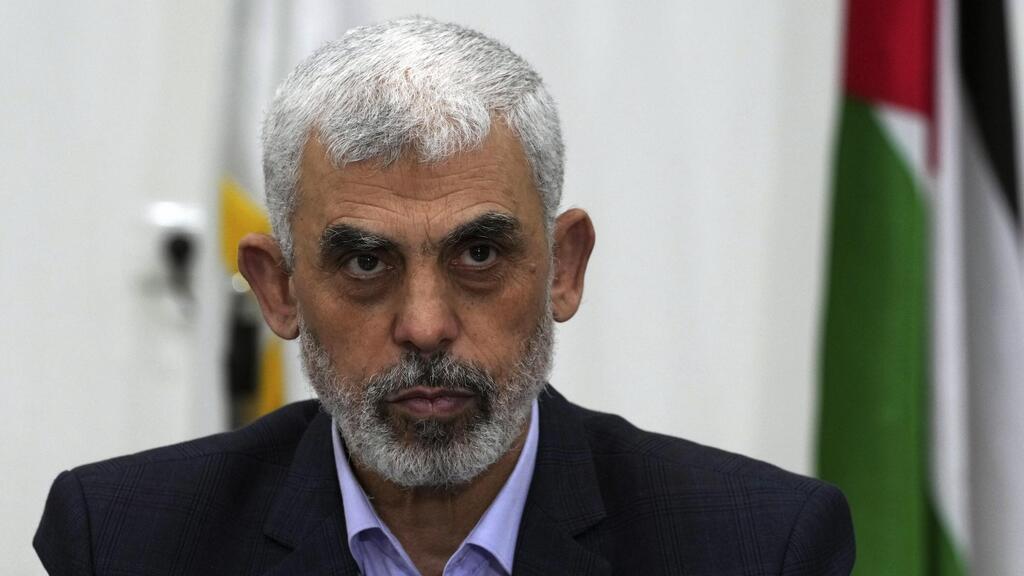
Yaha Sinwar
(Photo: Adel Hana/ AP)
As part of the process, al-Aamoudi and his associates have begun removing regional heads and local administrators, mainly those who were wounded or absent during the war, and appointing replacements. These moves have fueled growing anger among senior members of the political bureau outside Gaza, who warned of a deepening internal rift.
Hamas in its most difficult period since its founding
By contrast, a different picture is emerging within Hamas’ military wing. According to Asharq Al-Awsat, Izz al-Din al-Haddad, the new chief of staff of Hamas’ military wing, is working to systematically stabilize the organization’s ranks. He is holding frequent meetings and appointing commanders to replace those who were killed. Al-Haddad is also reportedly working to mediate between different political echelons and prevent further deterioration.
During the war, most of Hamas’ brigade commanders were killed in northern Gaza, central Gaza, Khan Younis and Rafah. The exception was Gaza City Brigade, which al-Haddad himself once commanded, and whose leadership was later assumed by Muhannad Rajab.
Alongside its organizational crisis, Hamas is also facing severe financial difficulties following damage to its funding sources. Still, the movement continues to pay salaries and grants, albeit in varying amounts and at irregular intervals.
Analysts assess that Hamas is in the most difficult period since its establishment in 1987. “This is a combination of military attrition, a leadership vacuum and strategic confusion,” analyst Mustafa Ibrahim told Asharq Al-Awsat. He said the movement is facing a fundamental question: whether it is working to preserve its rule in Gaza, merely ensure organizational survival, or manage a prolonged crisis with no clear horizon.
Chief of Staff Eyal Zamir conducted a tour of the southern Gaza Strip
(Photo: IDF Spokespersons Unit)


Meanwhile, IDF Chief of Staff Lt. Gen. Eyal Zamir toured southern Gaza Wednesday. Zamir spoke with troops on the ground and expressed his appreciation for their offensive actions against Hamas. He stressed the need for high alertness, continued engagement and the thwarting of any threat to protect Israel’s citizens.
“In 2025, the IDF achieved unprecedented accomplishments, foremost among them a severe blow to Hamas, the destruction of all its frontline units, the removal of the threat as we experienced on October 7, and the return of all living hostages to their homes,” Zamir said. “We are acting to bring back the last killed hostage, Sgt. Maj. Ran Gvili, of blessed memory, for burial in Israel, thereby closing the chapter of the hostages’ return from Gaza.”
Zamir added: “2026 will be a decisive year in shaping Israel’s security reality. Our determination to disarm Hamas is absolute. We will not allow the Hamas terrorist organization to rebuild its capabilities and threaten us. We are positioned on the ‘yellow line,’ controlling the dominant terrain in the Gaza Strip – this is a new security border. In recent months we have begun deepening our work on a multi-year plan and rewriting the IDF’s strategy. We will not return to the period before October 7.”