


The Cabinet voted overnight Friday to approve Prime Minister Benjamin Netanyahu’s plan for a military takeover of Gaza City, despite repeated warnings from the IDF chief of staff during the meeting that it could endanger the lives of hostages held by Hamas.
The first target will be Gaza City, the largest urban area in the territory. The Cabinet decision avoided the term “occupation,” instead using the phrase “takeover,” citing legal considerations related to responsibility for the civilian population. A senior Israeli official, however, said the wording was purely official and that the intention was in effect the occupation of Gaza.
Gallery
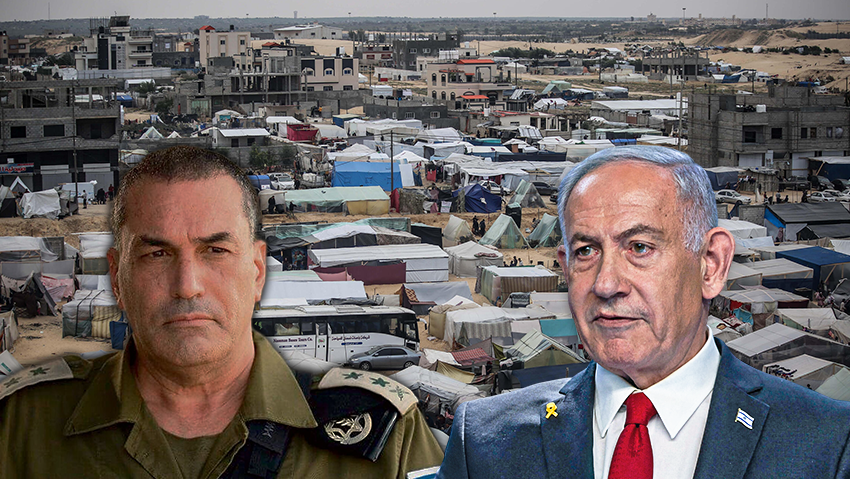
IDF Chief of Staff Lt. Gen. Eyal Zamir
(Photo: Dana Kopel, Shalev Shalom, REUTERS/Ronen Zvulun, GPO, Ahmad Hasaballah/Getty Images)
Netanyahu told IDF chief Lt. Gen. Eyal Zamir during the meeting that the plan the military had presented would not help bring the hostages home. “The plan we approved will achieve the war’s objectives more effectively,” the prime minister said.
Under the decision, evacuation of Gaza City’s civilian population to southward is to be completed by Oct. 7, described as a “symbolic date.” Once the evacuation is finished, Israeli forces would impose a siege on remaining Hamas fighters. Israel is expected to issue an ultimatum to Hamas to surrender. If the terrorist group refuses, Israeli troops would enter the city. The decision made no mention of a possible hostage deal, though officials indicated the operation would halt if such an agreement were reached.
The New York Times reported that while the army estimates seizing the remaining areas of Gaza not under Israeli control could take months, establishing a security system similar to Israel’s military presence in the West Bank could require up to five years of fighting. Three security officials made the assessment after Netanyahu told foreign media Israel intended to retake all control points in Gaza but not to govern it directly, instead transferring authority to a civilian administration.
An Israeli source familiar with the plan told CNN that one million Palestinians would be required to move to areas in the southern Gaza Strip and that the IDF would set up housing compounds for them. Meanwhile, three U.S. officials and a former senior official told NBC that satellite images they reviewed showed Israeli forces massing troops and equipment near the Gaza border, movements consistent with preparations for a major ground offensive.

IDF forces operating in Gaza
(Photo: IDF)
A Western official cautioned that a ground assault would be extremely dangerous for Israel because Hamas fighters are deeply entrenched and “there is no chance to kill them all.” The official added there was concern Hamas would harm the hostages or place them in combat zones if threatened.
Israeli forces believe they have a rough idea of where the hostages are held, likely in central Gaza. “Their condition makes it clear they don’t have much time,” the official said, referring to recently released videos showing captives Rom Braslavski and Evyatar David in distress.
The Prime Minister’s Office said in a statement that the Cabinet adopted what officials called “five principles to end the war”: disarming Hamas, securing the return of all hostages—alive and deceased—demilitarizing the territory, maintaining Israeli security control in Gaza and establishing an alternative civilian administration that is neither Hamas nor the Palestinian Authority.
According to the statement, most ministers rejected Zamir’s encirclement plan, arguing it would not bring about Hamas’ defeat or the hostages’ return.

Hostages Evyatar David and Rom Braslavski seen emaciated in Hamas and Palestinian Islamic Jihad propaganda videos
While the Cabinet approved sending additional aid to Gaza, the decision did not include the proposed “humanitarian city” as a temporary solution for Gazans. Briefings during the meeting said the U.S. supports an Israeli takeover of the enclave and is expected to soon unveil principles for ending the war and a large-scale aid plan it will lead, including up to 16 food distribution centers.
The decision was not unanimous. Finance Minister Bezalel Smotrich opposed it in its entirety. National Security Minister Itamar Ben-Gvir voted in favor of taking control of Gaza City but, along with Smotrich, opposed humanitarian aid and the establishment of additional relief centers. The two also opposed the five principles set for ending the war. Ministers Gideon Sa'ar and Ze’ev Elkin abstained in the vote on one of the clauses.
Get the Ynetnews app on your smartphone: Google Play: https://bit.ly/4eJ37pE | Apple App Store: https://bit.ly/3ZL7iNv
Australia was the first country to respond to the decision to occupy Gaza. “Australia calls on Israel to not go down this path, which will only worsen the humanitarian catastrophe in Gaza,” Foreign Minister Penny Wong said.
British Prime Minister Keir Starmer was equally blunt: “The Israeli Government’s decision to further escalate its offensive in Gaza is wrong, and we urge it to reconsider immediately. This action will do nothing to bring an end to this conflict or to help secure the release of the hostages. It will only bring more bloodshed.”

British Prime Minister Keir Starmer
(Photo: Toby Melville, Pool Photo via AP)
A Hamas source told the Saudi-owned daily Asharq Al-Awsat before the Cabinet decision that “the Israeli plan to occupy Gaza is nothing but a bargaining chip to extract concessions at the negotiating table, which may not reconvene because of these steps.”
The source said the expansion of the military operation reflects Netanyahu’s intention to use the plan with the understanding that any concession would be met with additional demands that would drain the negotiations of substance and threaten their resumption.
“Netanyahu prefers the option of escalation on the ground over any temporary ceasefire that fails to deliver solid political gains for him,” the source said, adding that “Netanyahu and his right-wing government, led by Ben-Gvir and Smotrich, see the continuation of the war as a domestic political lever, especially in light of the crisis of trust and deep divisions within Israeli society.” The source stressed that further Israeli advances could also result in the loss of additional soldiers or hostages.
Meanwhile, a senior Palestinian Authority official in Ramallah told the Saudi channel Al Hadath, “What is happening in Gaza is an occupation, not security control. The Palestinian Authority warns of the consequences of occupying Gaza. The Israeli decision is to reoccupy Gaza. The silence of the United States is a green light for Netanyahu’s plan in Gaza.”