

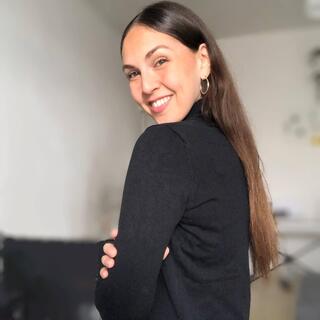
“I read an article about the female pilots who took part in Operation Roaring Lion. It moved and interested me. I always like hearing about strong women in the military,” said Talia Nachshon, 14, a ninth-grade student from Ofakim who is participating in the AIR program. “I never aimed for flight school, but the program opened my mind. Suddenly I think I can. I imagine myself as a pilot. Aiming as high as possible.”
Talia remembers the aircrew women who came to speak with the girls in Ofakim during the first meetings. “It’s nice to see it’s really possible and not just a dream. Women did it before, are doing it today and will do it in the future,” she said.
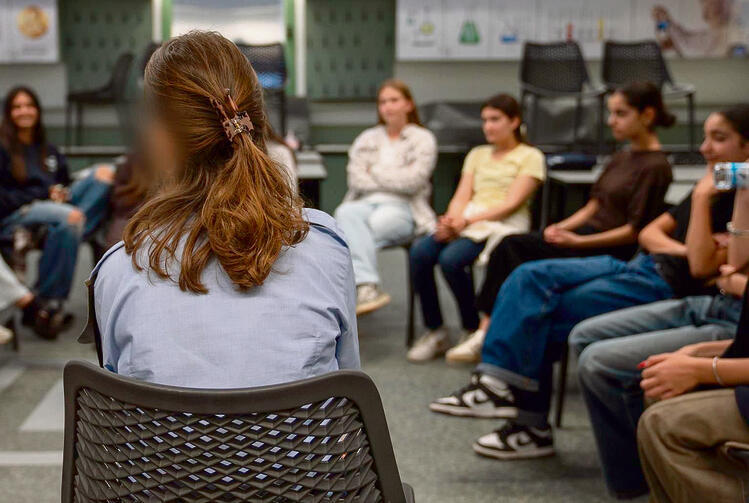
“We learned that anyone who wants to do something can achieve it; you just need to know how to work hard. Nothing is impossible.”
Another participant in the program is Tair Cohen, 15, from Ofakim. “From a young age, I’ve been interested in the Israel Air Force (IAF) and aviation, and I knew where I was heading. When they introduced the program to us, I thought it would open doors for me in the future. Meeting the aircrew women was empowering, understanding that girls are capable of everything, no less than boys.”
Building a sense of capability
Talia and Tair are part of the AIR team, a joint initiative of the Ramon Foundation and the IAF designed to expose girls to the world of aviation, develop relevant skills and strengthen their sense of capability ahead of potential pilot selection.
So far, within the program named after the Ramon family, two groups have been opened, with 19 participants in Ofakim and 28 in Be'er Sheva.
Each group takes part in weekly meetings from ninth through 12th grade, during which they receive training on flight simulators from initial practice to advanced technique. They complete a model aircraft project from construction to flight and take part in community volunteering activities.
In the final two years of high school, alongside pre-military screening processes, the girls are mentored by female aircrew officers.
Simulator training, set up specifically for the program, is led by Lt. (res.) Y., 24, a former instructor at the "Lavi" simulator in Hatzerim and a simulator officer for airborne munitions training in Hatzor.
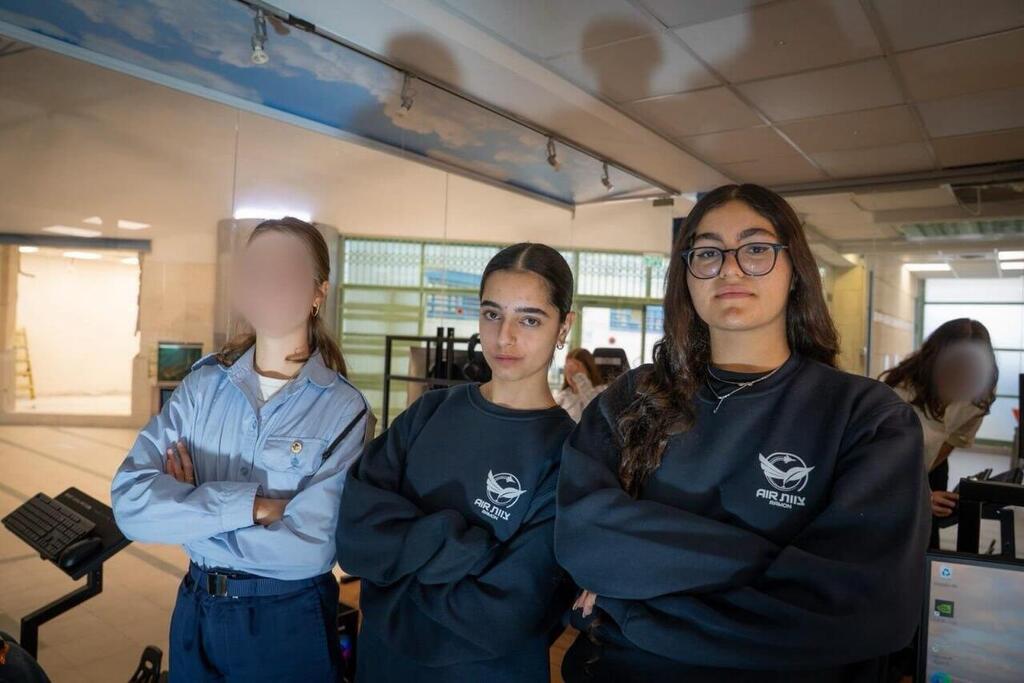
Lt. Y., Tair Cohen and Talia Nachshon
(Photo: IDF)
“As someone who served as a simulator instructor and also met many aircrews, the people I served with was quite similar. Most were from central Israel, sharing socioeconomic background,” she said. That is why, as a student in Be'er Sheva, she saw an opportunity to join an educational project that advances youth from the periphery.
She meets the girls in a classroom with five stations, each equipped with a computer, keyboard, mouse, joystick and throttle.
“At first we focused on flying. I taught them how to turn, see the horizon line, read data. Now there are also simulator missions — low-altitude flight, which is more complex, challenges like passing through gates, which adds competition.”
“They are attentive, cooperative, really engaged. At the end we do a debriefing — what happened, why it happened and how to improve. Now they have a stronger sense of capability and success, they feel they can do it.”
“The program connects to the Ramon family’s messages of resilience and growth from crisis”
“The goal is to increase and strengthen the girls’ sense of capability by using tools from the world of aviation and methodologies of the IAF,” said Bar Karlinsky, director of the AIR program on behalf of the Ramon Foundation.
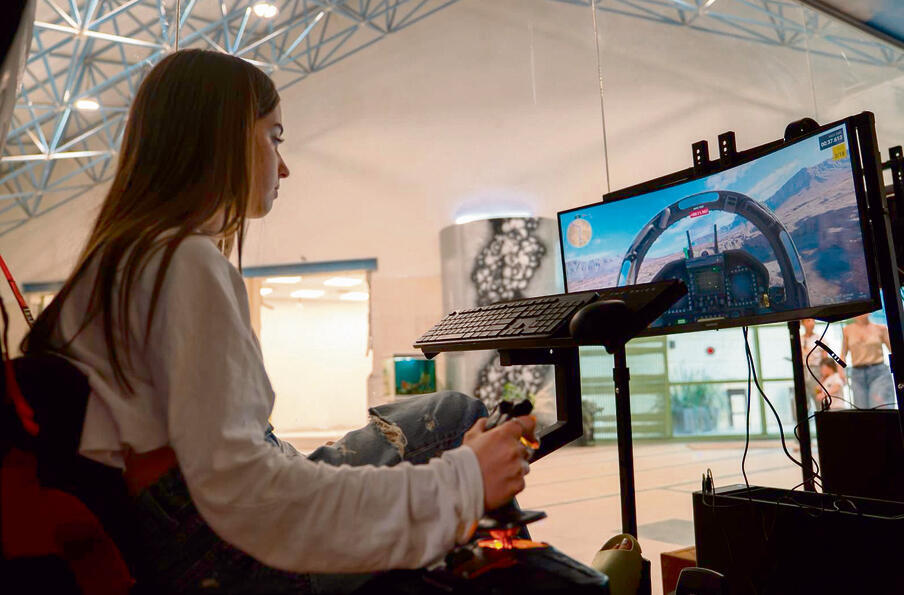
Simulator
(Photo: IDF)
A particularly memorable moment for her came during the model aircraft assembly stage. “The girls dealt with frustration because there were many steps and they lacked precise professional guidance. We connected them with the IAF UAV school, and after they received guidance on how to solve problems themselves, they got out of the crisis, completed the model aircraft and proved to themselves that they can do it. It connects to the Ramon family’s messages of resilience and growth from crisis.”
Not compromising on the integrity of selection
In a conversation with the head of the IAF Human Resources Department, Col. A., who leads the project on behalf of the Air Force, it was revealed that the rate of women completing the pilot course today stands at only 6%. “Our work on integrating women is significant,” she said, noting that in recent cycles the figure has risen to 7%.”
“In the past, a woman would only be sent to pilot selection if she specifically requested it. Today that does not exist. A woman is like a man. If she has the right qualities, the option opens up,” she said, describing a change implemented about three and a half years ago.
“We will create the foundation and provide the tools, but they must go through the selection process and exams like everyone else.”
The AIR program is one of several initiatives the Air Force is promoting to change the trend. The latest seminar, held recently, is expected to take place again this coming September.
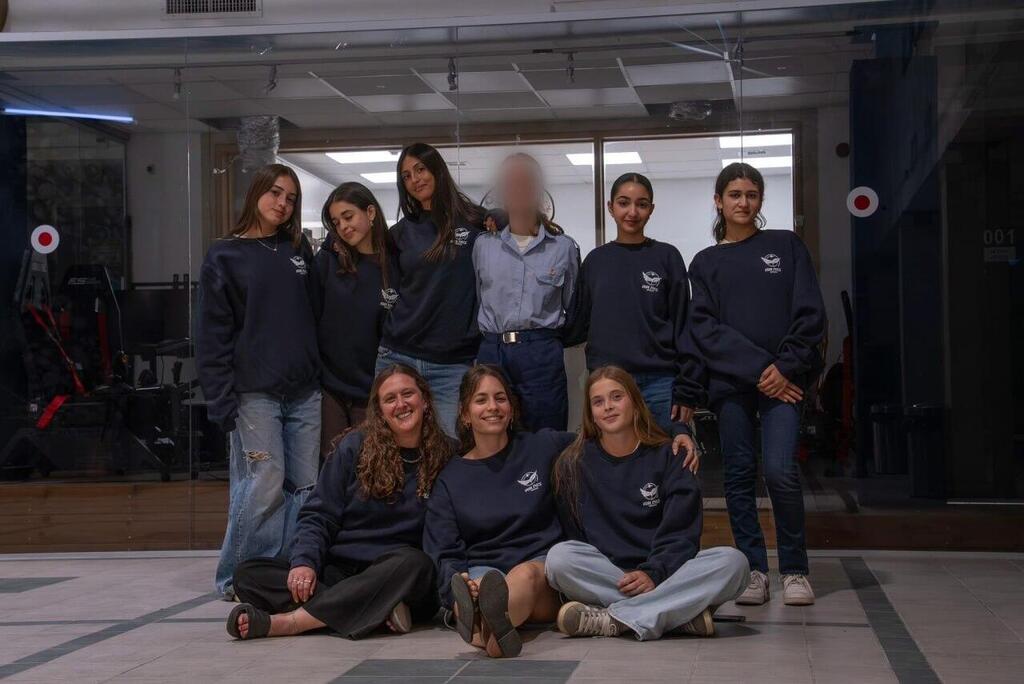
AIR Project
(Photo: IDF)
“We identified over the years that even when women pass the selection process, they are hesitant to move forward. Like someone who already passed the screening but the night before the selection course decided not to show up. When we contact her to understand why she didn’t come, she wonders how she would even pass it.”
“We want to strengthen their sense of capability,” Col. A. explained. According to her, “We found that the dropout rate during the selection course is the highest, and realized that creating a women’s seminar close to it reduces dropout rates and increases the likelihood of success.”
Alongside the emotional and mental aspect, the programs are also designed to develop professional skills. “We look at the timeline from middle school to the end of training and see what needs to be done to have more women on the parade ground,” she concluded, adding: “The integrity of the selection process remains. Everyone who completes the course and passes all the exams does so like everyone else. We will create the foundation and provide the tools, but they must go through the selection process and exams like everyone else.”